
D.C. Circuit revives challenge to DHS sensitive-locations policy
Evidence and accountability
Accountable person, organization or policy: Trump administration DHS
Documented issue under review: A federal appellate ruling addressed claims that the administration's sensitive-location immigration enforcement policy violated civil-rights and religious-liberty protections.
This report has an independent editorial fact-audit recorded in the archive. Check the linked source documents below for the underlying evidence; where a case remains pending, allegations are not findings.
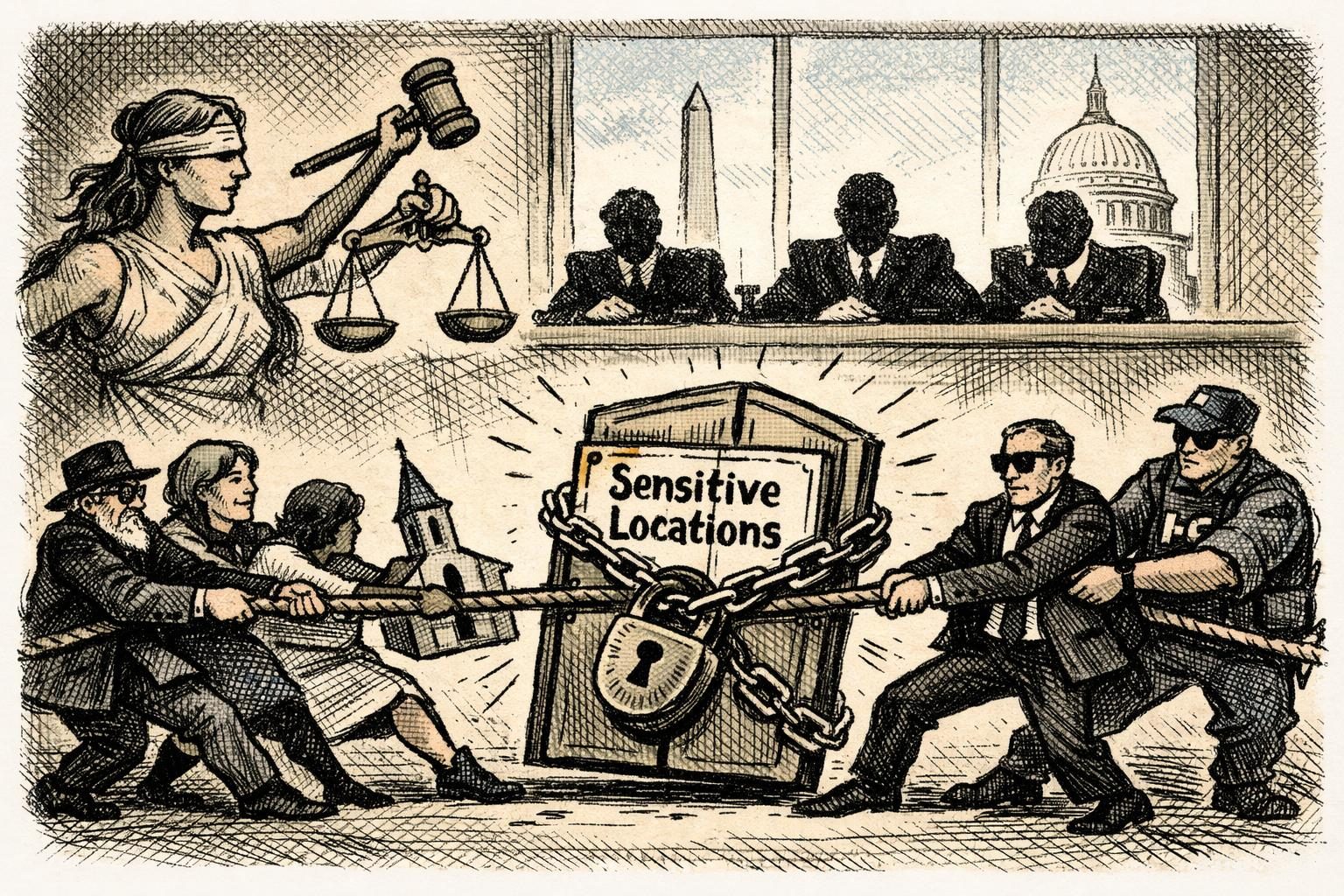
The D.C. Circuit on August 18, 2026, issued an opinion in Mennonite Church USA v. DHS that revived a challenge to the Trump administration’s sensitive-locations immigration enforcement policy. The case concerns whether federal immigration authorities may carry out enforcement actions in or near houses of worship and other places that faith groups say deserve special protection.
The court’s ruling was a preliminary one, not a final judgment on the merits. On the record before it, the panel concluded that the plaintiffs likely had standing to sue and reversed the district court’s denial of preliminary relief. That means the challengers can continue pressing their case, but the opinion does not itself establish a final statutory or constitutional violation by the administration.
The underlying dispute began after DHS changed its sensitive-locations policy in January 2025. Faith-based and civil-rights plaintiffs argued that the revised approach burdened worship and related religious activity, raising claims under the Religious Freedom Restoration Act and the First Amendment. The appellate decision addresses those claims at an early stage of the case and leaves additional litigation for the lower court.
For accountability purposes, the key fact is narrower than the original draft suggested: a federal appellate court found the challengers plausible enough to proceed on a preliminary record. It did not resolve whether DHS ultimately acted unlawfully, and it did not order a permanent end to immigration enforcement near houses of worship. The case now returns to further proceedings, where the administration can continue defending the policy on the merits.
Comments
Threaded replies, voting, and reports are live. New users still go through screening on their first approved comments.
Log in to comment
No comments yet. Be the first reasonably on-topic person here.