
Fourth Circuit upholds injunction in challenge to Trump administration church-arrest policy
Permanent article number: 102326011 Find another article by number
Original reporting and source documents
Open the reporting and original documents used for this article. These include evidence sources; not every link is necessarily the original claim being examined.
Evidence and accountability
Accountable person, organization or policy: Trump administration immigration policy
Documented issue under review: A court allowed a multifaith challenge to proceed over the policy permitting ICE arrests at churches, signaling a live legal setback for the administration’s enforcement approach.
This report has an independent editorial fact-audit recorded in the archive. Check the linked source documents below for the underlying evidence; where a case remains pending, allegations are not findings.
Questions sent by Radical Reading Room
These requests have a recorded outbound message ID and send time. A request for comment does not establish that its recipient read the message.
Department of Homeland Security — Public professional press contact
Question: What specific data or evidence did the Department of Homeland Security use to assess the impact of the 2025 policy change on attendance at houses of worship by immigrant congregants?
Contacted: October 25, 2026 at 2:24 PM (server time).
Status: Response pending; no substantive response recorded.
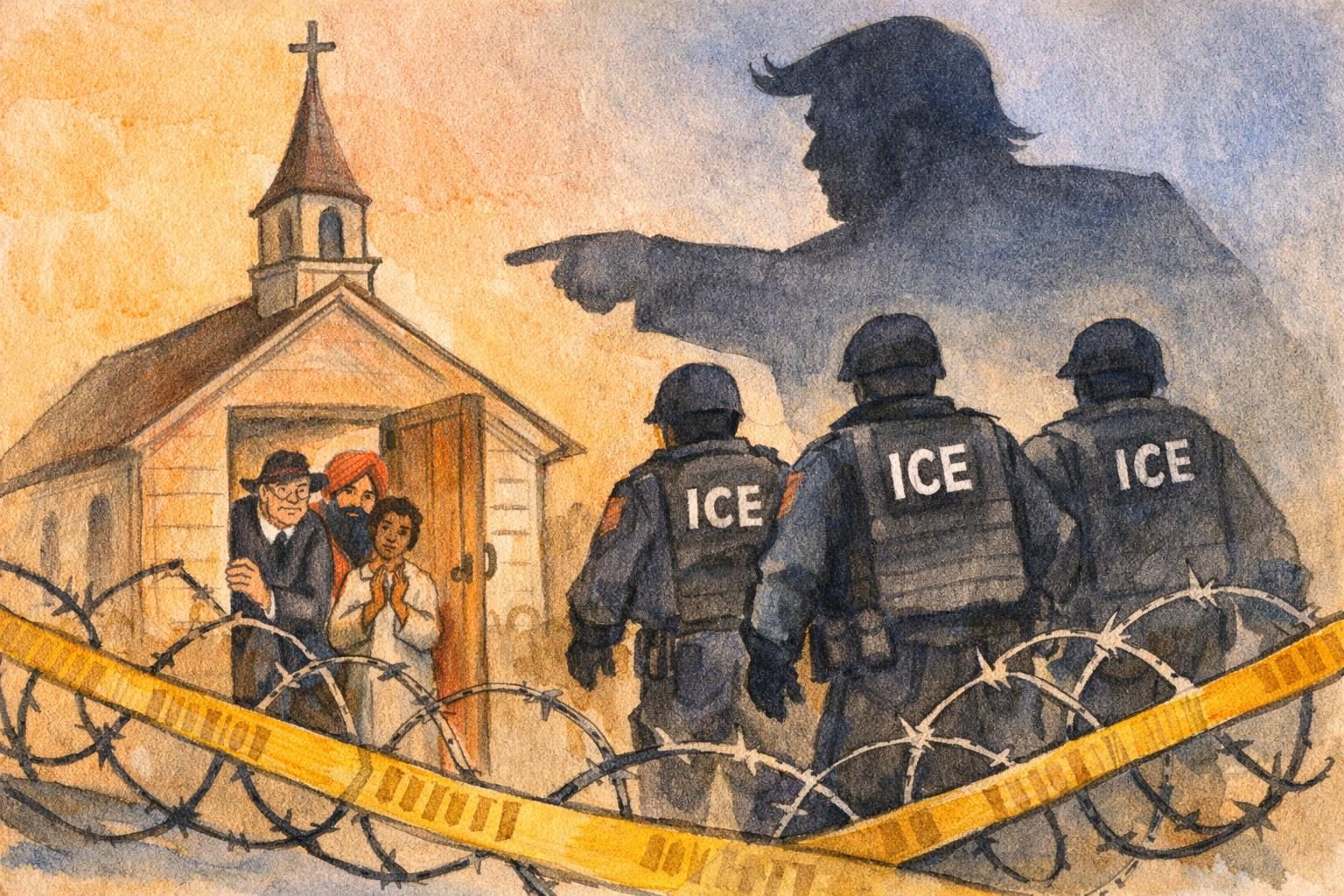
A federal appeals court has upheld a preliminary injunction against the Trump administration’s 2025 policy that removed prior limits on immigration enforcement at or near houses of worship. In a published opinion issued August 18, 2026, the Fourth Circuit affirmed a district court order in a case brought by Quaker, Sikh and Cooperative Baptist Fellowship plaintiffs who argued that the policy chilled attendance and burdened religious exercise. The panel did not enter a final merits judgment, but it did keep in place the injunction that requires the Department of Homeland Security to follow earlier guidance limiting enforcement actions in sensitive locations.
The court described the dispute as one over the Trump administration’s January 2025 rescission of a longstanding DHS policy that had restricted arrests and other enforcement actions at or near places of worship. Under the new policy, DHS and ICE told officers to rely on discretion and “common sense” rather than the prior bright-line safeguards. The plaintiffs argued that the change made immigrants less likely to attend services and participate in church ministries, which in turn burdened the religious exercise of the faith communities that serve them. The Fourth Circuit agreed that the plaintiffs had standing and that the district court did not abuse its discretion in finding them likely to prevail on their Religious Freedom Restoration Act claim.
The ruling matters because it preserves judicial limits on a policy change that faith groups say turned churches into places of fear for immigrant congregants. The court’s opinion said the plaintiffs showed a credible risk that attendance would fall because of the policy and concluded that such a decline could be fairly traced to the government’s action. It also held that the government waived a strict-scrutiny argument by failing to present it adequately in the district court. For now, the practical effect is that the injunction remains in force while the broader litigation continues.
Comments
Read the discussion freely. Posting and voting require a verified member account. Every comment and reply is screened by AI before publication. Clear spam and abuse are blocked; only strongly cleared comments publish automatically, while uncertain drafts wait for moderator review. Civil factual disagreement alone is not grounds for rejection.
Log in to comment or join free to take part.
No comments yet. Be the first reasonably on-topic person here.