
Visa pause ended on August 21, but applicants still faced delays
Permanent article number: 102626006 Find another article by number
Original article being examined
Published by: NPR
Original reporting and source documents
Open the reporting and original documents used for this article. These include evidence sources; not every link is necessarily the original claim being examined.
Evidence and accountability
Accountable person, organization or policy: Trump administration
Documented issue under review: slow-walking the processing of visas
This report has an independent editorial fact-audit recorded in the archive. Check the linked source documents below for the underlying evidence; where a case remains pending, allegations are not findings.
Corrections and clarifications
October 26, 2026: Restored the direct October 26 NPR report that was omitted during the audited rewrite. The underlying court ruling was August 21, 2026; NPR's new report documents applicants still awaiting visas. No factual claims or underlying event date were changed.
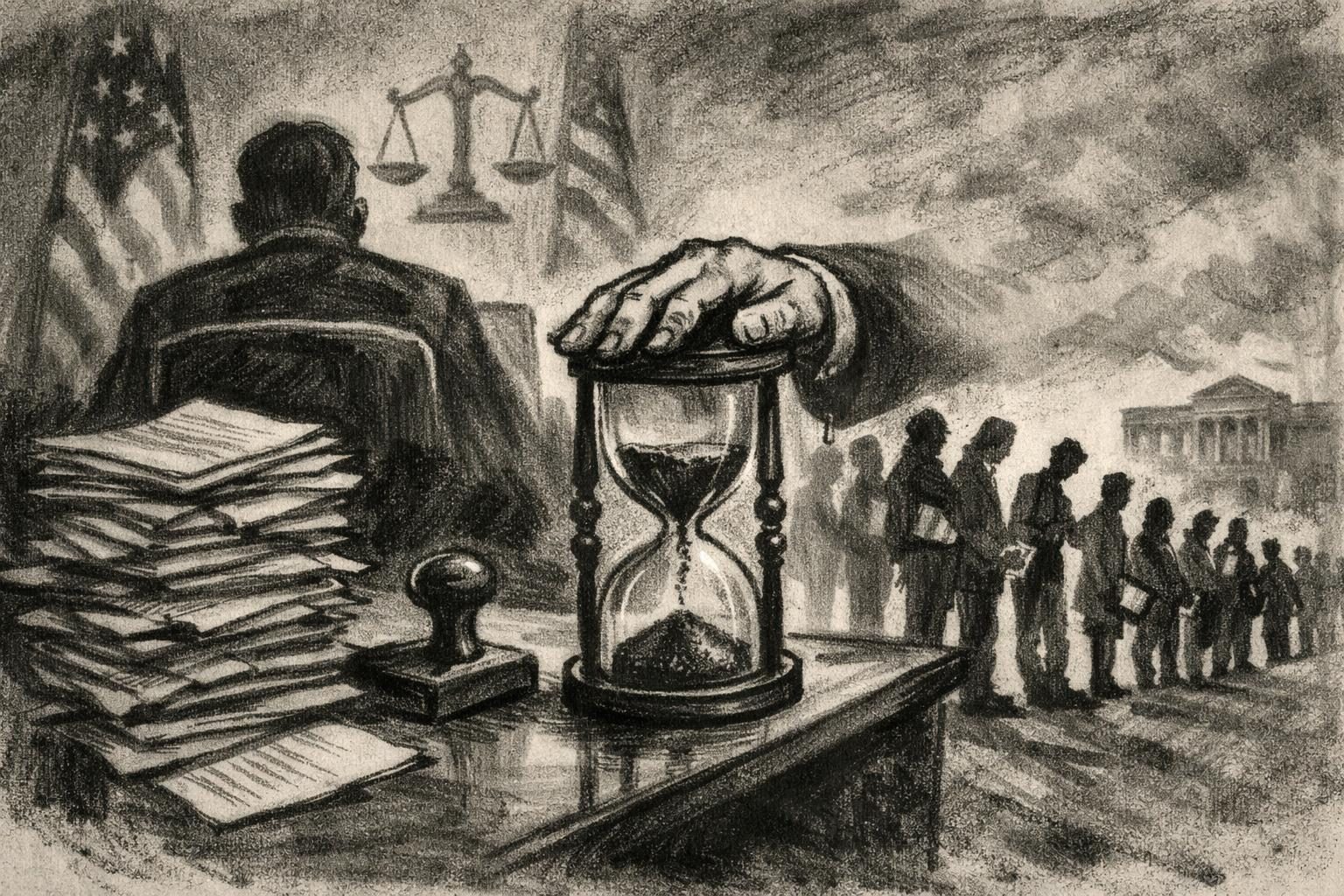
The State Department says the Trump administration’s pause on immigrant visa issuance for nationals of 75 countries ended on August 21, 2026, after a federal court order in CLINIC et al. v. Rubio. The department later published a notice on August 28 saying the pause was no longer in effect as of August 21 and that applicants from the affected countries could again submit applications, attend interviews and move through consular processing. ([travel.state.gov](https://travel.state.gov/en/newsroom/visas/2026/immigrant-visa-processing-updates-for-nationalities-at-high-risk-of-public-benefits-usage.html?utm_source=openai))
That chronology matters because it separates the date the policy actually ended from the date the department explained the change publicly. The court’s order came first; the State Department’s notice followed a week later. In the legal record available through the court docket, Judge Jeannette Vargas granted summary judgment in part and vacated the policy. AP reported that the ruling found the pause contrary to law and beyond statutory authority. ([law.justia.com](https://law.justia.com/cases/federal/district-courts/new-york/nysdce/1%3A2026cv00858/657161/83/?utm_source=openai))
The policy itself had been framed by the State Department as a measure tied to public-charge concerns. Its own February 2026 guidance says consular officers may consider an applicant’s circumstances, including past or present use of public benefits, when making visa decisions. The August notice said the department was conducting a full review of its screening and vetting policies after the pause ended. ([travel.state.gov](https://travel.state.gov/en/newsroom/visas/2026/preventing-public-benefits-reliance.html?utm_source=openai))
What the public record does not show is a judicial finding that the administration deliberately slow-walked visa processing after the pause was vacated. The evidence supports a narrower conclusion: the suspension ended, but applicants who had already been delayed still had to reenter a consular system that processes cases individually. That lingering delay is a practical consequence of the policy history, not a proven finding of misconduct on the existing record. ([travel.state.gov](https://travel.state.gov/en/newsroom/visas/2026/immigrant-visa-processing-updates-for-nationalities-at-high-risk-of-public-benefits-usage.html?utm_source=openai))
CLINIC, which helped bring the lawsuit, welcomed the decision and said the court had rejected the government’s authority to maintain the ban. But the case outcome did not itself guarantee immediate issuance for every affected applicant, and the State Department notice does not say that all pending cases were resolved at once. On the current record, the strongest provable takeaway is that the pause ended on August 21, 2026, while the administrative effects of the policy took longer to unwind. ([law.justia.com](https://law.justia.com/cases/federal/district-courts/new-york/nysdce/1%3A2026cv00858/657161/83/?utm_source=openai))
Comments
Read the discussion freely. Posting and voting require a verified member account. Every comment and reply is screened by AI before publication. Clear spam and abuse are blocked; only strongly cleared comments publish automatically, while uncertain drafts wait for moderator review. Civil factual disagreement alone is not grounds for rejection.
Log in to comment or join free to take part.
No comments yet. Be the first reasonably on-topic person here.