
Federal judge knocks out New York’s climate Superfund law, handing the state a legal gut-punch
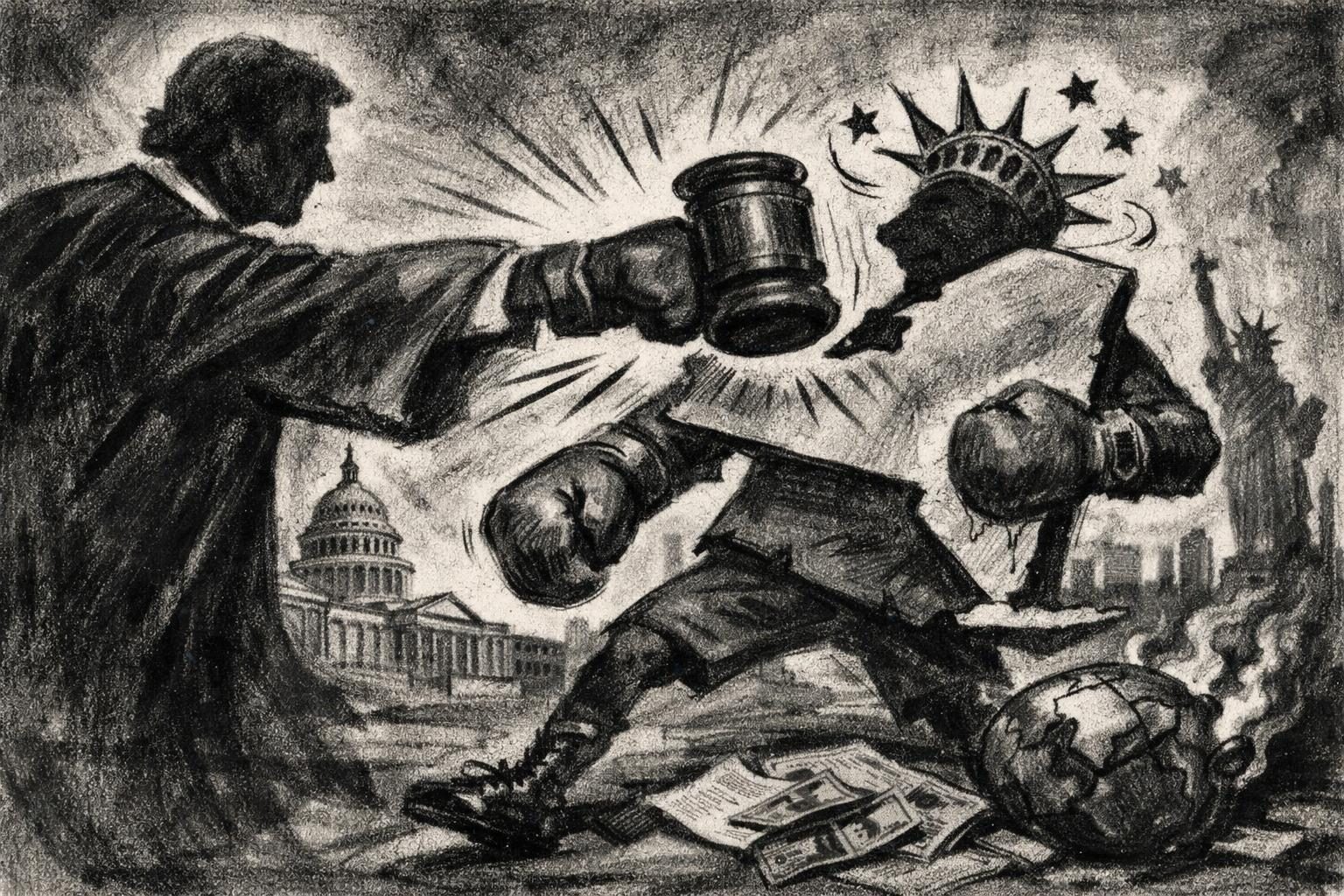
A second federal judge has now knocked down New York’s Climate Change Superfund law, deepening the legal trouble for one of the country’s most aggressive attempts to make fossil-fuel companies pay for climate-related damage. The Justice Department said the latest ruling found the statute unconstitutional, following an earlier federal decision that had already gone against the state. The law was built to collect $75 billion from fossil-fuel producers in an effort to shift some of the financial burden of climate harms onto the companies accused of helping cause them. With two federal courts now rejecting the approach, New York’s signature climate-accountability strategy is suddenly in far shakier territory than state officials had hoped. For supporters, it is a reminder that even the most ambitious climate laws can run hard into the limits of state power once they are challenged in federal court.
The core problem, at least as the government described it, is that New York tried to use state law to impose a massive financial penalty scheme on an industry that is regulated far beyond the borders of any single state. The court’s conclusion that the law was unconstitutional signals that judges saw the measure as crossing into territory reserved for federal authority or otherwise violating constitutional limits on what one state can do on its own. That matters because the law was not designed as a modest regulatory tweak or a symbolic gesture; it was meant to create a large-scale liability framework aimed directly at energy companies. By trying to make selected fossil-fuel producers pay billions for climate damages, New York took a path that almost guarantees aggressive legal challenge from industry and from the federal government. The ruling effectively says that a state cannot unilaterally rewrite the national energy debate by attaching financial punishment to climate harms through its own courts or statutes.
That is why this case has attracted attention well beyond Albany. Climate advocates have spent years looking for ways to force polluters to internalize the costs of rising seas, stronger storms, hotter summers, and other climate impacts that governments and taxpayers increasingly must manage. In the absence of broad congressional action, some state lawmakers have tried to build their own accountability mechanisms, arguing that fossil-fuel companies should help cover the damage tied to the products they sold. New York’s Superfund law was one of the most ambitious versions of that theory, and its collapse in federal court is a major setback for the idea that states can fill the policy vacuum through litigation-driven financial penalties. The ruling does not settle every possible climate liability theory, but it does deliver a serious warning that sweeping state-created payment schemes may face immediate preemption and constitutional barriers. For climate hawks, that is an ugly signal: even the most creative state-level workaround can still be shut down before it ever produces real money or leverage.
The politics around the case are just as sharp as the legal stakes. The Justice Department’s announcement fits neatly into a larger federal posture that has often been skeptical of expansive state climate regulation and receptive to arguments about overreach. That framing is likely to resonate with energy producers and allies who say states should not be allowed to impose their own de facto national climate tax through the courts. It will also infuriate clean-energy and environmental groups that see New York’s law as a necessary attempt to force accountability where Congress has stalled. The deeper fight here is not just about one statute in one state; it is about who gets to decide how climate costs are assigned in a country where the politics of energy remain deeply polarized. For now, the answer from the federal bench is that New York went too far, and that judgment may chill similar efforts elsewhere unless lawmakers can find a legal structure less vulnerable to claims that it intrudes on federal power. New York still has options, including appeals, but it now has to overcome two separate federal losses, which is a steep climb even for a state determined to keep pressing the issue.
Comments
Threaded replies, voting, and reports are live. New users still go through screening on their first approved comments.
Log in to comment
No comments yet. Be the first reasonably on-topic person here.