
Administration asks Supreme Court to bless prison trans-care cutoffs
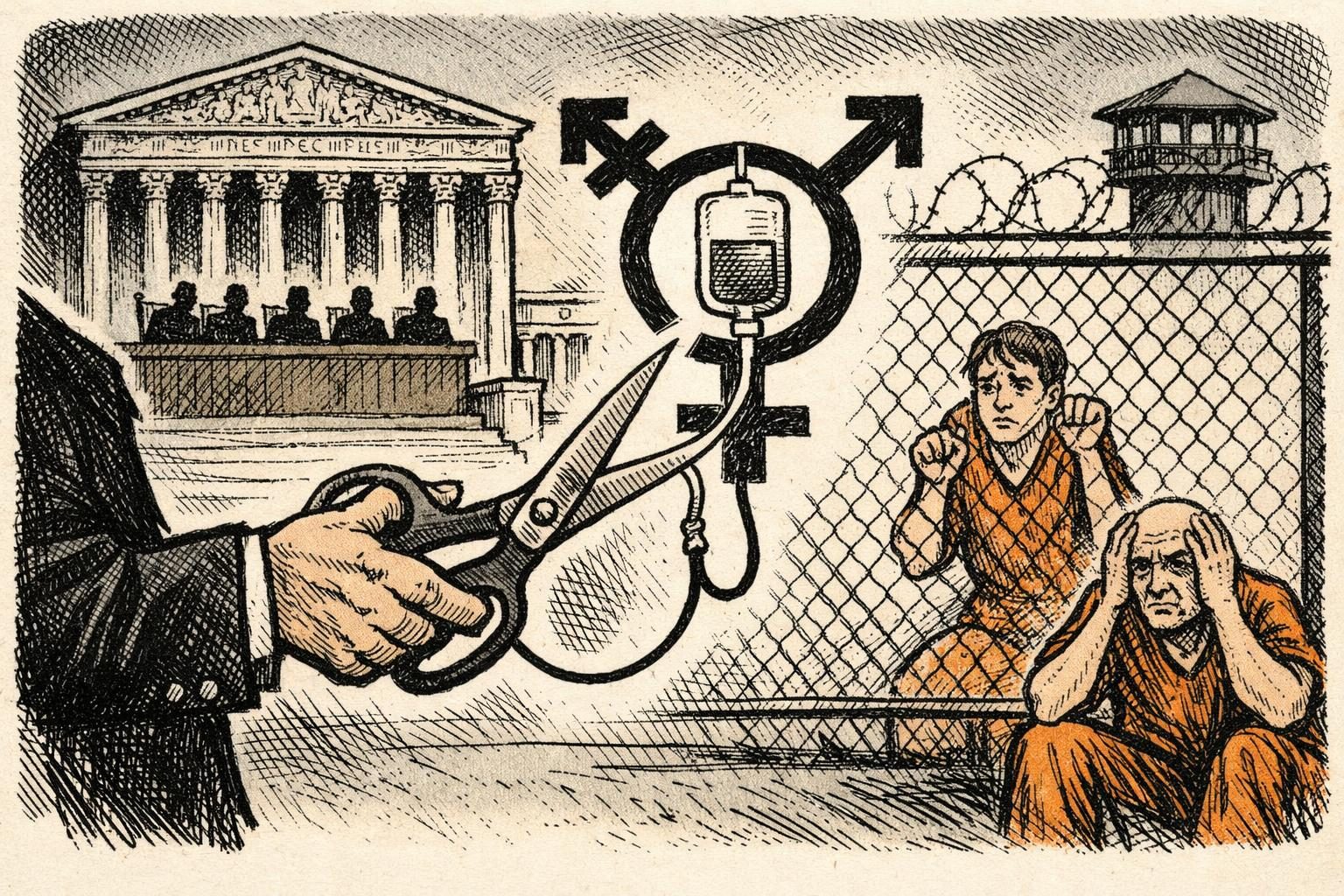
The Trump administration has asked the Supreme Court to step in and let it enforce restrictions on gender-affirming care for transgender people held in federal prison while the underlying legal fight plays out. The emergency appeal, filed Monday, seeks permission to put the policy into effect after lower courts blocked officials from carrying it out. At issue is a government effort to bar surgeries, hormone treatments, and some social accommodations for incarcerated transgender people, while still allowing mental health therapy. The administration is effectively asking the justices to freeze the lower courts’ intervention and give prison officials room to proceed now rather than wait for the case to wind its way through the normal appeals process. In plain terms, the question before the Court is whether federal prison authorities can impose a sweeping restriction on treatment that judges have already found serious enough to pause.
The case matters because it sits at the intersection of two politically charged areas: transgender rights and prison medicine. That combination gives it immediate consequences that are more concrete than the usual round of culture-war messaging. People in federal custody do not have the freedom to seek another provider, change health systems, or decide that a policy they dislike can simply be ignored. Their medical care is controlled by the state, which makes any decision about treatment especially consequential. Advocates for incarcerated people are likely to argue that the government is not merely changing a health policy but trying to strip away care in a setting where patients have no meaningful ability to resist. The administration, by contrast, is trying to frame the issue as a matter of prison administration and medical judgment, not discrimination. That framing will matter if the justices decide to weigh how much deference prison officials deserve when they change medical standards affecting a vulnerable population.
The filing also fits into a broader pattern of executive actions aimed at limiting federal support for gender-affirming care. The administration has been pressing an agenda that seeks to cut off funding or approval for treatment it opposes, even in settings where prison practice had previously included such care. That larger campaign gives the prison case a significance beyond the individual inmates involved. It suggests the government is testing how far it can push a policy shift through the courts while a larger ideological project remains in motion. Civil-rights lawyers and prisoners’ advocates are likely to say the administration is turning a political preference into an emergency, then asking the judiciary to ratify it before the evidence has been fully tested. If that is the theory behind the filing, it is a risky one, because emergency appeals tend to work best when the moving party can show clear, immediate harm from being blocked. Here, the administration must persuade the Court not only that its position is legally sound, but that lower courts were wrong to stop the policy before the case is resolved.
The lower-court rulings already signal that judges were not convinced the government had done enough to justify the change, at least not at this stage. That does not mean the administration will ultimately lose, but it does mean its position has not yet carried the day in the venues where the factual record is being developed. Seeking Supreme Court intervention now is often a sign that the government wants to avoid waiting for a more complete merits decision, especially when the policy at stake can be implemented or blocked on a nationwide basis. The justices could respond in several ways, from granting the request and allowing the restrictions to take effect during litigation, to leaving the lower-court orders in place for now. Even a temporary decision would matter a great deal, because prison medical care is not something that can be turned on and off without consequences. For the people affected, delay can mean missed treatment, worsening symptoms, and a legal fight over care that may never be fully recovered. The administration’s move therefore puts the Court in the middle of a dispute that is at once doctrinal and deeply physical, with real people waiting behind bars while lawyers argue over what the Constitution requires.
Comments
Threaded replies, voting, and reports are live. New users still go through screening on their first approved comments.
Log in to comment
No comments yet. Be the first reasonably on-topic person here.