
Justice Department keeps pressing the war on state climate superfund laws
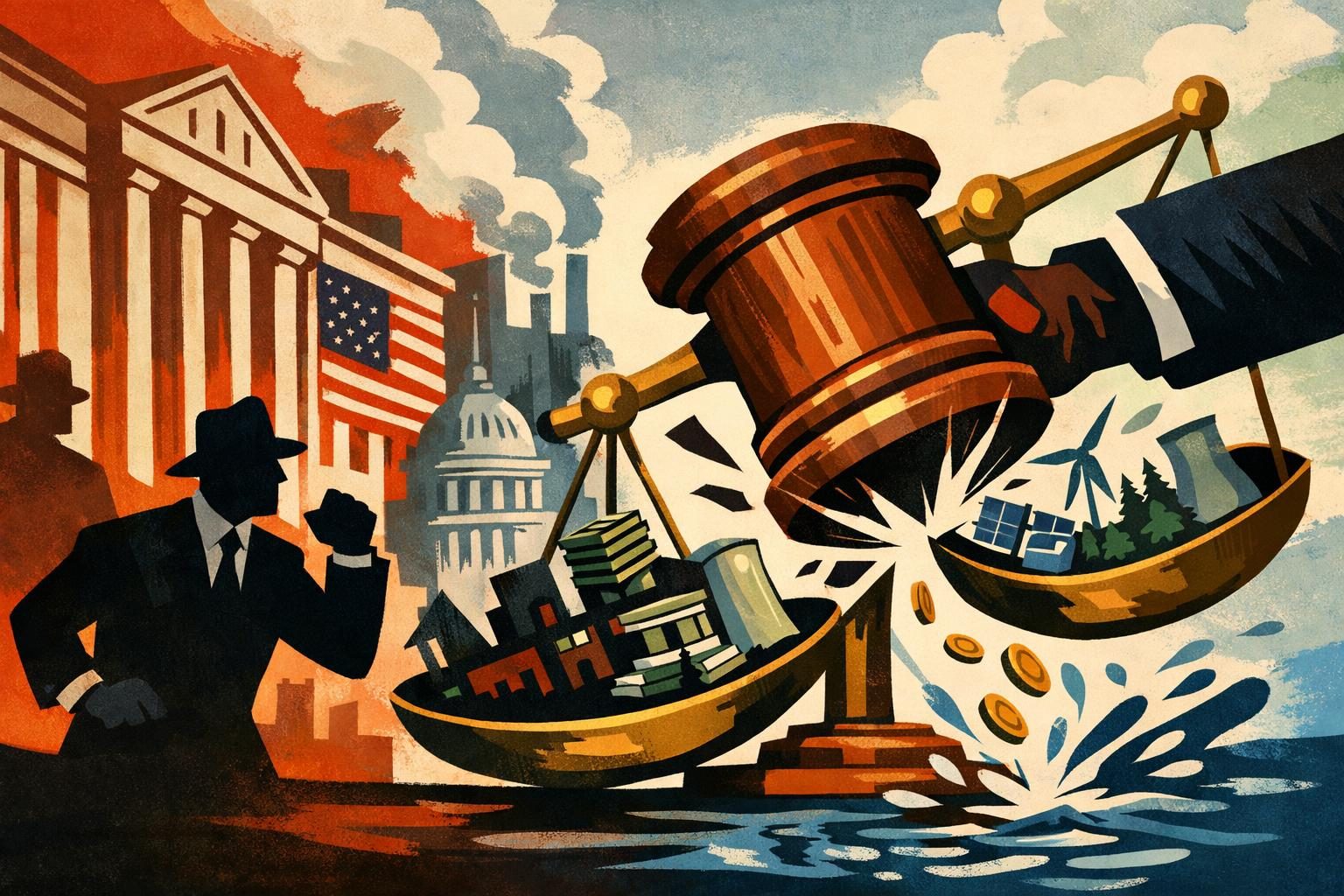
The Justice Department is once again making clear where it stands in the escalating fight over state climate superfund laws: firmly on the side of the companies being asked to pay. On October 15, the department highlighted a federal court decision striking down New York’s climate superfund statute as unconstitutional, underscoring a ruling that delivered another serious setback to one of the most ambitious efforts yet to make major fossil-fuel producers shoulder some of the costs tied to climate damage. At the center of the case is a law that sought to impose roughly $75 billion in penalties on global energy companies, based on the alleged local effects of climate change. The court’s decision does not end the larger political battle over climate accountability, but it does reinforce how difficult it has become for states to use their own legal machinery to extract money from the industries most associated with greenhouse gas emissions. For now, the practical message is blunt: one of the boldest blue-state climate finance experiments has been knocked down again, and the federal government is signaling that it sees no reason to soften the blow.
What makes this ruling especially consequential is that it lands in a broader struggle over who gets to decide how climate harms are paid for. Supporters of climate superfund laws argue that states should not be left holding the bag for flooding, heat, infrastructure damage, and other costly consequences of pollution that was profitable when it was being emitted and painful only later. Their logic is straightforward: if companies contributed substantially to the problem, they should contribute substantially to the cleanup, adaptation, and recovery. Opponents see something very different, describing these measures as an attempt to create a backdoor tax on energy producers for a global phenomenon that cannot be assigned neatly to one state, one company, or one courtroom. The recent decision gives those critics fresh ammunition and narrows the path for states that want to build large-scale compensation schemes around climate harms. It also leaves governors, lawmakers, and attorneys general in the awkward position of having to decide whether to keep pushing ahead with aggressive legal theories, or scale back ambitions to avoid another constitutional collision. In that sense, the ruling is not just a legal setback, but a warning shot to any state thinking about following New York’s lead.
The Justice Department’s posture fits a pattern that has become increasingly familiar in climate fights: lean on federal authority, challenge state-level experimentation, and argue that national problems require national rules rather than improvised state enforcement. That approach can be presented as a defense of constitutional order and economic consistency, especially by those who believe environmental policy should not resemble a patchwork of different state-imposed financial penalties. Yet it also has a clear practical effect. By helping limit state attempts to recover climate-related costs from polluters, the federal government is helping keep the financial burden distributed more broadly across taxpayers, utility customers, and local governments, rather than concentrated on the companies that profited from decades of carbon-intensive business. Critics of the ruling are likely to frame it exactly that way, as an intervention that protects powerful industry players while leaving communities to absorb the damage and the bill. Supporters, meanwhile, will argue that if states want to reshape energy policy or impose climate-related liability at this scale, they need clearer authority from Congress rather than unilateral measures that can be challenged as unconstitutional. That divide is now central to the legal and political drama, because it frames climate accountability not as a policy disagreement alone, but as a contest over the boundaries of state power in a national crisis.
The bigger consequence may be the chilling effect this kind of ruling has on future state action. Climate advocates already know they are fighting not only the usual legislative resistance from industry and its allies, but also a legal environment in which ambitious state experiments can be dismantled before they get very far. That makes planning harder, enforcement slower, and coalition-building more complicated, because every proposal has to be written with an eye toward surviving immediate courtroom scrutiny. Even when state lawmakers believe they are responding to a real and measurable public cost, they now have to weigh whether the legal theory behind the policy will survive a constitutional challenge long enough to matter. The New York decision therefore sends a broader signal than the one case itself might suggest. It tells other blue states that there is likely to be a federal courtroom ambush waiting for any effort to make large emitters pay through state-created compensation funds or similar mechanisms. It also confirms that the fight over climate policy has moved well beyond emissions targets and permitting rules into the much messier terrain of financial liability, redistribution, and political power. For climate advocates, that is a frustrating reminder that progress can be undone not only by elections, but by judges.
None of this means the larger debate is settled, and it would be a mistake to read the ruling as the final word on state climate finance. Courts can differ, legal theories can evolve, and states searching for new ways to respond to climate damage may well keep testing the boundaries of what is permissible. But the immediate trend is hard to ignore. With every decision that knocks down a state superfund law, the legal box around state climate action gets tighter, and the odds increase that Congress remains the only institution capable of imposing a broad national framework. Until that happens, the conflict will keep playing out state by state, court by court, and motion by motion, with industry pushing for preemption and federal officials often backing the same line. That leaves climate politics in an especially grim position for progressive lawmakers, who are being told in effect that even the boldest state-level remedies may not survive long enough to function. And it leaves the fossil-fuel lobby with another reason to celebrate: the cost of climate damage is still being fought over in court, but for now, the companies at the center of the crisis continue to avoid the kind of direct financial reckoning that state superfund laws were designed to force."}]}
Comments
Threaded replies, voting, and reports are live. New users still go through screening on their first approved comments.
Log in to comment
No comments yet. Be the first reasonably on-topic person here.