
HHS tries to sell health policy with a celebrity-inflected lifestyle showcase
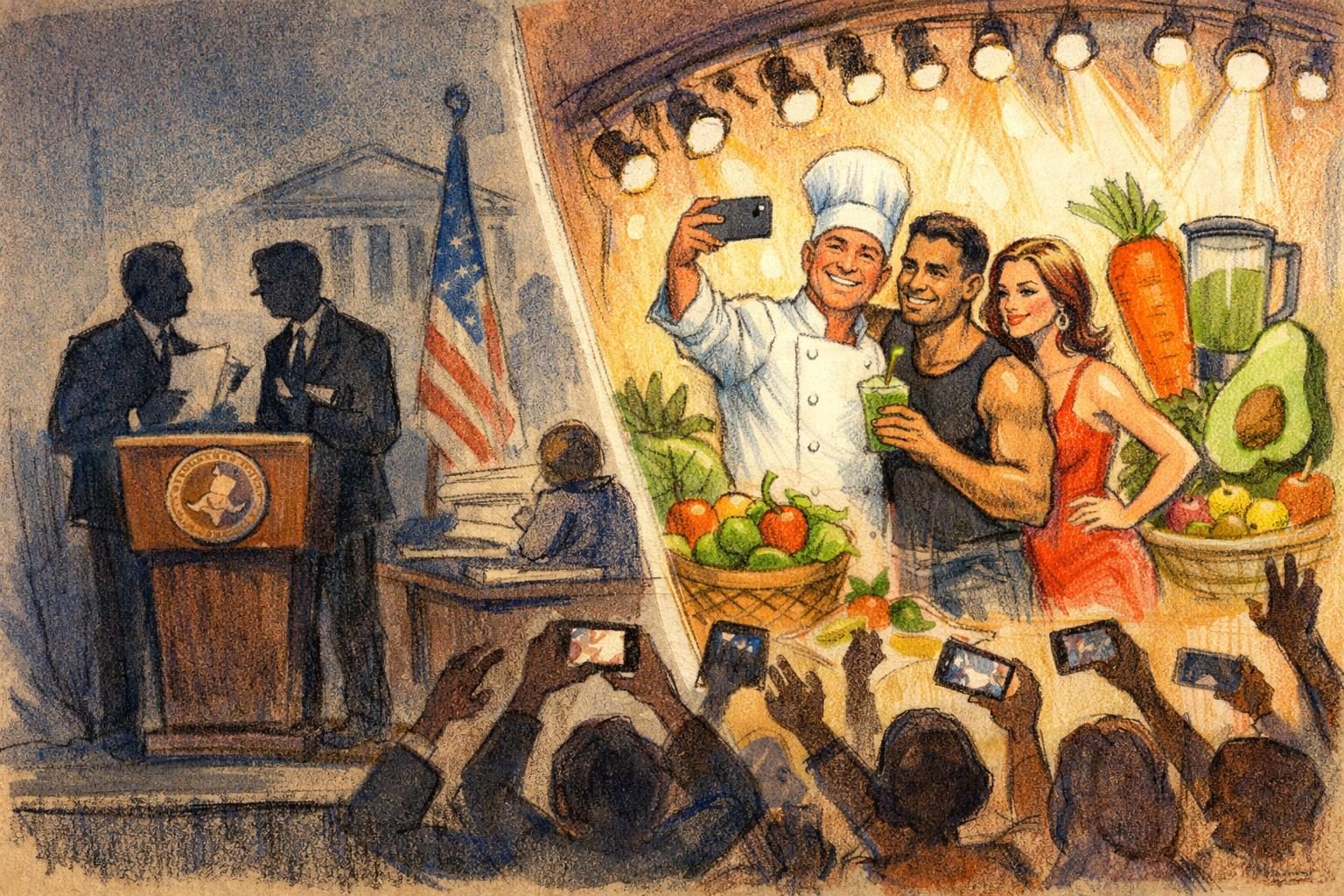
The Department of Health and Human Services spent October 16 promoting a new “Real Food for Real Heroes” event that leaned heavily into celebrity energy, lifestyle branding, and an upbeat, camera-ready presentation. On its face, that kind of public messaging is not unusual for a federal agency that wants people to pay attention. What makes this particular rollout worth notice is the way it turns health policy into a stage-managed spectacle, with the policy substance kept in the background while the visual and promotional elements do most of the work. The department is not announcing a rule change here, and it is not responding to a court order or a formal policy collapse. It is simply choosing to present itself through a glossy public-facing event, and that choice says something about how it wants to be seen. In a government setting, presentation is not nothing, because presentation often reveals what the institution thinks will persuade people. Here, the answer seems to be that a little celebrity and a lot of polish can stand in for a more straightforward explanation of public-health priorities. That is not automatically a problem, but it is a clue.
The deeper issue is not that public agencies should avoid creativity when they communicate. They should not. Agencies need plain language, accessible messaging, and the ability to meet audiences where they are instead of burying every public-health message in technical jargon. The concern is that HHS appears increasingly comfortable blending governance with branding, as if the department is trying to build a lifestyle identity around itself rather than simply explain what it is doing and why. That can be harmless when the topic is a public-awareness campaign, but it becomes more questionable when the underlying agency is responsible for some of the most consequential health and science decisions in the federal government. A promotional event about food, wellness, and hero imagery may attract attention, yet attention is not the same as trust. Trust comes from consistent, credible, and competent administration, especially when the government is speaking about nutrition, disease prevention, medical guidance, and public health. When the messaging starts to resemble a campaign segment, the line between useful outreach and image management gets harder to see. The more polished the show, the more people may wonder what is being left out of frame.
That skepticism is sharpened by the broader context in which HHS has been operating. The department has already been facing criticism over its general posture on health and science, and that criticism hangs over even the smaller, more harmless-looking communications choices. In that environment, a celebrity-friendly lifestyle event can look less like an earnest attempt to improve public understanding and more like an effort to redirect attention. That does not mean the event is sinister, and it does not mean the agency cannot talk about nutrition or healthy eating in public. It does mean that the messaging arrives with a built-in tension: the government says it is trying to educate, but the presentation suggests it is also trying to perform. Those are not the same function, and they do not always serve the same public interest. A department that wants to be taken seriously on health has to do more than stage a convincing visual. It has to show that its work is grounded in evidence, continuity, and administrative seriousness. Otherwise, the whole exercise risks feeling like content designed to travel well rather than policy designed to last. That matters because federal credibility is cumulative. Every press event either adds to it or chips away at it.
So this is not a major scandal, and it is not the kind of story that changes the governing landscape by itself. It is, however, a concrete example of how the administration is choosing to package itself in public, and those choices are worth tracking. The event took place on October 16, which makes it current and specific rather than speculative or hypothetical. It also fits a broader pattern in which the department’s public face often seems more interested in shaping mood than explaining machinery. Sometimes that may be an effective communications strategy. Sometimes it may even help an agency reach people who would ignore a drier announcement. But there is a cost when a health department starts acting like a lifestyle brand, especially if the policy substance is thin and the aesthetics are doing most of the persuading. The public is usually smart enough to notice when a cabinet department is selling an image rather than making a case. In this instance, the gap between the pose and the policy is the story. And if HHS wants to be judged on seriousness, it probably should not keep choosing a format that looks like it is auditioning for a promotional reel.
Comments
Threaded replies, voting, and reports are live. New users still go through screening on their first approved comments.
Log in to comment
No comments yet. Be the first reasonably on-topic person here.