
White House Moves to Ease Sanctions Pressure on Russian Oil
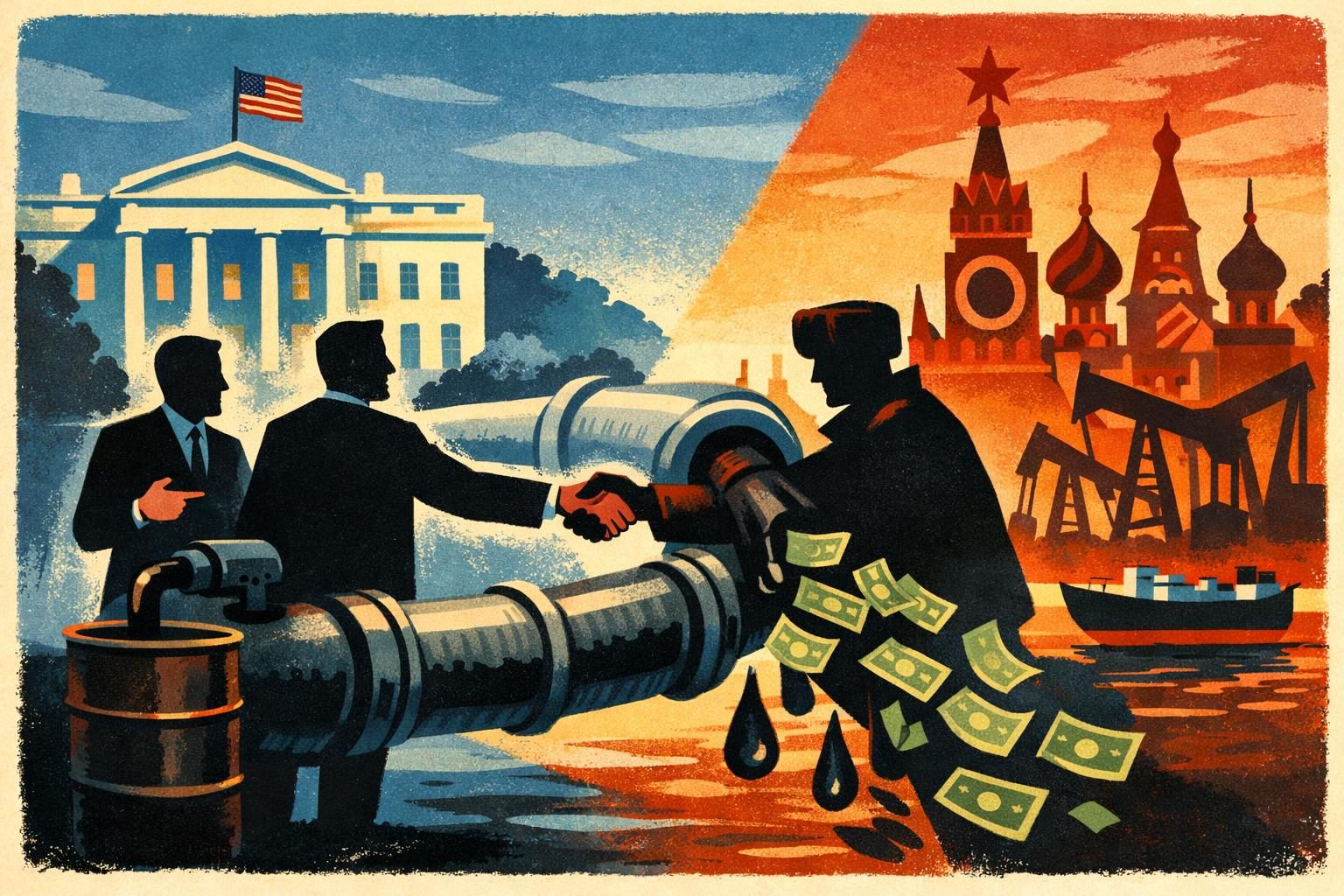
A Senate statement released on October 16 said the White House had reached an agreement to ease sanctions on Russian oil, a development that instantly sharpened the political and diplomatic stakes around a policy area already carrying enormous weight. Even before any full explanation from the administration, the news raised the obvious question of whether Washington is reducing pressure on Moscow at the very moment it should be keeping it high. Sanctions are not a symbolic gesture in this conflict; they are one of the few economic levers the United States has used to make Russia pay a price for its war in Ukraine. So when the White House signals that it may soften that pressure, the move is bound to be judged as more than a routine technical adjustment. It becomes a test of what the administration values most: short-term market stability, or sustained leverage over the Kremlin. That tension is already driving the criticism, because the policy can be presented as practical only if people are willing to ignore how quickly it can look like retreat.
The administration would almost certainly argue that any easing tied to Russian oil is meant to manage energy costs and avoid collateral damage to American consumers. That is a familiar justification, and it is not without political appeal in a country where gasoline prices and broader energy costs can shape public mood fast. But the problem is that sanctions policy has always been understood as part of a wider strategy, not just a domestic price-control tool with a foreign-policy label slapped on it. If the White House is relaxing restrictions in a way that helps stabilize fuel markets, it will say it is acting responsibly and protecting households from unnecessary pain. Critics, however, will see something much darker: a decision that gives the Kremlin breathing room while asking Americans to accept that the trade-off somehow serves the national interest. That is a difficult case to make in an election-era environment, especially when the beneficiary on the other side of the equation is an authoritarian government already under heavy scrutiny for its war economy.
The political danger is not just that opponents can accuse the White House of being soft on Russia. It is that the move invites a clean, emotionally charged narrative that the administration is putting convenience ahead of principle. The statement has already been framed in a way that suggests the policy could help Putin more than American households, and that line is likely to become the center of the fight. Once a sanctions shift is cast as a gift to Moscow, the White House has to do more than cite market logic. It has to explain why the timing is right, what conditions are attached, what safeguards remain in place, and how the change fits into a broader strategy rather than a one-off accommodation. Without that explanation, the criticism almost writes itself: Washington is easing pressure on an adversary while asking the public to trust that the long-term damage is worth the short-term comfort. That is a hard argument to sell when the stakes involve war financing and the appearance of favoring a foreign power over the declared aims of U.S. policy.
All of this lands in a week when the White House is already under pressure over other aggressive and legally fraught domestic actions, which makes the sanctions story harder to separate from a broader credibility problem. When an administration is trying to defend multiple controversial moves at once, every new dispute feeds the impression that it is improvising rather than governing with discipline. That matters because sanctions policy depends heavily on trust, both at home and abroad. Allies need to believe the United States is serious about enforcement. Markets need to understand what is changing and why. Adversaries need to see that relief, if offered, comes with limits and clear strategic terms. If those audiences conclude that the White House is drifting or making quiet concessions without a coherent explanation, then the issue becomes larger than Russian oil. It becomes a question of whether the administration can still set a consistent line on foreign policy at all. The next step will depend on whether the agreement is formalized, what the administration says publicly, and how much detail it is willing to provide about the scope of any sanctions relief. Until then, the move sits in an uncomfortable place: too significant to dismiss as routine, too sensitive to spin easily, and too politically charged to be sold without consequences.
Comments
Threaded replies, voting, and reports are live. New users still go through screening on their first approved comments.
Log in to comment
No comments yet. Be the first reasonably on-topic person here.