
Trump’s Russia sanctions waiver blows up in Congress before the ink is dry
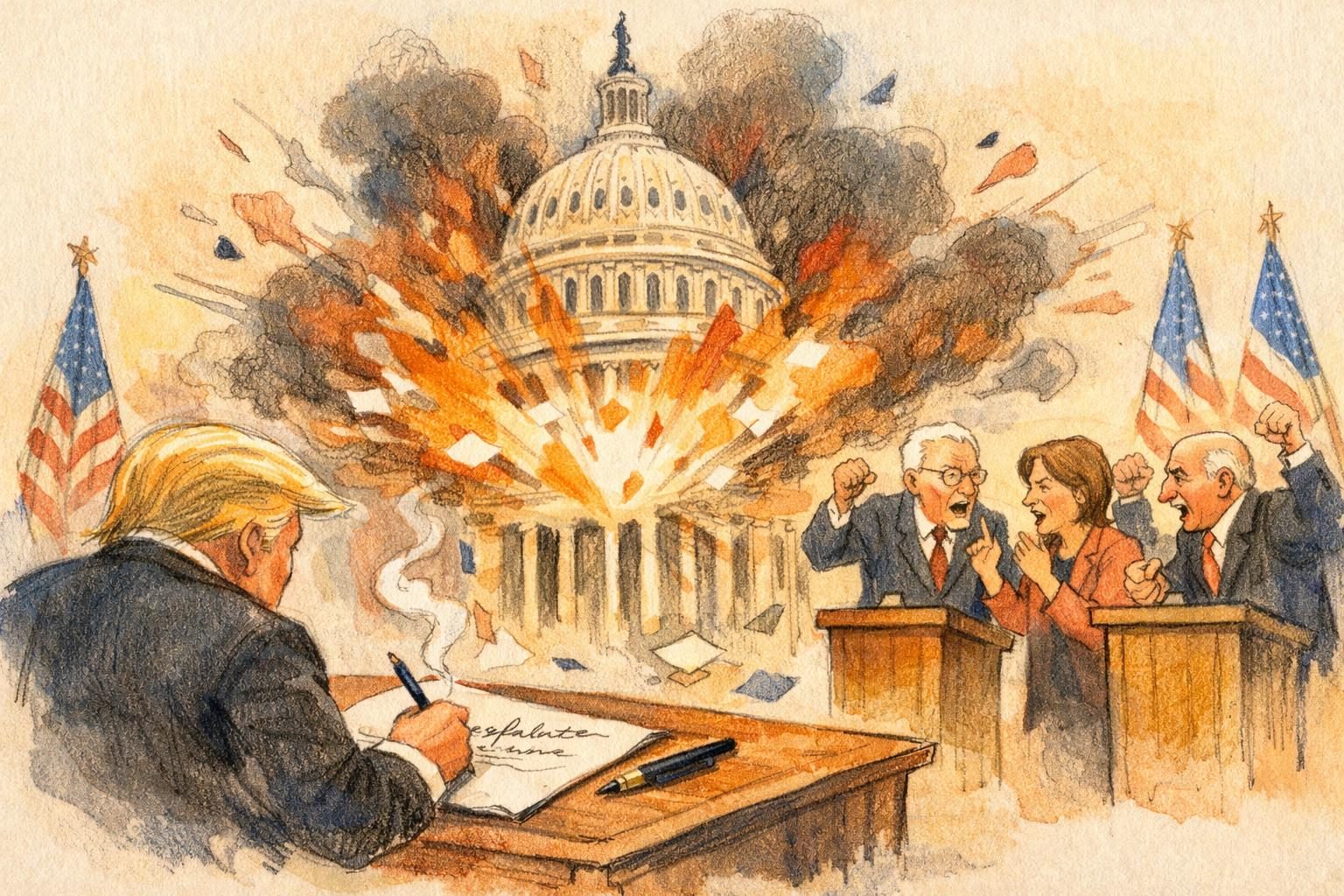
President Donald Trump’s decision to waive newly approved sanctions on Russia, just days before they were set to snap into force, detonated a fresh fight in Washington over who really controls U.S. foreign policy. The move immediately drew heat from lawmakers in both parties, many of whom had supported the sanctions package specifically to increase pressure on Moscow. Instead of allowing the legislation to work as written, the White House chose to pause it, turning what had been framed as a bipartisan show of resolve into a test of executive discretion. That shift is politically awkward on its own, but it also lands in territory Congress guards closely: sanctions, once enacted, are supposed to be one of the clearest ways lawmakers can shape national security policy. By stepping around the expected timeline, Trump created the kind of sharp institutional clash that rarely stays confined to one issue.
What makes the backlash especially potent is that it does not require much translation. Lawmakers voted for sanctions. The president delayed them. That simple sequence gives critics a ready-made argument that Trump is freelancing on matters that should involve Congress, not merely consulting it after the fact. The bipartisan frustration is also notable because it cuts across a foreign-policy fault line that usually makes consensus difficult. Republicans who support a hard line against Russia are now under pressure to explain why a waiver is acceptable when the stated aim was to impose costs on Moscow, not offer relief. Democrats, meanwhile, can point to the waiver as evidence that the White House is willing to undercut legislation even when it passes with broad support. The optics are even worse because the issue is not abstract. It is tied to real sanctions that were meant to signal American resolve at a moment when Ukraine and its backers continue trying to keep pressure on Russia.
The immediate question is whether Congress will do more than complain. Lawmakers have several tools available, including oversight hearings, new legislative language, or attempts to narrow the administration’s room to maneuver on sanctions enforcement. None of those options is simple, and none guarantees a clean outcome, especially if partisan loyalties start to soften the outrage once the news cycle moves on. Still, the fact that the reaction was so fast suggests the waiver touched a nerve beyond the usual Washington noise. Members of Congress are sensitive to any sign that an executive branch can simply delay or dilute a law after it has already won broad approval. If the White House can suspend the practical effect of sanctions through a waiver, critics will argue, then the statute begins to look less like a binding policy choice and more like a suggestion. That is the sort of precedent Congress tends to resent, even when it lacks the discipline to reverse it immediately.
The broader damage may be less visible but more enduring. Allies watching from abroad are left to wonder how stable U.S. commitments really are if Congress can approve a sanctions regime only to have it effectively put on ice by the president. Rivals, by contrast, may see a lesson in patience: if they can wait out the political process, or rely on the White House to seek flexibility later, the enforcement picture may become less threatening than advertised. That is why this episode matters beyond the immediate fight over Russia policy. It feeds an existing concern that Trump treats legal constraints as negotiable when they conflict with his preferred approach, and that Congress is often left to react after the fact. For now, the waiver has not changed the underlying reality that Washington still has sanctions tools on the table and still faces a volatile security environment. But it has changed the politics around them in a way that is likely to linger, because every side now has a clear story: one about executive overreach, one about necessary flexibility, and one about a Congress that passed a policy only to see the White House rewrite its effect before the ink was dry.
Comments
Threaded replies, voting, and reports are live. New users still go through screening on their first approved comments.
Log in to comment
No comments yet. Be the first reasonably on-topic person here.