
Trump’s Kentucky Rally Turned Into a Bragging Session About Power, Not Governance
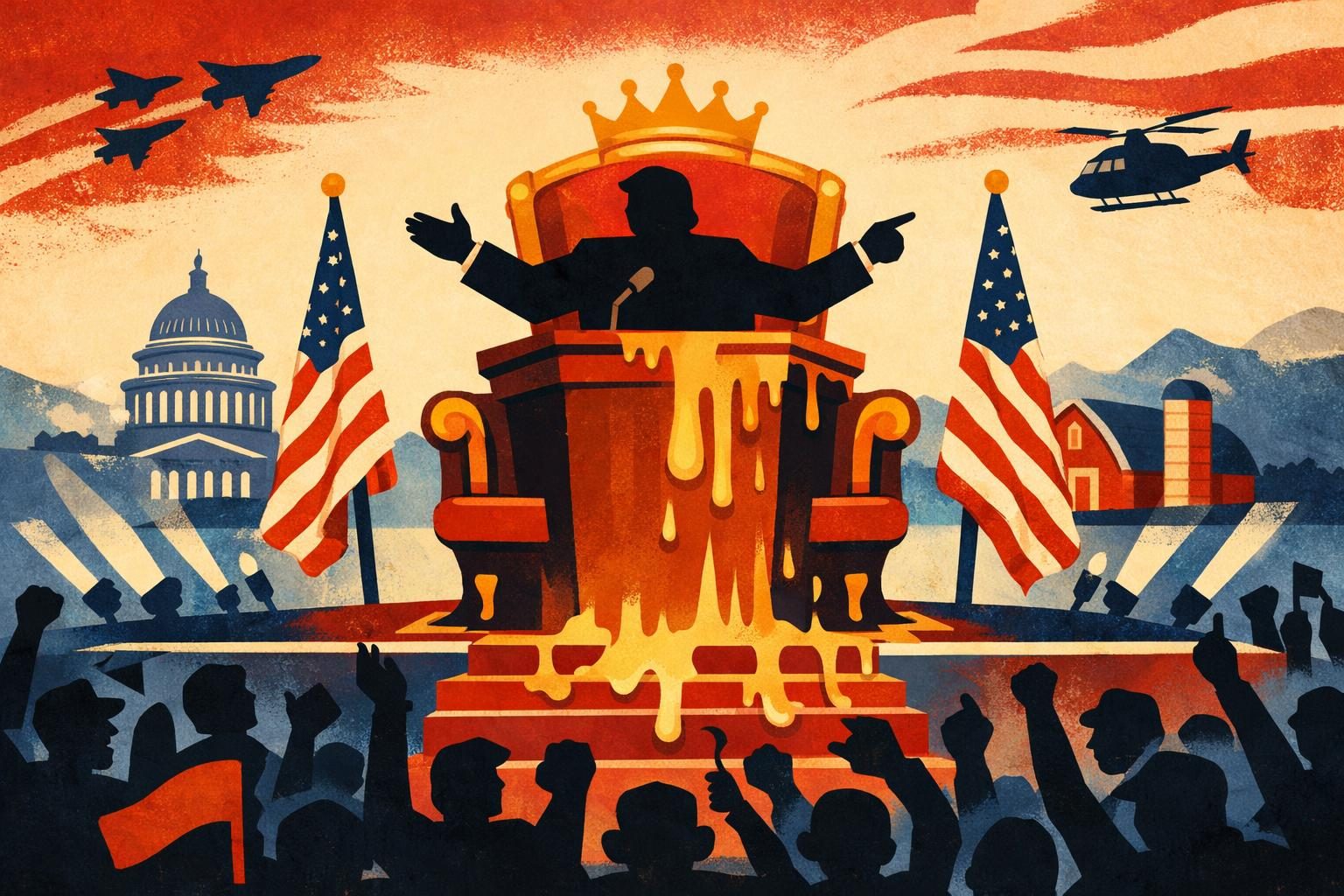
Donald Trump used a Saturday rally in Kentucky to turn a political appearance into something closer to a live tutorial on how he thinks about power. Instead of spending much of the event on policy specifics or a narrow appeal for Republican turnout, he leaned hard into the idea that he can do things others cannot, boasting in broad terms about the reach of his office and describing some of what he can do as, in his words, “unbelievable.” The effect was less a conventional stump speech than a performance of dominance, one that encouraged supporters to see the presidency not as a duty bounded by rules, but as a tool of personal will. That framing has become familiar enough that it may no longer shock regular observers, but it still matters because it reveals how thoroughly the campaign and the presidency continue to blend together. When a sitting president speaks as if the job exists to showcase his own force of personality, the line between governing and self-promotion starts to disappear.
The rally fit a broader pattern in which Trump treats raw power as both a political argument and a source of entertainment. He has long favored language that casts executive authority as something almost theatrical, a spectacle meant to impress allies and unsettle opponents at the same time. In that sense, the Kentucky event was not an outlier so much as a concentrated example of his style: boast first, explain later, and suggest that any objection is proof that critics simply do not understand strength. But even when that formula works politically, it carries risks that are easy to overlook in the moment. A president who talks casually about what he can do, and implies that constitutional limits are secondary to his own confidence, invites supporters to treat restraint as weakness rather than as a core democratic principle. That is not just rhetoric for its own sake. It teaches audiences how to interpret power, and it leaves little room for the idea that the office is supposed to be checked by law, institutions, and norms that predate whoever occupies it.
The timing also gives the speech added weight. The White House is currently juggling sanctions disputes, litigation, and a widening stack of policy decisions that suggest a government operating with a heavy emphasis on force rather than careful administration. In that setting, Trump’s rally remarks did not sound like a harmless aside. They sounded like confirmation that the administration prefers projection to discipline, and that it often treats executive power as something to be displayed rather than managed. That approach may resonate with a crowd that wants a leader who seems unafraid to push boundaries, but it does not necessarily translate into effective governance. A president can energize a political base by promising to act with unconstrained confidence, yet the real world usually demands more than swagger. Courts, agencies, allies, and adversaries all respond to consistency, procedure, and credibility. When those elements are replaced by improvisation and bravado, the costs can surface slowly at first and then all at once. The administration may continue to argue that strength itself is the point. Still, strength without structure tends to look less like control than like constant escalation.
The broader concern is not just that Trump sounded boastful in Kentucky, but that the performance normalizes a governing theory in which the president’s personal instincts stand above institutional restraint. That theory is seductive because it is simple: if something can be done, and the president wants it done, then the only relevant test is whether he has the will to do it. But democratic government depends on a more demanding standard. Power is supposed to be exercised on behalf of the public, within limits that keep it accountable and predictable, even when that slows things down or frustrates a political agenda. Each time Trump turns the authority of his office into part of the show, he pushes that standard further out of view. The immediate effect is mostly political, giving critics another example of what they see as strongman behavior wrapped in campaign theater. The longer-term effect is more corrosive. It wears down public expectations that the presidency should be governed by rules rather than impulses, and it pressures the rest of the system to absorb the strain of a leader who appears to view boundaries as optional. That kind of fatigue does not always announce itself in dramatic fashion, but it can leave institutions weaker, officials more cautious, and the public more resigned to a version of politics in which power is its own justification.
Comments
Threaded replies, voting, and reports are live. New users still go through screening on their first approved comments.
Log in to comment
No comments yet. Be the first reasonably on-topic person here.