
Justice Department Files Election Crime Charges Against 28 Foreign Nationals in California
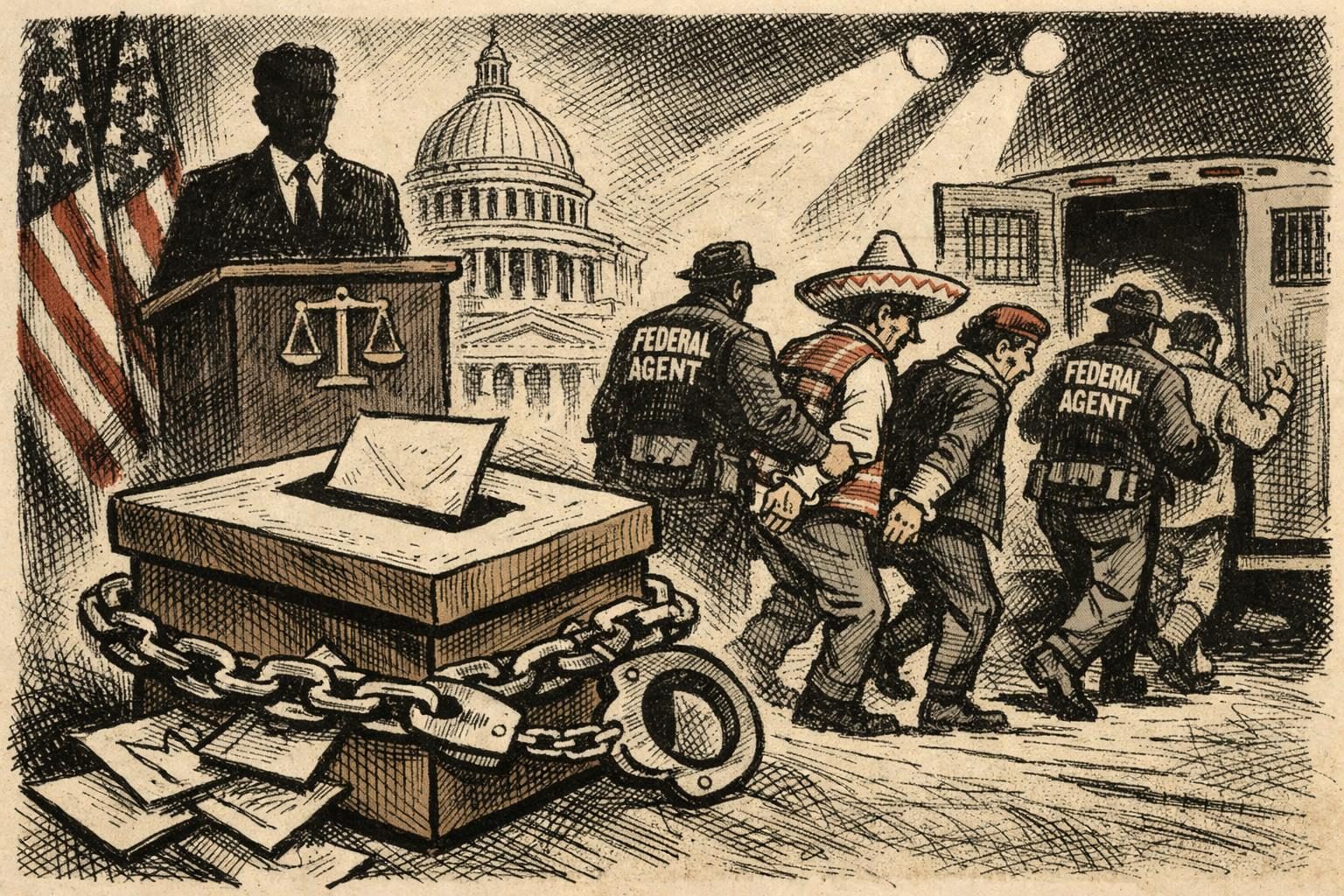
Federal prosecutors in California have filed criminal complaints against 28 foreign nationals in what they say is a coordinated election-security action aimed at voters, registration rolls, and ballot handling. According to the Justice Department, 11 of the defendants were arrested on Monday, while the remaining cases were announced as part of a broader sweep under “Operation Protect the Vote.” Officials said the defendants are lawful permanent residents rather than U.S. citizens, making them ineligible to vote in federal, state, and local elections. The complaints include allegations of false voter registration, and in some cases the casting of illegal ballots. In the government’s telling, the cases are not isolated mistakes but part of a larger effort to identify and stop election-related violations before they can affect results.
The announcement came from all four California-based U.S. attorney’s offices, which the department said were working together on the operation. That detail is important because it shows the case was presented not merely as a routine prosecution, but as a coordinated institutional push with symbolic weight. The government also said California officials had been notified earlier so that ballots could be set aside while citizenship status was verified. That suggests the matter involved administrative checks as well as criminal allegations, and it leaves open the possibility that some ballots were intercepted before any vote could be counted. Still, the public framing of the case was unmistakable: the Justice Department wanted the arrests seen as an active, visible enforcement response rather than a quiet paperwork dispute.
The political stakes are high precisely because election fraud claims have long been used as a weapon in broader fights over voting access, immigration, and election administration. Supporters of stricter enforcement are likely to point to the California cases as evidence that noncitizen voting is not just theoretical and that election systems need stronger safeguards. They will also likely argue that a federal prosecution with 28 defendants underscores the seriousness of violations involving registration and ballot casting. On the other side, voting-rights advocates are likely to warn that highly publicized cases like this can feed a climate of suspicion around immigrant communities and the ballot box, even when the number of defendants is small relative to the overall electorate. The government’s announcement may therefore do more than describe alleged crimes; it may also influence the political argument about how common such conduct is and how much threat it poses.
There is also a broader messaging dimension that extends beyond the courtroom. The Justice Department’s timing, and the language surrounding “Operation Protect the Vote,” show an effort to project toughness at a moment when the campaign season is intensifying and election security is a live political issue. That kind of enforcement action can serve multiple purposes at once. It may deter future violations, reassure election officials, and build a public record of prosecution. But it can also become a talking point in a national narrative about fraud, borders, and trust in institutions. In that sense, the case is not only about the individuals accused of unlawful voting-related conduct. It is also about the government’s desire to shape the debate over election integrity through highly visible federal action.
The details released so far also point to a bureaucratic reality that is less dramatic than the headline numbers suggest. The Justice Department described a process in which registration and ballot concerns were tied to immigration status and then flagged through official channels. That means the case likely involved coordination among federal prosecutors, immigration-related records, and election administrators, rather than a single dramatic raid or discovery. Even so, the optics of 11 arrests in one day and 28 criminal complaints overall create a powerful impression, especially when paired with a national enforcement label. Whether the cases ultimately prove to be a significant example of illegal voting or a narrower set of isolated violations, they are already being positioned as evidence in a larger political fight. What happens next in court may determine the legal outcome, but the public meaning of the case has already been set: this is a crackdown designed to be seen, and it will almost certainly be used by both sides as proof of their broader claims about the integrity of American elections.
Comments
Threaded replies, voting, and reports are live. New users still go through screening on their first approved comments.
Log in to comment
No comments yet. Be the first reasonably on-topic person here.