
Homeland Security grants a temporary deportation reprieve to Ukrainians and Sudanese
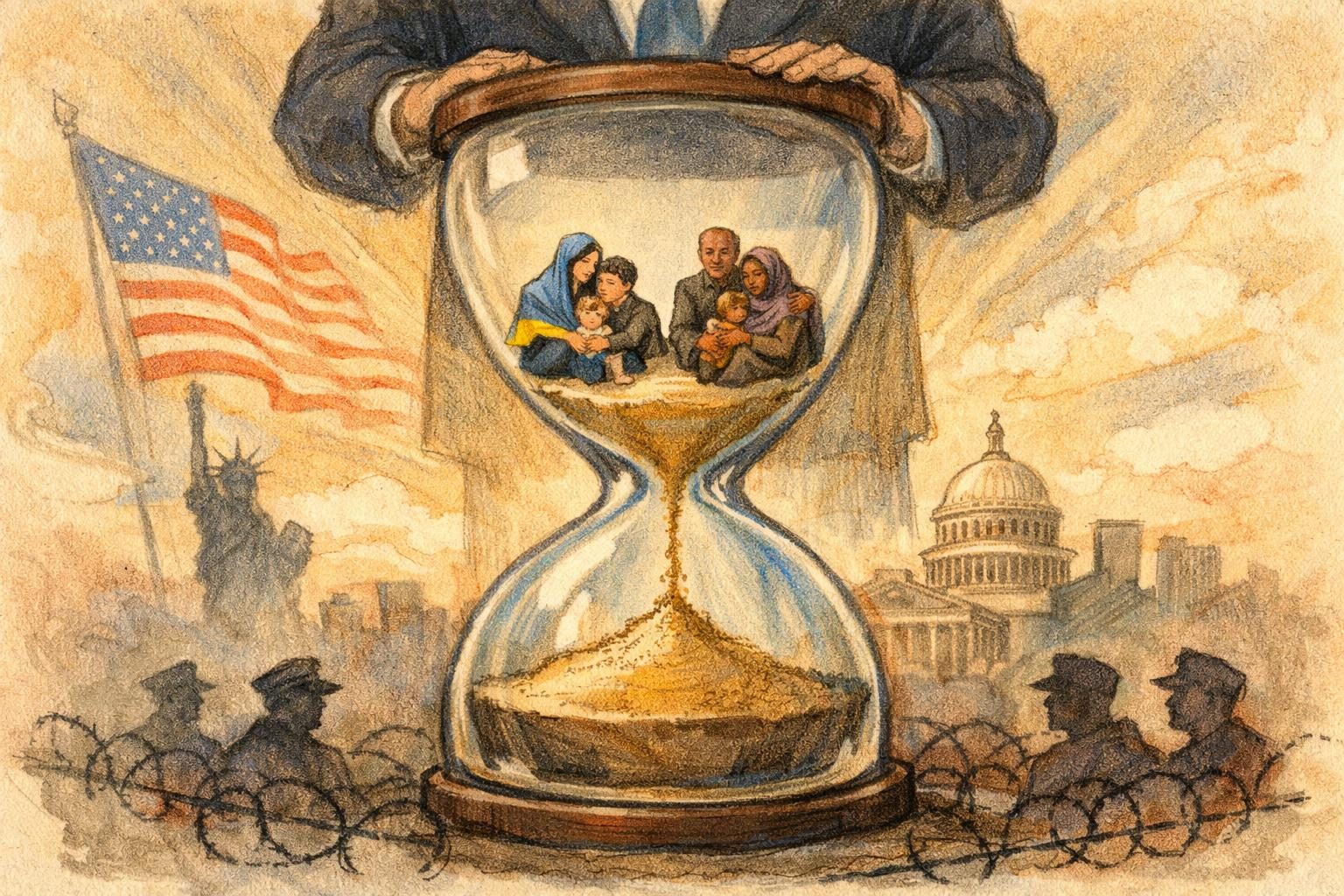
The Department of Homeland Security moved on October 19 to give more than 100,000 people from Ukraine and Sudan a temporary reprieve from deportation, stepping in just as protections that had allowed them to remain in the United States were set to expire. The action means that families who might otherwise have faced immediate enforcement risk are not suddenly pushed into that position overnight. It also delays a much harsher reckoning for people whose lives, work, and schooling have already been built around the assumption that they could stay. But the reprieve is narrow and temporary, not a permanent answer to the uncertainty they have been living with for months and, in some cases, years. For now, the administration has chosen to extend a buffer rather than resolve the deeper legal questions that remain.
The timing matters because these kinds of deadlines can have instant, destabilizing consequences. When protection lapses, even briefly, families can find themselves in a state of legal limbo that affects jobs, housing, education, and the most basic sense of security. A short administrative extension can prevent those immediate disruptions, but it does not create a stable path forward. It simply keeps the clock from striking at once. That distinction is at the center of the policy’s significance, because it is not a broad change in immigration law and it does not establish a durable status that people can rely on long term. Instead, it reflects the way current immigration policy often gets managed through short-term fixes, stopgaps, and deadline-driven discretion. For the people affected, that can mean relief today and anxiety all over again when the next expiration date approaches.
The decision also carries a clear political dimension. It shows that the administration retains the ability to soften the edge of its immigration posture when the human cost of doing nothing would be impossible to ignore. In practical terms, that discretion can spare thousands of people from immediate upheaval and spare the government from a chaotic enforcement surge. But it also highlights how fragile the current arrangement is, since a reprieve depends on executive action rather than a settled legal framework. That leaves the same population vulnerable to future changes in policy, future deadlines, and future shifts in enforcement priorities. Supporters of the move are likely to frame it as a humane and necessary step, especially for people displaced by war and instability. Critics, meanwhile, are likely to argue that temporary protection is not a substitute for permanent status or a legislative solution that would remove this uncertainty altogether.
What makes the announcement especially consequential is that it does not solve the underlying problem it addresses. Ukraine and Sudan remain places where conflict and instability have driven displacement, and the people who came to the United States under protection are now caught between humanitarian need and a legal system that often moves in fragments. The reprieve buys time, but time alone does not answer what happens next. Families still have to plan for a future that could change with another administrative decision or another missed deadline. The government has chosen to postpone immediate deportation risk, but it has not removed the possibility that that risk could return later. That is why the move is best understood as a temporary pause rather than a resolution. It reduces pressure in the moment, while leaving the broader policy question intact.
The most immediate effect is straightforward: more than 100,000 people are not being forced into immediate deportation status because their protections were about to expire. That matters on the ground, where ordinary life depends on the ability to work, keep children in school, and avoid sudden disruption from immigration enforcement. Yet the larger story is about the limits of temporary governance in immigration policy. Reprieves can prevent the worst outcomes in the short term, but they can also keep people trapped in a recurring cycle of uncertainty. The administration’s move is therefore both a humanitarian gesture and a reminder of how unstable the system remains for those who depend on it. For the moment, these families have gained time. What they have not gained is certainty, and in immigration matters, that difference can shape every part of daily life.
Comments
Threaded replies, voting, and reports are live. New users still go through screening on their first approved comments.
Log in to comment
No comments yet. Be the first reasonably on-topic person here.