
Justice Department says UNC will settle antisemitism and race-discrimination claims
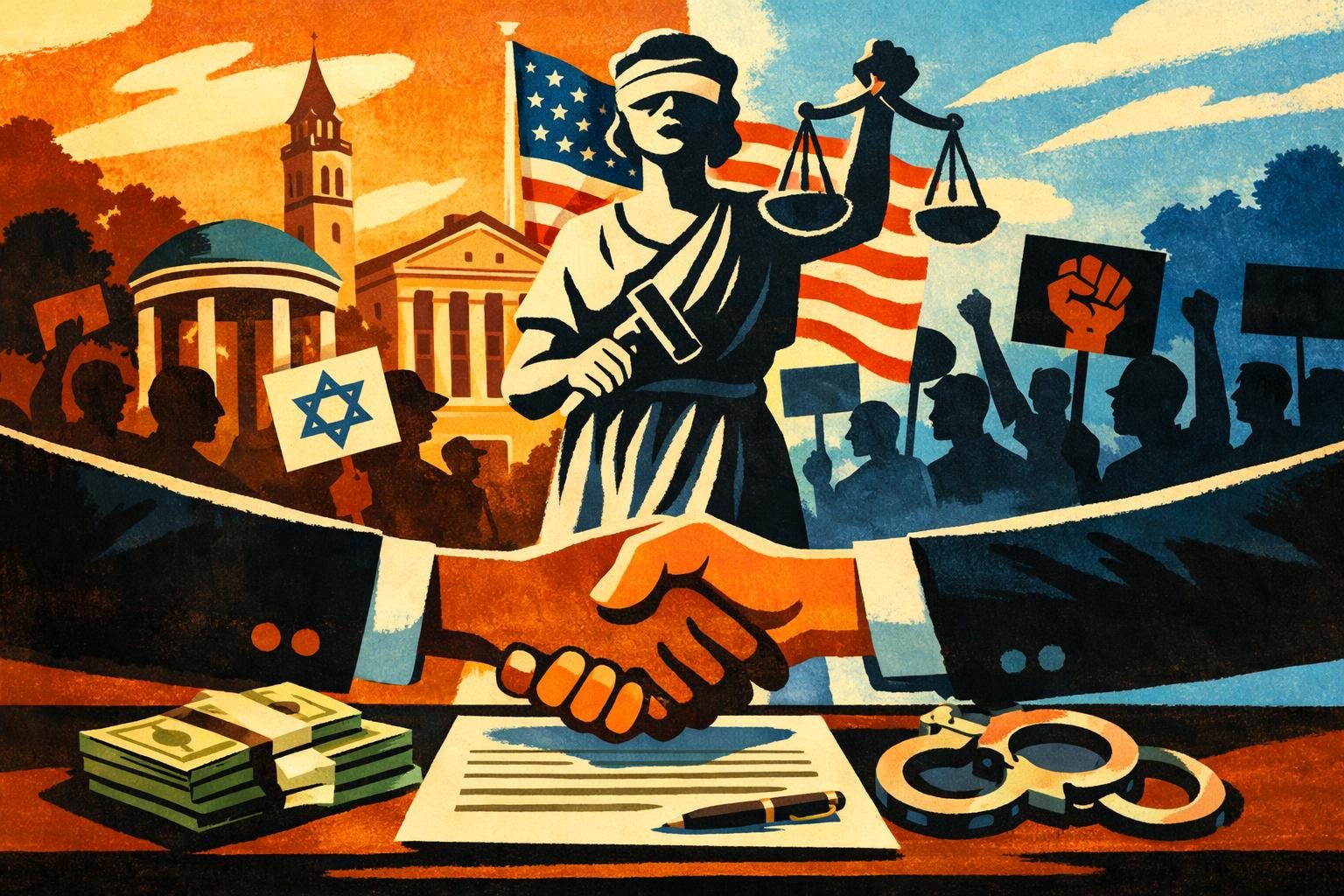
The Justice Department said Monday that it has reached a settlement with the University of North Carolina that closes out federal allegations tied to antisemitism and race discrimination, marking another turn in the growing fight over how campus-rights enforcement is being used. The announcement did not settle every larger argument surrounding the university, and it did not end the broader national dispute over campus climate, speech, or how schools should respond when students say they have been targeted. But it did draw a formal line under one federal track, which is often the point at which a legal matter becomes something larger: a political signal, a warning to other institutions, and a test of how far the government intends to push universities into compliance. At a moment when colleges are being pulled into highly charged debates from several directions at once, the UNC settlement is less a routine administrative action than a reminder that federal enforcement can still land with real force when agencies decide a case deserves that level of attention. It also shows that discrimination cases at major public universities are no longer being treated as narrow institutional disputes hidden inside campus bureaucracy. They are now being handled in full public view, with reputational consequences that can matter as much as the legal ones.
The significance of the settlement extends beyond UNC itself because it illustrates the way the federal government can reshape a campus controversy once it chooses to intervene. On one level, the administration can point to the agreement as evidence that it is taking antisemitism and race discrimination seriously without waiting for Congress to pass a new law or for a broader political consensus to emerge. That matters in a landscape where universities are under pressure to demonstrate that they are protecting students while also preserving speech and academic freedom. On another level, the case underscores how quickly a campus dispute can become a federal compliance matter, which changes both the stakes and the audience. Once an enforcement agency steps in, the university is no longer just answering to students, faculty, alumni, or trustees. It is also answering to investigators, lawyers, political critics, and a public that may already have made up its mind about whether the institution has done enough. That kind of scrutiny can be useful if the underlying record supports it. It can also become combustible if people begin to believe that enforcement is being applied unevenly or driven by ideology rather than principle.
That tension is part of what makes the UNC settlement politically potent. The administration can describe the outcome as a straightforward response to civil-rights concerns, and on its face that is what the department says it is doing. Yet the case lands in a broader environment where nearly every major campus controversy is filtered through questions about selective enforcement, partisan motive, and whether institutions are being pressured more for symbolic reasons than for documented misconduct. Universities have been told, in effect, that the federal government is prepared to treat some of their most volatile internal disputes as legal compliance problems rather than as matters to be worked out through campus governance. For advocates who have spent years arguing that schools often fail to respond adequately to discrimination, that can sound long overdue. For critics who worry about federal overreach, it can look like a convenient way to discipline institutions that already occupy a politically vulnerable place. UNC now sits in that contested space, where the facts of the case matter, but so do the broader assumptions people bring to it. The settlement may bring closure to one formal inquiry, but it will not stop the arguments about what the government is trying to accomplish by making examples of prominent universities.
For UNC, the practical effect is likely to be less dramatic than the political reaction, at least in the short term. A settlement can spare a university the cost, delay, and exposure of prolonged litigation or discovery, and that alone can make closure attractive even when the institution would prefer not to be associated with the underlying accusations. It can also allow administrators to say they have resolved the matter and can now move on to other priorities, which is often the central objective in situations where the public attention has become as punishing as any possible legal remedy. But settlement does not erase the questions that brought the case forward in the first place, and it does not settle the larger debate over how universities should balance student protections, campus speech, and the demands of federal enforcement. The real story now is not simply that the Justice Department made a deal, but that it chose to use one of the nation’s largest public universities as a proving ground for how aggressively civil-rights claims can be pursued on campus. That makes the agreement more than a housekeeping item. It is evidence that campus-rights enforcement is becoming a live federal battlefield, with universities caught between the risks of resistance and the costs of compliance. In that sense, the UNC settlement is a marker for the moment we are in: one where discrimination claims, institutional autonomy, and political identity all collide, and where the outcome of a single case can send a message far beyond the campus where it began.
Comments
Threaded replies, voting, and reports are live. New users still go through screening on their first approved comments.
Log in to comment
No comments yet. Be the first reasonably on-topic person here.