
FTC votes to challenge a toy-and-play equipment merger on antitrust grounds
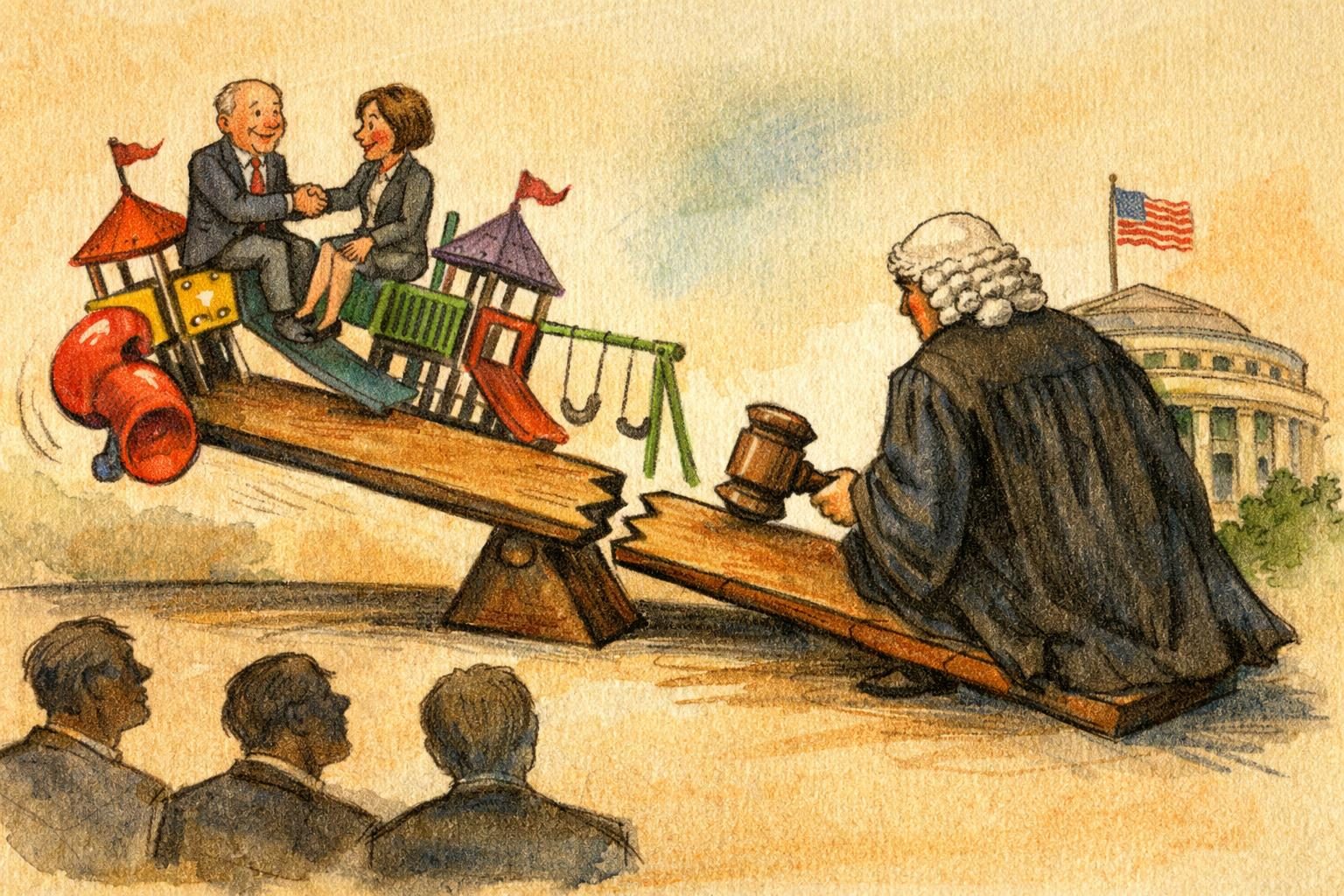
The Federal Trade Commission voted 2-0 on Monday to conclude that there is reason to believe the proposed PlayPower/Burke transaction may substantially lessen competition or tend to create a monopoly, marking a formal escalation in a merger review that now carries real antitrust consequences. On its face, that kind of decision sounds like the kind of procedural language only lawyers and economists would read closely. In practice, it is the opening move in a serious enforcement effort, one that gives the agency a legal and factual basis to challenge a deal it believes could distort the market. The commission’s vote does not by itself kill the transaction, but it signals that regulators think the harm is plausible enough to merit formal action. For a company merger, that is the point at which the conversation shifts from routine filing to a meaningful fight over competition.
The case matters because it lands in the middle of a broader question that has shaped federal antitrust policy in recent years: whether regulators are willing to use the merger-review process to slow consolidation before it becomes irreversible. The FTC’s action suggests that, at least in this instance, the agency is prepared to move beyond generalized concern and put its weight behind a specific theory of harm. That matters not only for the companies involved, but for buyers, smaller rivals, and anyone watching how much concentration the market can absorb before competition starts to fray. When a market becomes too concentrated, firms can gain room to raise prices, narrow choice, reduce innovation, or squeeze out competitors that cannot match scale. The commission’s vote indicates it believes the PlayPower/Burke deal could create exactly that kind of structural problem, or at minimum move the market in that direction. The language is still cautious, but the underlying message is not: the FTC thinks this transaction could be bad for competition, and it is prepared to say so in a formal setting.
That makes the matter more than a narrow dispute over two companies in the toy-and-play equipment space. It is also a test of whether antitrust enforcement is being treated as a live policy tool or as little more than a rhetorical flourish. Enforcement agencies often talk about competition in broad public-interest terms, but the practical measure of seriousness is whether they are willing to take on deals that could change market structure in ways that are hard to unwind later. This vote suggests the commission sees merger review as one of the few places where it can still act decisively before damage is done. That does not mean the government will prevail, or even that it will ultimately seek to block the transaction outright. It does mean the agency has crossed a threshold from passive review to active skepticism. In the current political environment, that is notable because it shows regulators trying to use antitrust law as something more than a symbolic gesture. For critics of consolidation, this is the sort of move that can look like basic law enforcement. For supporters of the merger, it will likely be portrayed as overreach. Either way, the agency has now put itself on the record.
The real question going forward is whether the FTC can turn this vote into actual relief, whether through a negotiated fix, a restructuring of the deal, or litigation that stops the merger altogether. A reason-to-believe determination is important, but it is only a step, not a conclusion. The commission still has to prove its case if the transaction is contested, and antitrust cases often turn on market definition, competitive effects, and the credibility of the agency’s economic theory. Those are not trivial hurdles. Still, by acting now, the FTC is reminding companies that merger review remains a consequential checkpoint rather than a box to be checked on the path to consolidation. That is especially important in a period when corporate mergers can look routine until they are suddenly not. If regulators are serious, they have to show it in the places where they can actually intervene, and this is one of them. If they fail, the case will be remembered less for the vote itself than for what it revealed about the limits of the government’s appetite to challenge concentration. For now, though, the commission has at least made clear that it sees this deal as one worth fighting over.
Comments
Threaded replies, voting, and reports are live. New users still go through screening on their first approved comments.
Log in to comment
No comments yet. Be the first reasonably on-topic person here.