
The FTC sued to block a playground-merger deal
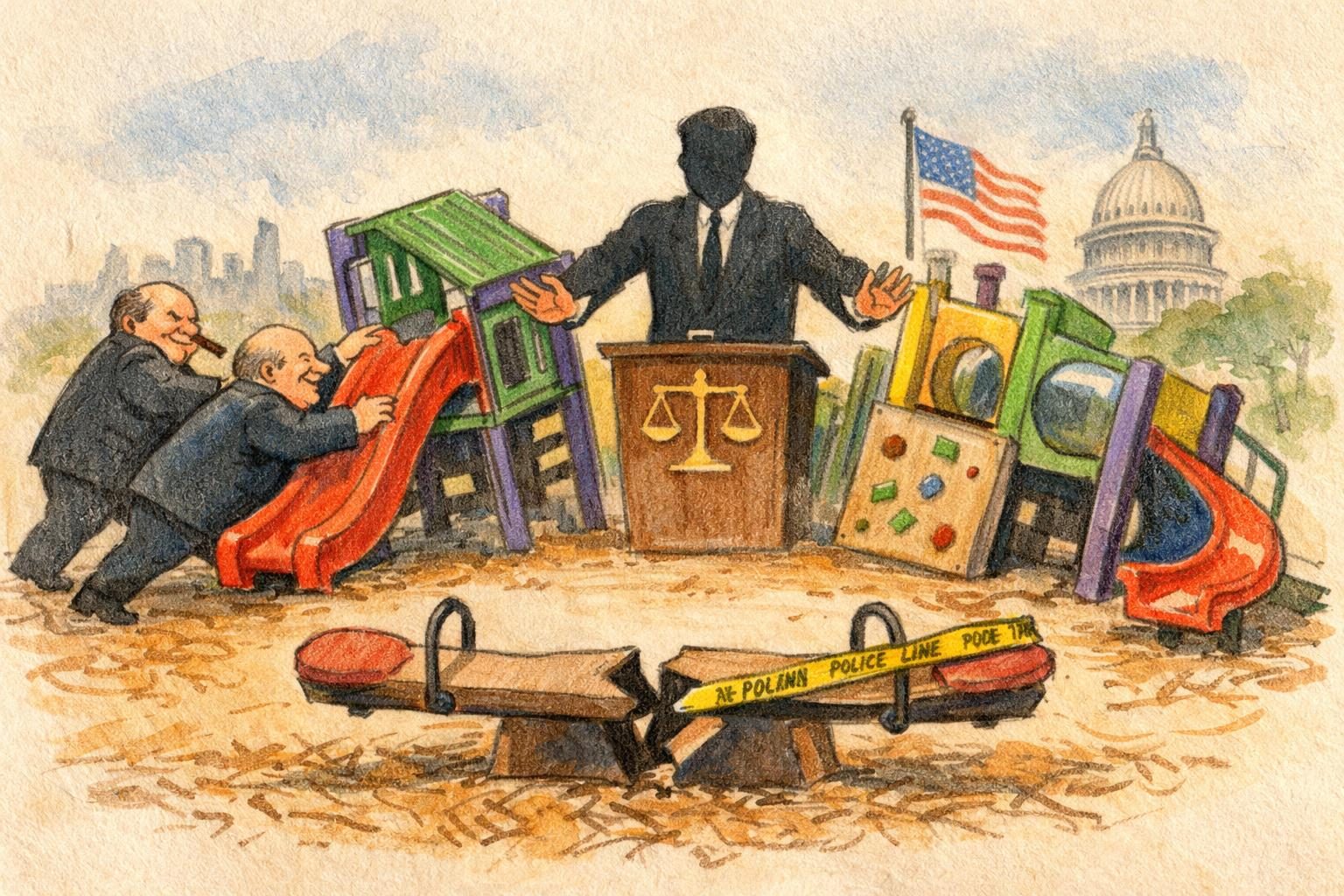
The Federal Trade Commission has moved to block Platinum Equity’s PlayPower from acquiring BCI Burke, a rival in the commercial outdoor playground equipment market, setting up another test of how aggressively antitrust enforcers are willing to police consolidation outside the usual headlines. The agency’s challenge centers on a sector that is not flashy but is deeply public-facing: playgrounds used by schools, parks, municipalities, and other institutions that buy equipment with taxpayer dollars and have limited room to shop around. According to the FTC, the transaction would bring together two of the most important suppliers in a market that is already concentrated enough to raise competitive concerns. That makes the case less about swings and slides than about whether the companies that build everyday civic infrastructure can be combined without leaving buyers with fewer choices and higher prices. It is a reminder that merger enforcement is not confined to tech platforms or pharmaceutical giants, and that ordinary-seeming industries can still matter a great deal to competition policy.
The logic of the FTC’s action is straightforward, but the stakes are broader than the narrow market definition might suggest. Commercial playground equipment may not dominate political debate, yet it sits at the intersection of public spending, child safety, product quality, and long-term maintenance costs. When schools, cities, and park systems purchase this equipment, they are often not shopping in a bustling open market with dozens of viable substitutes. If the number of serious competitors shrinks further, buyers can end up negotiating with less leverage, facing less innovation, or paying more for a product that is essential to public spaces. That is the basic antitrust concern the agency appears to be raising: if two of the leading players merge, the combined company may gain enough market power to change the terms on which public institutions do business. For local governments, that can mean stretched budgets and fewer options; for taxpayers, it can mean that the cost of consolidation gets passed through in ways that are not always visible until much later. The complaint also reflects a familiar enforcement theory: once a market is narrow enough, even a transaction that looks modest from the outside can have an outsized effect on competition.
Platinum Equity and PlayPower are likely to argue that the deal would create efficiencies, improve scale, and support investment in product development, manufacturing, and service. Those claims are standard in merger review, and they are not automatically meaningless. Large buyers often say that consolidation can produce better logistics, stronger supply chains, or more capital for expansion, and antitrust agencies generally have to consider whether those benefits are real, merger-specific, and likely to reach customers. But the FTC does not have to take such claims at face value, especially when the market structure itself raises alarms. If the agency believes the field is already tightly bounded and that the merging companies are among the most significant competitors, then the burden on the parties becomes substantial. They will need to show more than optimistic projections or financial presentation language. They will need to demonstrate that the deal will not lessen competition in a meaningful way, or that the claimed benefits outweigh the loss of rivalry in a market where buyers may have few practical alternatives. In that sense, the case is as much about proof as it is about policy. It asks whether a company can point to efficiencies while still preserving the pressure that keeps prices and quality in check.
The broader significance of the FTC’s move is that it fits into a larger pattern of enforcement attention to concentration in industries that rarely make headlines but still shape daily life. Merger policy often gets discussed in the context of consumer apps, hospital systems, airlines, or grocery chains, where the effects of consolidation are easier to imagine. But the same economic logic applies to the quieter corners of the economy, where market power can accumulate without much public notice. Playground equipment may seem like an unusually niche target for a federal lawsuit, but that is precisely why the case is notable. It suggests regulators are still willing to challenge deals simply because they risk reducing competition, not because the industry is politically fashionable or immediately recognizable to the public. Whether the case ends in litigation, a settlement, or a consent decree, the filing itself signals that the agency sees antitrust law as more than a symbolic gesture. It is willing to use it in markets that many people would never think about until something goes wrong: prices rise, quality slips, or public buyers discover they have fewer firms to call. In that respect, the lawsuit underscores a larger point about monopoly power. It is not only a Big Tech problem. It can emerge in the most unglamorous corners of the economy, including the business of building the places where children play.
Comments
Threaded replies, voting, and reports are live. New users still go through screening on their first approved comments.
Log in to comment
No comments yet. Be the first reasonably on-topic person here.