
Labor Department hands out $95.5 million while the job market still needs the fix
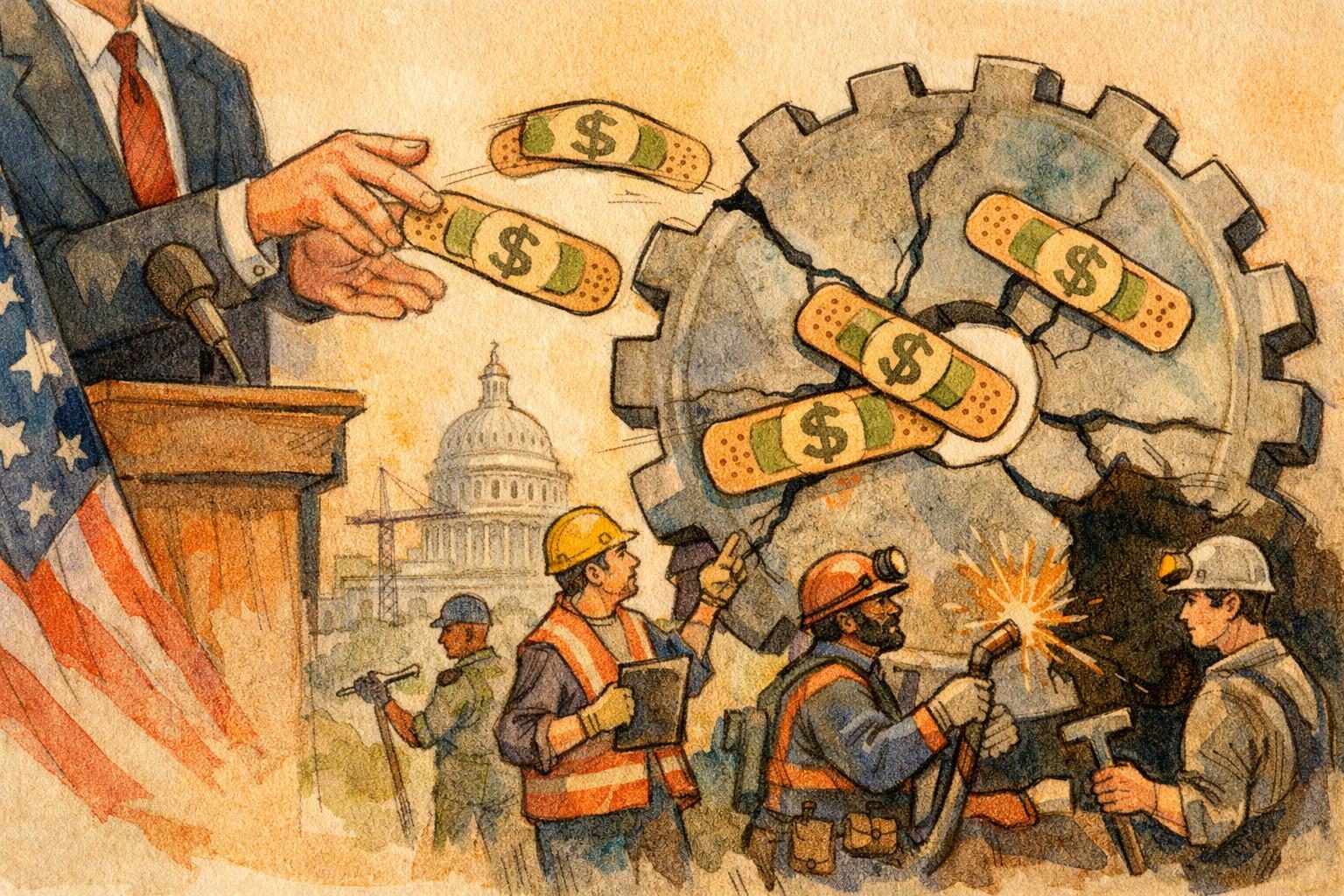
The Labor Department said Monday it is distributing $95.5 million in grants aimed at helping displaced workers find new training and employment paths, while also setting aside more than $10.5 million for mine safety and health training. The announcement has the familiar shape of a Washington policy rollout: a large dollar figure, a promise to strengthen workers’ prospects, and a message that the government is doing something concrete about a problem that has outlasted several political cycles. At least on paper, the grants are meant to support reemployment services, workforce retraining, and safety education in one of the country’s most dangerous industries. That is a worthwhile use of federal money, especially in communities where layoffs, industrial shifts, and safety gaps land hard on workers and their families. But the timing and the framing also make the announcement feel like a partial answer to a much bigger question about what kind of labor market the administration actually wants to build.
The worker-training grants could matter in places that have seen factories close, local employers contract, or entire sectors shift faster than workers can keep up. Programs supported by this funding can help connect people who have lost jobs to retraining, credentialing, placement services, and other forms of support that can make the difference between a temporary setback and a long stretch of instability. That kind of assistance is not glamorous, but it is often the practical bridge between one paycheck and the next. It can also help local institutions, workforce boards, and community programs build pipelines into industries that still need labor, which is especially important when the economy is changing unevenly across regions. Still, a grant announcement alone does not solve the underlying problem that many workers are navigating a labor market that remains uncertain, uneven, and in some cases unforgiving. The government can fund programs, but it cannot declare the broader structural tensions away.
The mine safety portion of the announcement carries its own significance because it underscores how much of labor policy is still reactive. Mine safety and health training is unquestionably important, and any federal support that improves worker knowledge and preparedness in a high-risk industry deserves attention. Yet training after the fact is not the same thing as preventing danger in the first place. If the federal government wants to claim a worker-first posture, then safety grants have to sit alongside stronger oversight, more consistent enforcement, and a broader industrial policy that does not treat injuries and fatalities as acceptable collateral. The decision to fund mine safety training is therefore both constructive and revealing. It shows recognition that hazards remain real, but it also highlights how much of the public response still arrives after the system has already failed to protect people as well as it should have.
That tension is what makes this announcement politically useful and substantively limited at the same time. The administration can point to the $95.5 million in workforce grants and the additional $10.5 million for mine safety as evidence that it is investing in workers rather than merely talking about them. That is not nothing, particularly for the organizations and communities that will receive the money and put it to use. But the larger test is not whether a federal department can announce a round of funding; it is whether those dollars lead to better outcomes for workers who are displaced, underprepared, or exposed to dangerous conditions. Washington often prefers visible announcements because they are easy to stage and easy to quantify. Workers usually care more about what happens after the press release fades, whether the training leads to real jobs, and whether the safety effort actually keeps people from getting hurt. The gap between those two perspectives is where labor politics often lives, and this latest announcement fits that pattern closely.
Comments
Threaded replies, voting, and reports are live. New users still go through screening on their first approved comments.
Log in to comment
No comments yet. Be the first reasonably on-topic person here.