
Trump’s own golf-course renovation announcement just complicated his court case
Evidence and accountability
Archive transparency: this article has not yet completed the site's newer independent fact-audit process. Its source links are provided below. Do not treat allegations, commentary, or a rating as a legal finding.
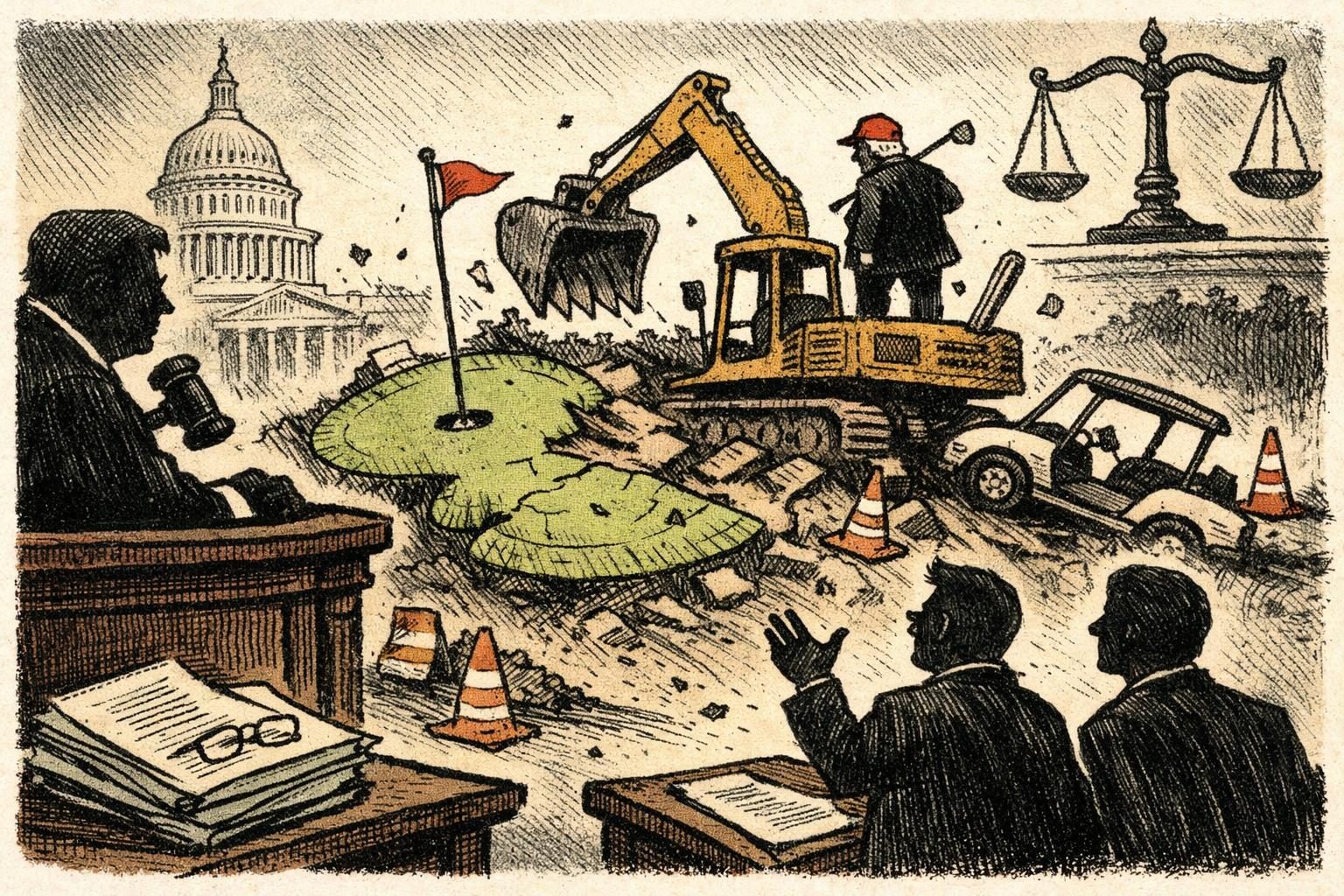
Donald Trump’s public declaration that he intends to close the historic Washington golf course for 15 months of renovations has done more than stir up another fight over one of his signature properties. It has complicated the administration’s legal position in an already sensitive case over the project, forcing the government to tell a judge whether its stance has shifted. What had been described in court as little more than preliminary thinking now looks more like an actively moving plan, at least from the perspective of anyone reading the president’s own words. That matters because the case turns in part on whether there has been enough official action to give the plaintiffs something concrete to challenge. When the president says the closure and renovation are happening, it becomes much harder for the government to argue that nothing final has occurred.
The dispute is about a golf course, but it is also about how the law treats presidential announcements that appear to function as policy. In its earlier filing, the administration argued that Trump had only given “preliminary thought” to the renovation and that there was no final agency action, a legal phrase that can determine whether a court even has a case to hear. The judge’s response to Trump’s announcement suggests that the issue may no longer be abstract. By asking the government to explain by Sunday evening whether its position has changed, the court signaled that the president’s post could have real legal significance. That does not automatically mean the challengers will win, or even that the case can proceed on the same theory they have been pressing, but it does mean the government’s own messaging has become part of the record in a way that is difficult to ignore. For lawyers on both sides, that is a meaningful development, not just a headline-grabbing aside.
The plaintiffs in the case, including the DC Preservation League and two golfers, are challenging the project on grounds tied to preservation and the use of federal property. Their argument appears to be that the proposed work is not just a private renovation plan but something that implicates public interests and should be subject to legal scrutiny. The administration’s public posture may have given them an opening they did not have before, because the president’s announcement can be read as evidence that the project has moved from speculation to commitment. That is precisely the kind of evidence courts often want when deciding whether a claim is ripe or whether an agency has taken action that can be reviewed. If the White House maintains that the announcement was only aspirational or conversational, it may face questions about why the language sounded so definite. If it concedes that the project is further along, the challengers can likely point to that as support for their case that judicial review is already appropriate.
This is also a familiar political pattern, even if the stakes in this instance are unusually specific. Trump has long favored making big announcements in public before the legal and administrative groundwork is fully aligned, then treating objections as either misunderstandings or overreactions. That style can be effective in the political arena because it creates momentum and keeps attention focused on the plan itself rather than the process behind it. In court, though, it can cause problems by creating a record that is not easy to square with a narrower legal argument. The judge’s order suggests the court is not interested in pretending the announcement never happened. If the administration insists the statement was merely political talk, it may have to explain why it described a project with such certainty while simultaneously telling the court that no final action had occurred. Courts do not have to accept a legal fiction simply because it is convenient.
The immediate consequence is procedural, but the larger significance may be practical. If the government tells the court that the president’s announcement changed nothing, it risks looking disconnected from the very public reality it created. If it says the announcement reflected a real decision, then the challengers may have a stronger argument that there is already enough agency action to support their lawsuit. Either way, the administration has been pushed into a more difficult position by its own messaging. The case may still turn on technical questions of standing, finality, and preservation law, but those questions are now being asked against the backdrop of a highly visible presidential statement that seems to promise a concrete timeline. The golf course may yet undergo the planned makeover, but the path to that outcome has become more legally awkward than it was before Trump chose to announce it himself.
Comments
Threaded replies, voting, and reports are live. New users still go through screening on their first approved comments.
Log in to comment
No comments yet. Be the first reasonably on-topic person here.