
Faith groups assemble a last-line defense against election-day intimidation
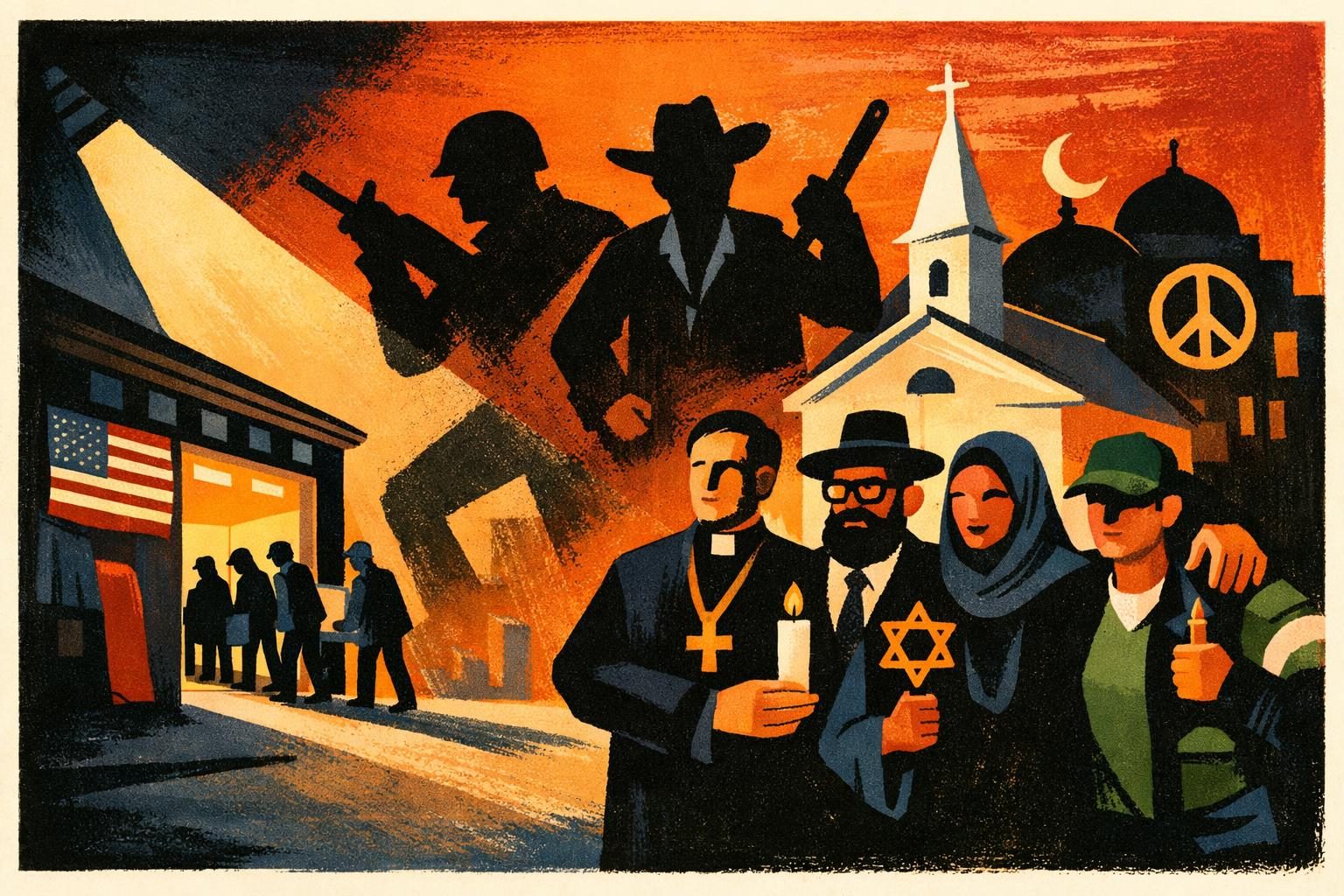
Faith leaders and civic organizers are assembling a volunteer protection network across nine battleground states in an effort to blunt voter intimidation and keep Election Day disputes from spilling into polling places. The coalition says it is preparing clergy members and lay volunteers to serve as a visible, nonpartisan presence in Arizona, Michigan, Georgia, Ohio, Pennsylvania, North Carolina, Wisconsin, Virginia and Texas, where they believe tensions are most likely to run high. The effort is being framed as a practical response to an election climate in which suspicion, misinformation and political aggression have become increasingly familiar features of the public square. Organizers are not claiming they can solve every problem that may arise, but they are betting that calm, trained observers can help discourage harassment before it starts and reduce the odds that routine voting becomes a confrontation. In a political environment where even ordinary election procedures can be treated as partisan provocation, the coalition is trying to create a buffer between voters and the most combustible impulses around the contest.
The volunteers are being trained and certified so that they can show up in a way that is both reassuring and disciplined, rather than chaotic or confrontational. That distinction matters, because election protection efforts can quickly become muddled if they are confused with partisan poll watching or with attempts to challenge voters rather than support them. Organizers say their presence is meant to be calming, not policing, and to help people feel that they can cast a ballot without being shouted at, misled or pressured. The practical goal is straightforward: make polling places feel less vulnerable to intimidation and make it harder for bad actors to create the appearance of disorder. Even when no one physically blocks access to a line, the atmosphere around voting can still discourage participation, especially for people who already fear conflict, confusion or retaliation. Local officials are also left to manage a thin line between legitimate election observation and conduct that crosses into disruption, and that ambiguity can be difficult to navigate when tempers are already high.
The decision to organize now reflects a broader sense that the coming election could be shaped as much by chaos as by policy debate or campaign messages. Faith leaders involved in the effort appear to be responding to a worry that threats to the vote may come not only through formal legal fights, but through a wider pattern of harassment, false claims and social pressure designed to make ordinary voting feel risky. That concern is especially sharp in states where the margin for political advantage may be narrow and where local tensions can escalate quickly under the right conditions. In that sense, the coalition is trying to fill a gap that many communities feel government has not credibly closed on its own. Law enforcement can respond to crimes and election officials can enforce procedures, but neither can easily erase the fear that a voter might encounter a hostile confrontation outside a polling site. The volunteers are meant to occupy that fragile space between formal authority and community reassurance, and their existence is itself a sign of how fragile the atmosphere has become.
This effort also says something unsettling about the state of civic life heading into November. When clergy and community organizations feel obliged to mobilize a defensive presence around voting, it suggests that trust in the election process is already strained and that ordinary democratic participation can no longer be assumed to proceed smoothly everywhere. Organizers are clearly hoping that visible, nonpartisan support from trusted local figures can lower the temperature faster than official warnings alone. But even if the network functions as intended, it will still amount to a stopgap rather than a cure, a temporary shield against pressures that should not be part of American elections in the first place. If it succeeds, it may help voters, volunteers and election workers get through the day with less fear and less confusion. If it falls short, the consequences may not be measured only in isolated incidents, but in the broader damage done when people decide that the process feels too hostile to trust. Either way, the need for such a coalition is a warning sign, not a reassuring one, and it underscores how much work remains to make voting feel routine rather than adversarial.
Comments
Threaded replies, voting, and reports are live. New users still go through screening on their first approved comments.
Log in to comment
No comments yet. Be the first reasonably on-topic person here.