
New Jersey importer sues to knock down Trump’s 50% Canada tariff
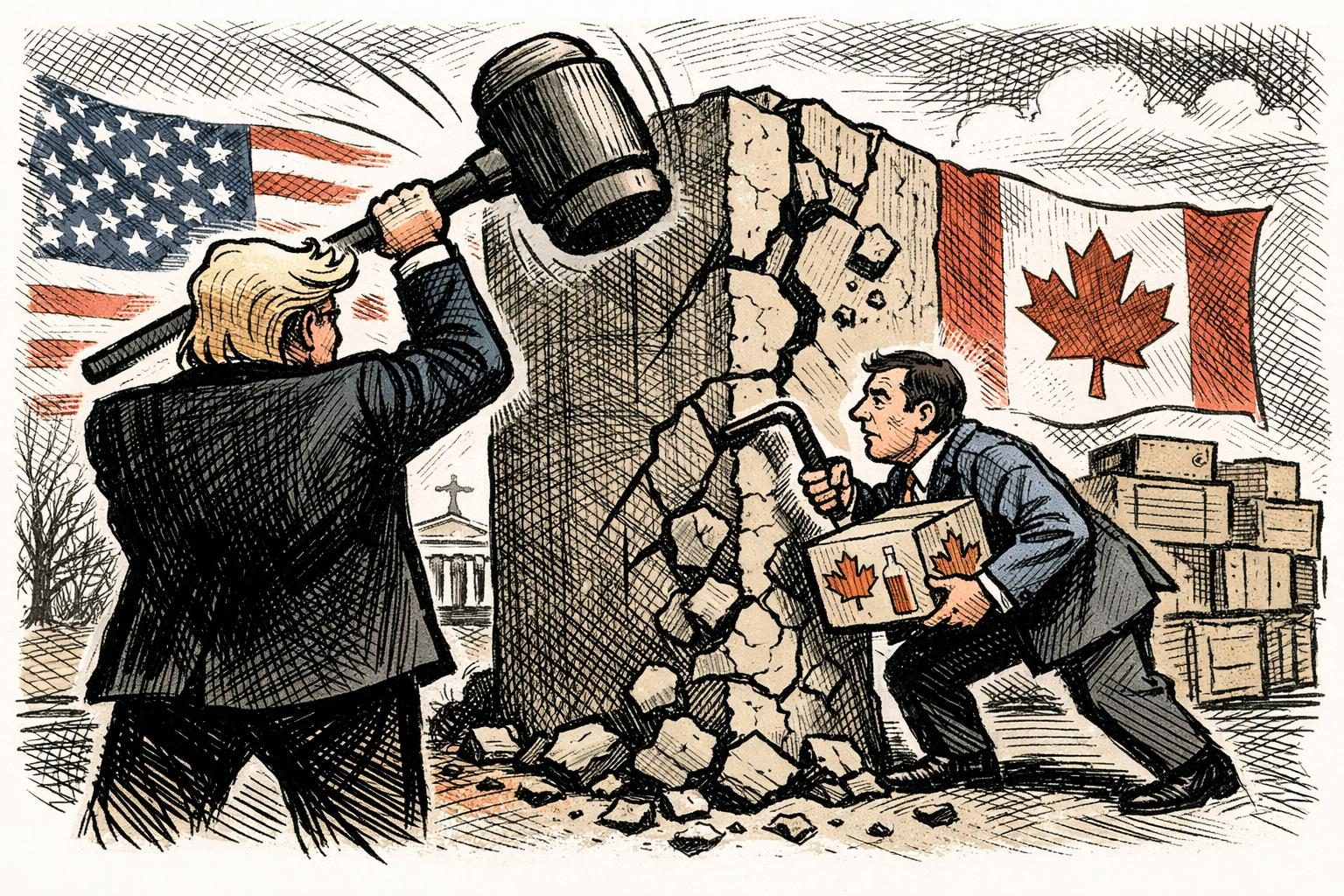
A New Jersey food importer has filed a federal lawsuit aimed at blocking President Donald Trump’s 50% tariff on goods from Canada, arguing that the administration went beyond its lawful authority when it imposed the levy. The case, filed Tuesday morning, adds a fresh legal challenge to one of the White House’s most aggressive trade measures and could become an important test of how much room the president has to use emergency-style powers in commerce policy. At its core, the suit asks a familiar but consequential question: how far can a president go in using tariffs as a unilateral economic weapon before the courts step in? The answer could matter well beyond this one dispute, because the tariff is not just a diplomatic pressure point. It is a tax imposed at the border, and those costs ripple through supply chains in ways that can be hard to reverse once they take hold. For importers, distributors, and retailers, the stakes are immediate even if the final legal outcome remains uncertain.
The challenge focuses on the administration’s reliance on a Depression-era law that it says gives the president authority to justify the tariff in the name of emergency action. That legal theory may give the White House broad rhetorical cover, but it is much less clear that it will satisfy judges who are likely to scrutinize whether an old statute can support such a sweeping modern trade move. The lawsuit underscores a broader pattern in Trump’s approach to economic policy this year: tariffs have increasingly been treated less as one bargaining tool among many and more as a default instrument of presidential power. Supporters of that approach argue the White House is trying to restore leverage in dealings with foreign governments and protect domestic interests that have long been exposed to import competition. Critics counter that the administration is using emergency language as a shortcut around Congress, which holds the formal power to regulate tariffs but often leaves presidents wide latitude until someone challenges the policy in court. That tension has become sharper as the administration has paired hard-edged trade actions with other unilateral moves that avoid the usual legislative process. The lawsuit, in that sense, is not just about one tariff rate. It is about whether a president can turn expansive emergency authority into a standing trade policy.
The economic consequences are part of what makes the case so significant. Tariffs are often described in political speeches as penalties aimed at foreign countries, but the practical burden usually lands much closer to home. Companies that import Canadian goods may face higher costs right away, and those expenses can work their way down to wholesalers, retailers, and eventually consumers. Even when businesses try to absorb some of the blow, the pressure can still affect pricing, inventory planning, and long-term purchasing decisions. That creates uncertainty for firms that have to operate in the present while the courts decide whether the tariff survives. The filing also arrives at a time when business plaintiffs, state officials, and advocacy groups have increasingly treated Trump’s economic decisions as courtroom issues rather than settled policy choices. In that sense, this is part of a larger legal campaign against the administration’s use of broad economic powers. It suggests that trade policy, once a largely executive-centered arena, is becoming a more contested constitutional battleground.
What happens next will depend on how quickly the case moves and how seriously the courts are willing to examine the administration’s claim of authority. If the importer wins early relief, it could complicate enforcement of the tariff and invite broader challenges from other companies facing similar costs. If the White House prevails, it would reinforce a view of executive power that allows the president wide discretion to act first and defend later in matters of trade. Either way, the lawsuit is likely to be watched closely by businesses, lawmakers, and legal analysts trying to gauge whether Trump’s tariff strategy is a temporary negotiating tactic or a durable part of the administration’s economic agenda. The dispute also arrives against a broader backdrop in which trade policy has become tightly linked to political messaging, with toughness on imports often presented as proof of resolve. But the courtroom is a different arena, and judges tend to care less about political symbolism than about statutory limits and constitutional structure. For now, the case adds another front to a widening fight over the boundaries of presidential power, and it could end up shaping not only tariff policy but also the way future administrations try to use emergency authority to remake the economy.
Comments
Threaded replies, voting, and reports are live. New users still go through screening on their first approved comments.
Log in to comment
No comments yet. Be the first reasonably on-topic person here.