
Judge orders Trump administration to halt noncitizen-voting probes in nine states
Permanent article number: 102226003 Find another article by number
Evidence and accountability
Accountable person, organization or policy: Trump administration / Department of Justice election enforcement
Documented issue under review: A federal judge found the noncitizen-voting investigation relied on error-filled data and improperly intimidated election-related groups, halting the probes in nine states.
This report has an independent editorial fact-audit recorded in the archive. Check the linked source documents below for the underlying evidence; where a case remains pending, allegations are not findings.
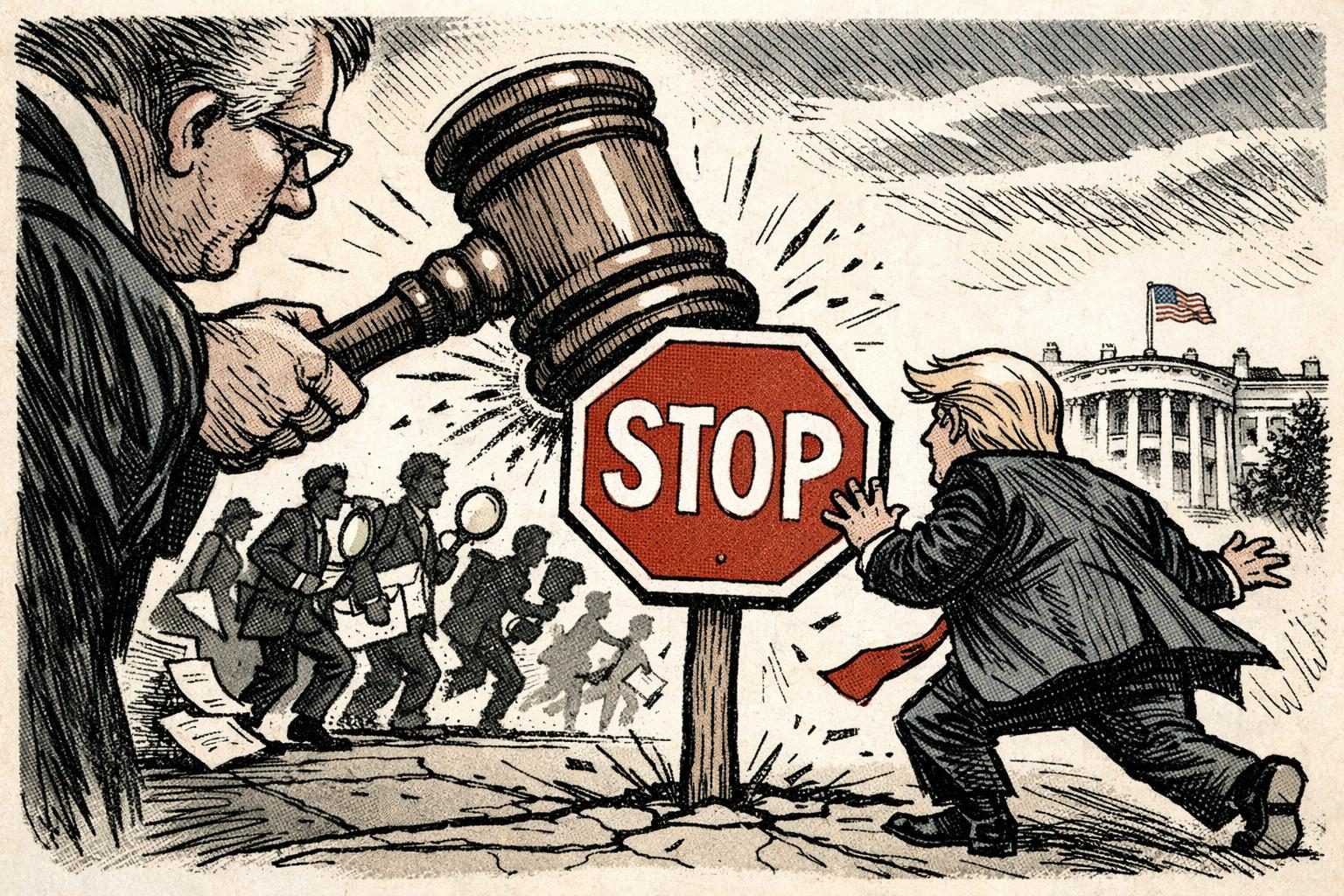
A federal judge in Oakland has ordered the Trump administration to stop investigations in nine states over whether noncitizens are registered to vote, delivering a sharp judicial rebuke to one of the administration’s most aggressive election-enforcement efforts. The ruling, issued Wednesday and reported Thursday, said the government’s case rested on data that was “full of errors” and that the investigations were having a chilling effect on groups that help voters navigate registration and election rules. The order applies to California, Connecticut, Georgia, Missouri, Nevada, New York, Pennsylvania, Washington and Wisconsin, though the judge temporarily put the ruling on hold until Friday to allow the administration time to appeal. For now, that means the investigations are blocked, but not yet shut down permanently, and the dispute remains alive in the courts. Even so, the decision is a significant setback for a White House that has been trying to cast noncitizen voting as a major electoral threat.
The case goes to the heart of how the administration has framed election enforcement since returning to office. Officials have repeatedly leaned on a sweeping voter-fraud theory to justify broad inquiries into voter rolls and election-related organizations, even as public evidence suggests noncitizen voting is rare. According to reporting by AP, the administration has portrayed the issue as a large and persistent problem despite the limited scope of the underlying conduct, including in its own investigations. That gap between the rhetoric and the proof mattered in the courtroom, where the judge concluded that the government’s approach was not supported by a sound factual basis. The ruling did not merely question one investigative tactic; it challenged the premise that could be used to justify a wider campaign. In practical terms, that matters because claims of fraud can be used to exert pressure on states and on organizations that help voters comply with election law.
The court’s concern was not only that the data were flawed, but also that the investigations could intimidate election-adjacent groups that play a routine role in voter participation. Those organizations often help with registration, outreach and education, and even if they are not the direct target of enforcement, a federal probe can have a broad deterrent effect. That is one reason the order is being viewed as more than a technical dispute over recordkeeping. It suggests the court saw the administration’s inquiry as potentially burdensome in a way that reached beyond any individual allegation of misconduct. The administration can still argue on appeal that it has a lawful basis for its actions and that the investigations are necessary to protect election integrity, but it will have to do so against a record that the judge found wanting. The temporary stay until Friday preserves that chance, while also signaling that the judge believed immediate relief was warranted.
The ruling also lands against a growing legal and political backlash to the administration’s election agenda. On Wednesday, Democrats filed a separate lawsuit accusing the administration of trying to usurp state authority over elections and intimidate election officials, underscoring the broader fight over who controls election administration and how far federal power can go. That lawsuit is not the event at the center of this ruling, but it helps explain why the court’s decision is being treated as consequential. The administration’s critics say the strategy combines exaggerated fraud claims with pressure tactics aimed at states and groups that support voting access, while the administration insists it is simply enforcing the law. The judge’s order does not settle that larger debate, but it does narrow the administration’s room to operate in the short term. For now, the court has made clear that broad suspicion is not enough to sustain federal investigations of this kind. The immediate question is whether the administration can convince a higher court that its evidence is stronger than the district judge found, or whether this becomes an early marker of judicial resistance to its election-enforcement push.
Comments
Read the discussion freely. Posting and voting require a verified member account. Every comment and reply receives a pre-post evidence check and stays unpublished until a moderator approves it. Factual disagreement alone is not grounds for rejection.
Log in to comment or join free to take part.
No comments yet. Be the first reasonably on-topic person here.