
Supreme Court leaves block on Trump prison-care restrictions in place
Permanent article number: 102126007 Find another article by number
Evidence and accountability
Accountable person, organization or policy: Trump administration
Documented issue under review: The Supreme Court left in place a block on restrictions on medical care for transgender inmates after the government failed to justify the policy with documented security evidence.
This report has an independent editorial fact-audit recorded in the archive. Check the linked source documents below for the underlying evidence; where a case remains pending, allegations are not findings.
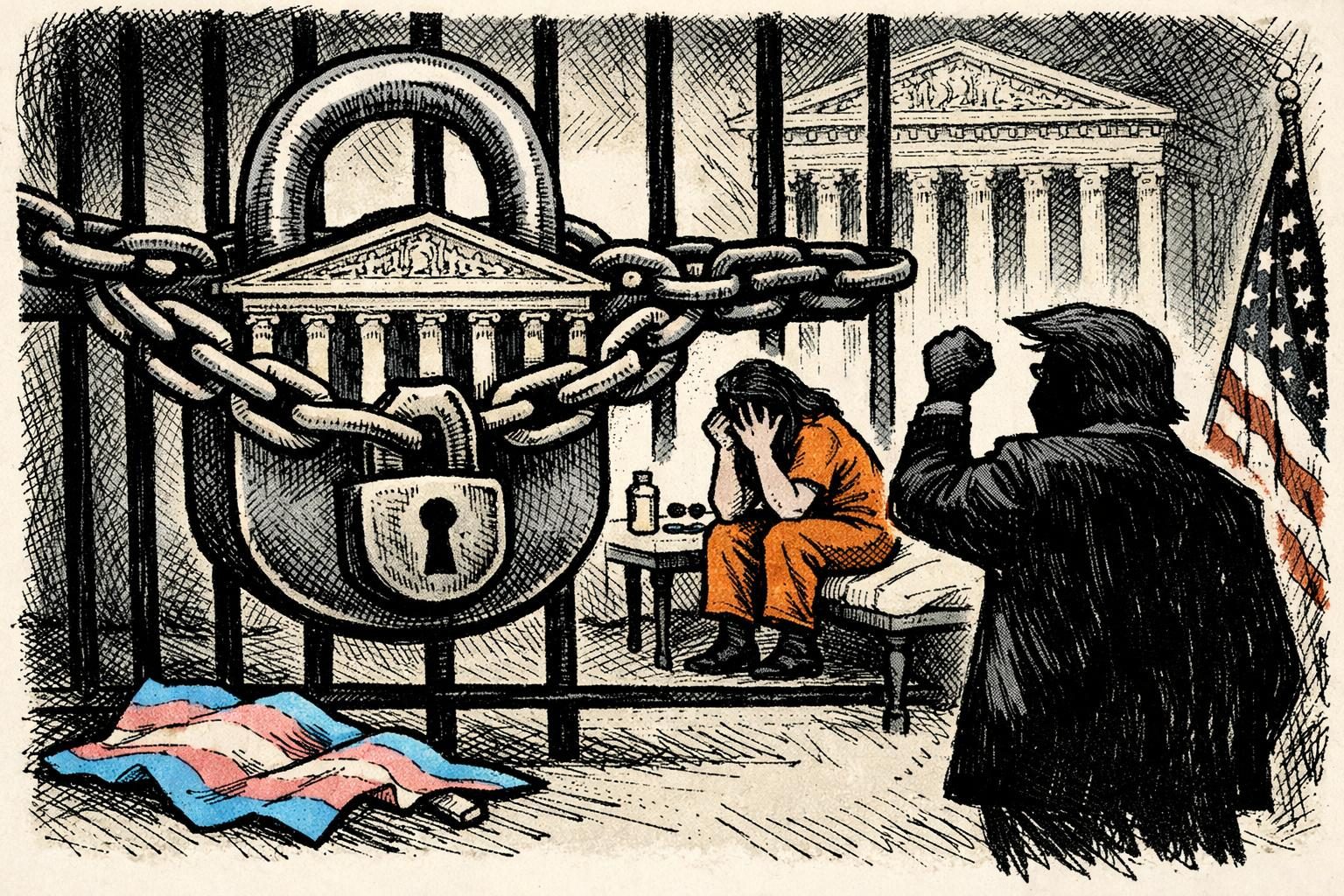
The Supreme Court has left in place a lower-court block on a Trump administration policy that would have restricted medical care for transgender prisoners, preserving for now a long-running arrangement that allowed inmates to receive hormone therapy and related treatment. The court declined to lift the order on an emergency basis, meaning the policy remains on hold while the underlying litigation continues. The immediate effect is practical as much as legal: correctional systems cannot begin enforcing the restrictions while the injunction stands. It is also a setback for President Donald Trump’s broader second-term push to roll back transgender rights through executive action and agency policy. The case is not yet a final ruling on the merits, but the justices’ refusal to intervene at this stage gives opponents of the policy an important temporary victory.
The dispute centers on whether the administration had a factual basis for treating gender-affirming medical care in prison as a security or administration problem. The government argued that prison officials should have broad authority to control treatment decisions and maintain order, including limiting hormone therapy and related care for transgender inmates. Critics responded that the record did not support a claim that such care posed a meaningful security threat, particularly because hormone therapy has been provided in federal prisons for roughly 30 years without the kind of evidence the administration said justified a change. According to the reporting cited in the case, the government did not spell out evidence of security problems tied to that long-standing practice. That omission mattered because the court was being asked not to decide the full constitutional question, but to decide whether the policy should be allowed to take effect while litigation continued. In that setting, the absence of a well-supported factual record cut against the administration.
The case fits neatly within Trump’s broader effort to reverse federal protections associated with transgender rights. The administration has framed that effort as a matter of restoring discipline, common sense, and deference to prison authorities, while opponents see it as part of a deliberate campaign to narrow the rights of transgender people in public institutions. The policy at issue was connected to an executive order from Trump and was presented as a correctional-management measure rather than an overtly ideological one. But the distinction is difficult to maintain when the justification is questioned for lacking concrete evidence. That is why the development carries significance beyond the prison context. If the government cannot show that a claimed security concern is real, then a policy presented as administrative necessity may instead look like a political directive in search of a rationale. The Court’s refusal to unblock the policy does not settle that broader debate, but it does signal that the administration did not persuade a majority of justices that emergency relief was warranted on the current record.
The ruling should be read carefully, because it is not the same thing as a final defeat for the administration. The justices did not issue a full merits opinion, and emergency orders often turn on a narrower and less definitive assessment than a case’s eventual outcome. That said, emergency losses are still consequential because they determine what can happen right now. For transgender inmates, the practical result is that existing care remains protected by the lower-court order, at least for the moment. For the administration, the decision is a setback that suggests the current evidence does not justify immediate enforcement of the restrictions. More broadly, the episode highlights the burden the government faces when it tries to convert a sweeping political claim into a prison policy with real consequences for medical treatment. Whether the policy can survive later review is still unresolved. What is clear today is that the Supreme Court declined to help put it into effect, and that leaves the Trump administration’s prison-care restrictions suspended while the case moves forward.
Comments
Threaded replies, voting, and reports are live. New users still go through screening on their first approved comments.
Log in to comment
No comments yet. Be the first reasonably on-topic person here.