
Fifth Circuit reverses bond-hearing orders in three immigration detention cases
Permanent article number: 102426010 Find another article by number
Original reporting and source documents
Open the reporting and original documents used for this article. These include evidence sources; not every link is necessarily the original claim being examined.
Evidence and accountability
Accountable person, organization or policy: Trump administration / Department of Homeland Security and Justice Department
Documented issue under review: A lower-court bond-hearing safeguard in immigration detention was wiped out by the administration’s appellate victory; the new order preserves mandatory detention without individualized bond hearings in these cases.
This report has an independent editorial fact-audit recorded in the archive. Check the linked source documents below for the underlying evidence; where a case remains pending, allegations are not findings.
Questions sent by Radical Reading Room
These requests have a recorded outbound message ID and send time. A request for comment does not establish that its recipient read the message.
Department of Homeland Security — Public professional press contact
Question: What are the average and maximum durations of detention experienced by immigrants held under 8 U.S.C. § 1225(b)(2)(A) without an individualized bond hearing in the Fifth Circuit?
Contacted: October 25, 2026 at 12:14 PM (server time).
Status: Response pending; no substantive response recorded.
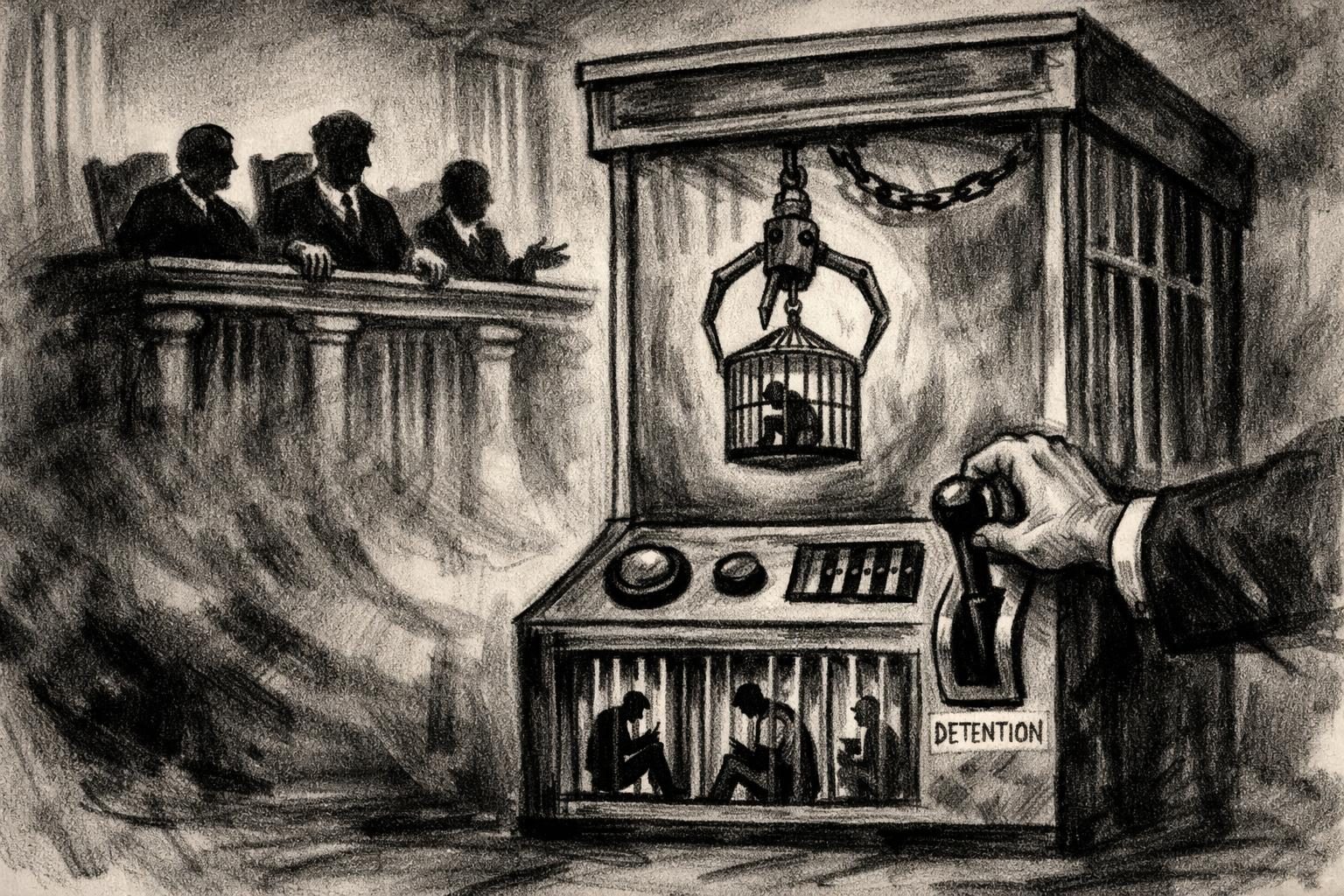
The Fifth Circuit’s en banc court on Oct. 23, 2026, reversed three district court rulings that had required individualized bond hearings for detained immigrants in Texas and had ordered them released while their removal cases continued. In the consolidated opinion, the court said the men were being held under 8 U.S.C. § 1225(b)(2)(A) and were not entitled to a hearing on dangerousness or flight risk before detention under that statute. The court also vacated the habeas relief the district courts had granted. ([ca5.uscourts.gov](https://www.ca5.uscourts.gov/opinions/pub/26/26-50183-CV1.pdf))
The decision involved Ignacio Sosnava Rodriguez, Alejandro Villegas Angel and Miguel Angel Gomez Alvarado, all of whom had challenged their confinement in federal custody. According to the opinion, the district courts had agreed with the detainees and ordered them released unless the government first provided bond hearings. The en banc panel disagreed, writing that the duration of their detention did not create a constitutional problem on the records before it. ([ca5.uscourts.gov](https://www.ca5.uscourts.gov/opinions/pub/26/26-50183-CV1.pdf))
That makes the ruling a significant legal setback for the three petitioners and for other detainees who might have relied on the lower-court orders, but it is not a finding that any named official or agency engaged in misconduct. The opinion addresses the scope of mandatory detention and due process in these cases; it does not accuse the Department of Homeland Security, the Department of Justice or any individual respondent of wrongdoing. ([ca5.uscourts.gov](https://www.ca5.uscourts.gov/opinions/pub/26/26-50183-CV1.pdf))
The respondents in the case were officials and agencies including the Department of Homeland Security, the DOJ Executive Office for Immigration Review, and ICE officials named in their official capacities. The court’s ruling now controls in these consolidated cases unless a higher court changes course. For the moment, the effect is to restore the government’s position that these detainees can be held under the statute without individualized bond hearings first. ([ca5.uscourts.gov](https://www.ca5.uscourts.gov/opinions/pub/26/26-50183-CV1.pdf))
Comments
Read the discussion freely. Posting and voting require a verified member account. Every comment and reply is screened by AI before publication. Clear spam and abuse are blocked; only strongly cleared comments publish automatically, while uncertain drafts wait for moderator review. Civil factual disagreement alone is not grounds for rejection.
Log in to comment or join free to take part.
No comments yet. Be the first reasonably on-topic person here.