
Ninth Circuit leaves block on Trump administration’s California Guard federalization in place
Permanent article number: 102426001 Find another article by number
Original reporting and source documents
Open the reporting and original documents used for this article. These include evidence sources; not every link is necessarily the original claim being examined.
Evidence and accountability
Accountable person, organization or policy: Trump administration
Documented issue under review: The Ninth Circuit held the administration exceeded its statutory authority in federalizing the California National Guard and left the injunction against that action in place.
This report has an independent editorial fact-audit recorded in the archive. Check the linked source documents below for the underlying evidence; where a case remains pending, allegations are not findings.
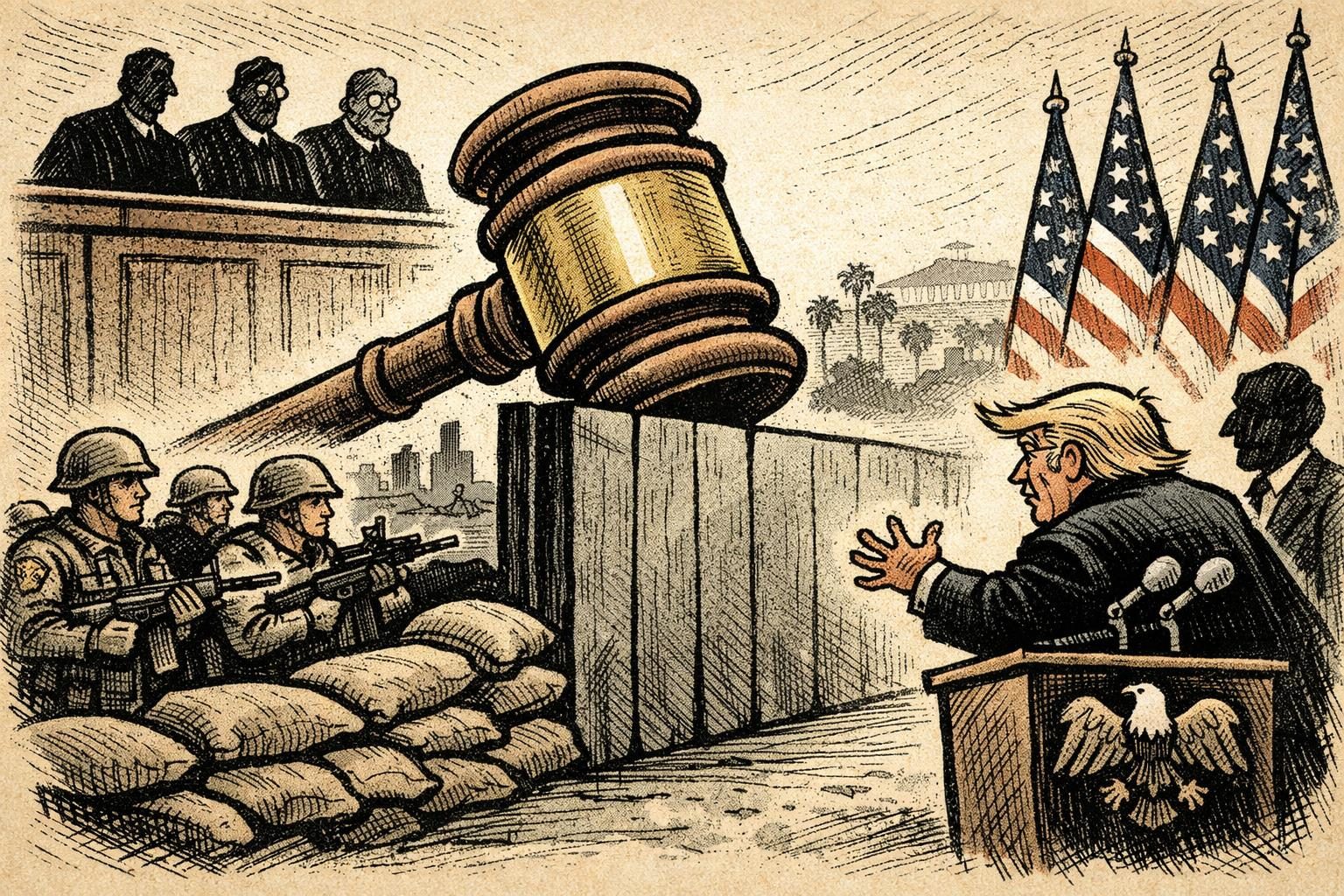
A federal appeals court on October 23 kept in place an order preventing the Trump administration from federalizing the California National Guard for use in Los Angeles, preserving state control of the force while the underlying lawsuit continues. In a split opinion in Newsom v. Trump, the U.S. Court of Appeals for the Ninth Circuit affirmed a preliminary injunction entered by the district court and concluded the administration had not shown that its move fit within the authority Congress gave the president under 10 U.S.C. § 12406(2) and (3).
The practical effect is straightforward: for now, the federal government cannot rely on that order to take command of the state Guard in this dispute. The appellate ruling does not end the case, and it does not resolve every issue the parties may continue to press. But it does leave the district court’s injunction intact unless a later panel, the full Ninth Circuit, or the Supreme Court changes the result.
The opinion is a statutory decision, not a criminal judgment and not a finding that Donald Trump committed personal wrongdoing. Its immediate significance is narrower and more legalistic than the political arguments surrounding it. The court addressed whether the administration had a valid statutory basis for the federalization order, and on the record before it, the panel said no.
California officials treated the ruling as a victory for the state’s position that the federal government had gone beyond its lawful authority. The administration had argued that unrest connected to immigration protests justified the order as a public-safety measure. The panel did not accept that justification as sufficient under the statute the government cited.
The case now moves forward with the injunction still in place. Further review is possible, but absent a new ruling, the Ninth Circuit’s decision keeps the California National Guard under state control in this dispute.
Comments
Read the discussion freely. Posting and voting require a verified member account. Every comment and reply is screened by AI before publication. Clear spam and abuse are blocked; only strongly cleared comments publish automatically, while uncertain drafts wait for moderator review. Civil factual disagreement alone is not grounds for rejection.
Log in to comment or join free to take part.
No comments yet. Be the first reasonably on-topic person here.