
Trump carves out some Canadian goods from 50% tariffs as Maine race intensifies
Permanent article number: 102426004 Find another article by number
Original reporting and source documents
Open the reporting and original documents used for this article. These include evidence sources; not every link is necessarily the original claim being examined.
Evidence and accountability
Accountable person, organization or policy: Trump tariff policy
Documented issue under review: The administration exempted some Canadian imports after backlash, indicating a partial retreat from a tariff policy that has produced documented commercial and political fallout.
This report has an independent editorial fact-audit recorded in the archive. Check the linked source documents below for the underlying evidence; where a case remains pending, allegations are not findings.
Questions sent by Radical Reading Room
These requests have a recorded outbound message ID and send time. A request for comment does not establish that its recipient read the message.
U.S. Office of the United States Trade Representative (USTR) — Public professional press contact
Question: Which specific Canadian products were exempted from the 50% tariffs in the Oct. 23, 2026 announcement?
Contacted: October 25, 2026 at 6:44 PM (server time).
Status: Response pending; no substantive response recorded.
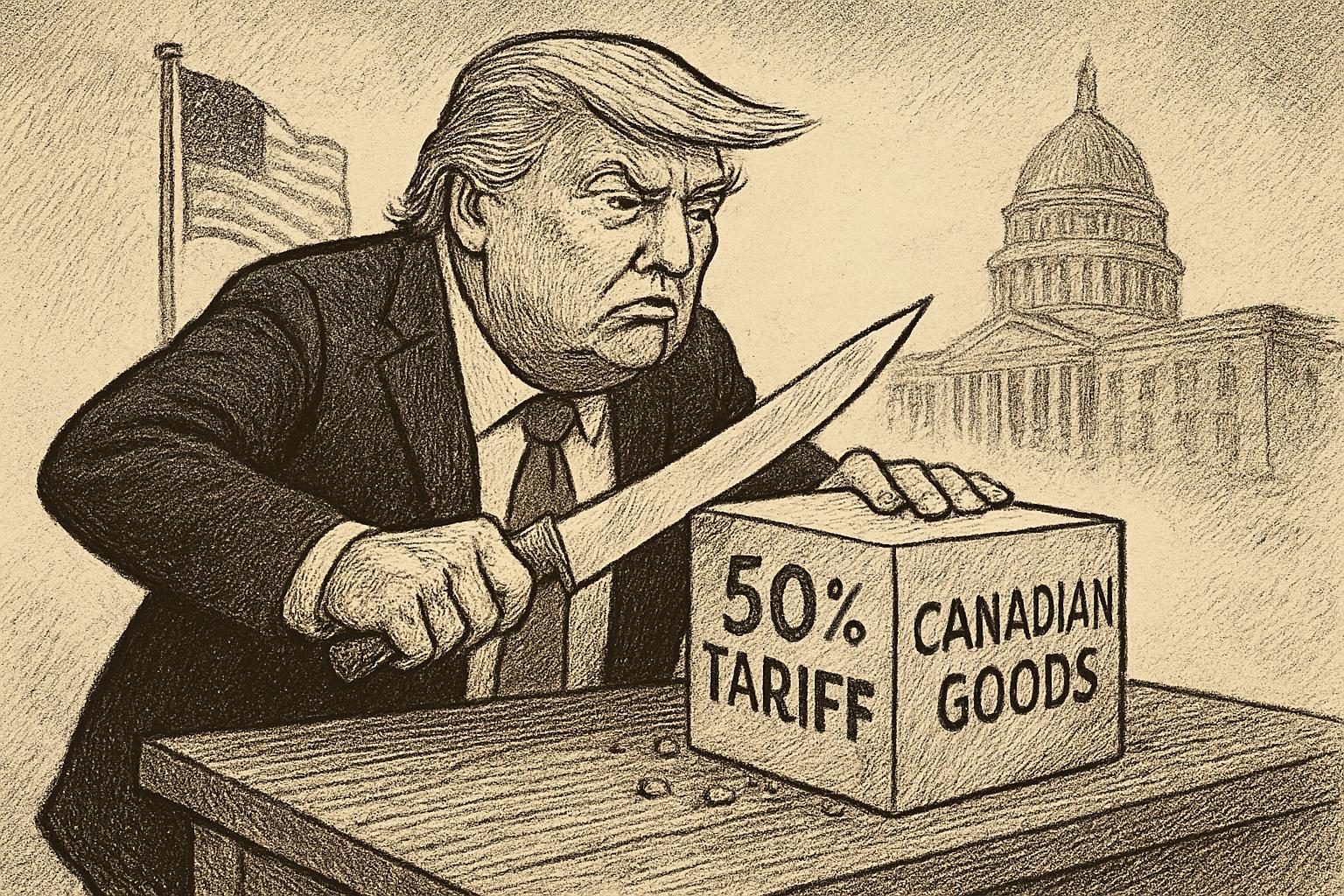
President Donald Trump on Oct. 23, 2026, changed part of his Canada tariff policy by exempting some Canadian products from the 50% duties his administration had imposed earlier this year. The move did not end the tariff program. It carved out specific goods while leaving the broader regime in place.
Reuters and The Associated Press reported that the timing of the decision was tied to the political pressure surrounding Sen. Susan Collins’ reelection effort in Maine, where Republicans see a competitive Senate race. The reporting did not amount to a formal finding about the administration’s motives; it showed only that the rollback landed in the middle of a politically sensitive campaign and was widely understood in that context.
The exemption is consequential because it changes the cost of importing the covered goods, including products such as plywood sheets and packing crates, according to the reporting. But the record supports a narrower conclusion than a sweeping one: the White House adjusted the tariff list on specific Canadian imports, not the entire policy.
The action also leaves open the larger trade conflict behind it. Trump’s tariffs on Canadian goods remain part of an ongoing dispute, and the Oct. 23 change shows the administration was willing to make selective concessions under political pressure. What the announcement does not establish is that the tariff strategy has been abandoned or that its broader economic effects have been fully measured from this single move alone.
Comments
Read the discussion freely. Posting and voting require a verified member account. Every comment and reply is screened by AI before publication. Clear spam and abuse are blocked; only strongly cleared comments publish automatically, while uncertain drafts wait for moderator review. Civil factual disagreement alone is not grounds for rejection.
Log in to comment or join free to take part.
No comments yet. Be the first reasonably on-topic person here.