
Utah judge denies DOJ bid to compel voter-roll access
Permanent article number: 102426008 Find another article by number
Original reporting and source documents
Open the reporting and original documents used for this article. These include evidence sources; not every link is necessarily the original claim being examined.
Evidence and accountability
Accountable person, organization or policy: Trump Justice Department
Documented issue under review: A Utah judge dismissed the department’s attempt to compel private voter-roll records.
This report has an independent editorial fact-audit recorded in the archive. Check the linked source documents below for the underlying evidence; where a case remains pending, allegations are not findings.
Questions sent by Radical Reading Room
These requests have a recorded outbound message ID and send time. A request for comment does not establish that its recipient read the message.
State of Utah — Public professional press contact
Question: What specific personal information is contained in Utah's statewide voter registration list that Utah officials argue is legally protected from disclosure?
Contacted: October 25, 2026 at 10:15 AM (server time).
Status: Response pending; no substantive response recorded.
Corrections and clarifications
October 24, 2026: October 24, 2026: Clarified that Judge Barlow’s October 23 order dismissed the DOJ’s Title III voter-records claim with prejudice based on statutory interpretation, not merely on procedural grounds. The ruling made no finding that voter fraud occurred, and it did not decide separate privacy-law questions. The original court order is linked.
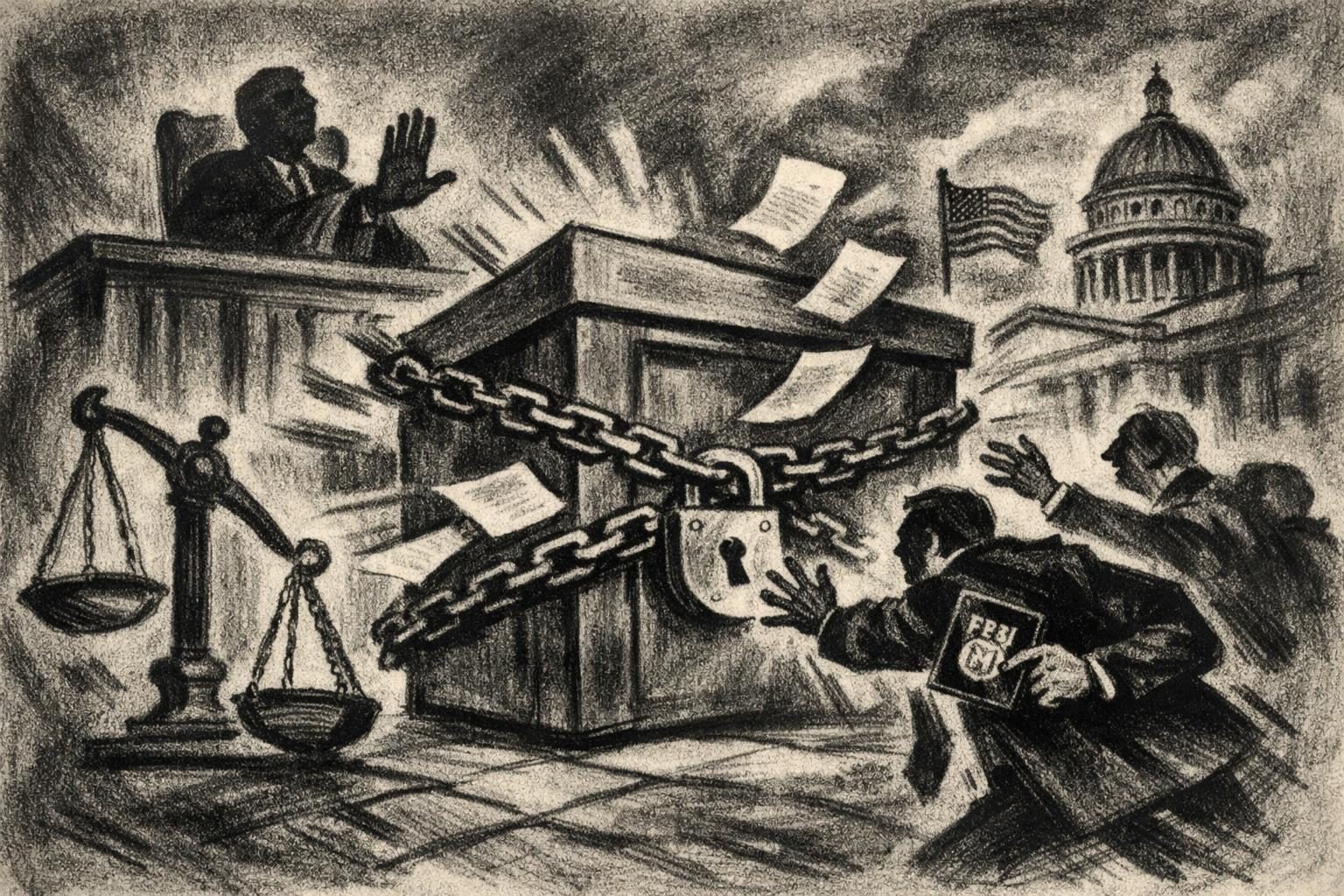
A federal judge in Utah on Oct. 23, 2026 denied the Justice Department’s request to compel access to the state’s statewide voter registration list and dismissed the lawsuit challenging the state’s refusal to turn over the data. In a memorandum decision, U.S. District Judge David Barlow wrote that the court denied the Attorney General’s motion to compel and granted the defendants’ motions to dismiss. The case, United States v. Henderson, centered on whether the Justice Department could force disclosure of Utah’s statewide voter registration list under the Civil Rights Act of 1960. ([democracydocket.com](https://www.democracydocket.com/wp-content/uploads/2026/02/68-2026-10-23-Memorandum-decision.pdf))
Barlow’s decision resolves a substantive question about the scope of Title III of the Civil Rights Act of 1960. He held that Utah’s state-created statewide voter-registration list does not count as a record that “comes into” the lieutenant governor’s possession under that law. The court therefore denied the Justice Department’s motion to compel and dismissed its complaint with prejudice. This does not amount to a finding that the department’s officials personally engaged in misconduct or that any election fraud took place. The court did not need to decide Utah’s separate privacy-law arguments. ([democracydocket.com](https://www.democracydocket.com/wp-content/uploads/2026/02/68-2026-10-23-Memorandum-decision.pdf))
The Justice Department had announced the Utah suit in February as part of a broader set of cases against states it said had failed to produce voter rolls. In that release, the department said it had filed suit against Utah and four other states over nonproduction of full voter registration lists and described the litigation as part of its election-integrity work. Utah officials argued that disclosing the full database would expose legally protected personal information. The judge did not decide those privacy-law arguments because the statutory interpretation resolved the case. ([justice.gov](https://www.justice.gov/opa/pr/justice-department-sues-five-additional-states-failure-produce-voter-rolls))
The practical result of Friday’s decision is straightforward: the Justice Department did not get the compelled access it sought, and Utah’s voter-registration records remained under state control. What the ruling does not do is resolve the larger political fight over federal demands for election records or establish that any underlying election-fraud claim is true. The dismissal with prejudice resolves the Justice Department’s Title III claim at the district-court level, subject to any appeal. It does not determine whether any voter committed fraud. ([democracydocket.com](https://www.democracydocket.com/wp-content/uploads/2026/02/68-2026-10-23-Memorandum-decision.pdf))
Comments
Read the discussion freely. Posting and voting require a verified member account. Every comment and reply is screened by AI before publication. Clear spam and abuse are blocked; only strongly cleared comments publish automatically, while uncertain drafts wait for moderator review. Civil factual disagreement alone is not grounds for rejection.
Log in to comment or join free to take part.
No comments yet. Be the first reasonably on-topic person here.