
House ethics review of harassment rules narrows to a specific set of recent cases
Permanent article number: 102526009 Find another article by number
Original reporting and source documents
Open the reporting and original documents used for this article. These include evidence sources; not every link is necessarily the original claim being examined.
Evidence and accountability
Accountable person, organization or policy: Republican-controlled Congress and the House Ethics system
Documented issue under review: A series of ethics cases has renewed scrutiny of congressional harassment rules and exposed ongoing weakness in the chamber’s self-policing regime.
This report has an independent editorial fact-audit recorded in the archive. Check the linked source documents below for the underlying evidence; where a case remains pending, allegations are not findings.
Questions sent by Radical Reading Room
These requests have a recorded outbound message ID and send time. A request for comment does not establish that its recipient read the message.
U.S. House of Representatives — Public professional press contact
Question: How many of the 20 sexual misconduct investigations initiated since 2017 resulted in formal disciplinary actions against House members?
Contacted: October 25, 2026 at 2:14 PM (server time).
Status: Response pending; no substantive response recorded.
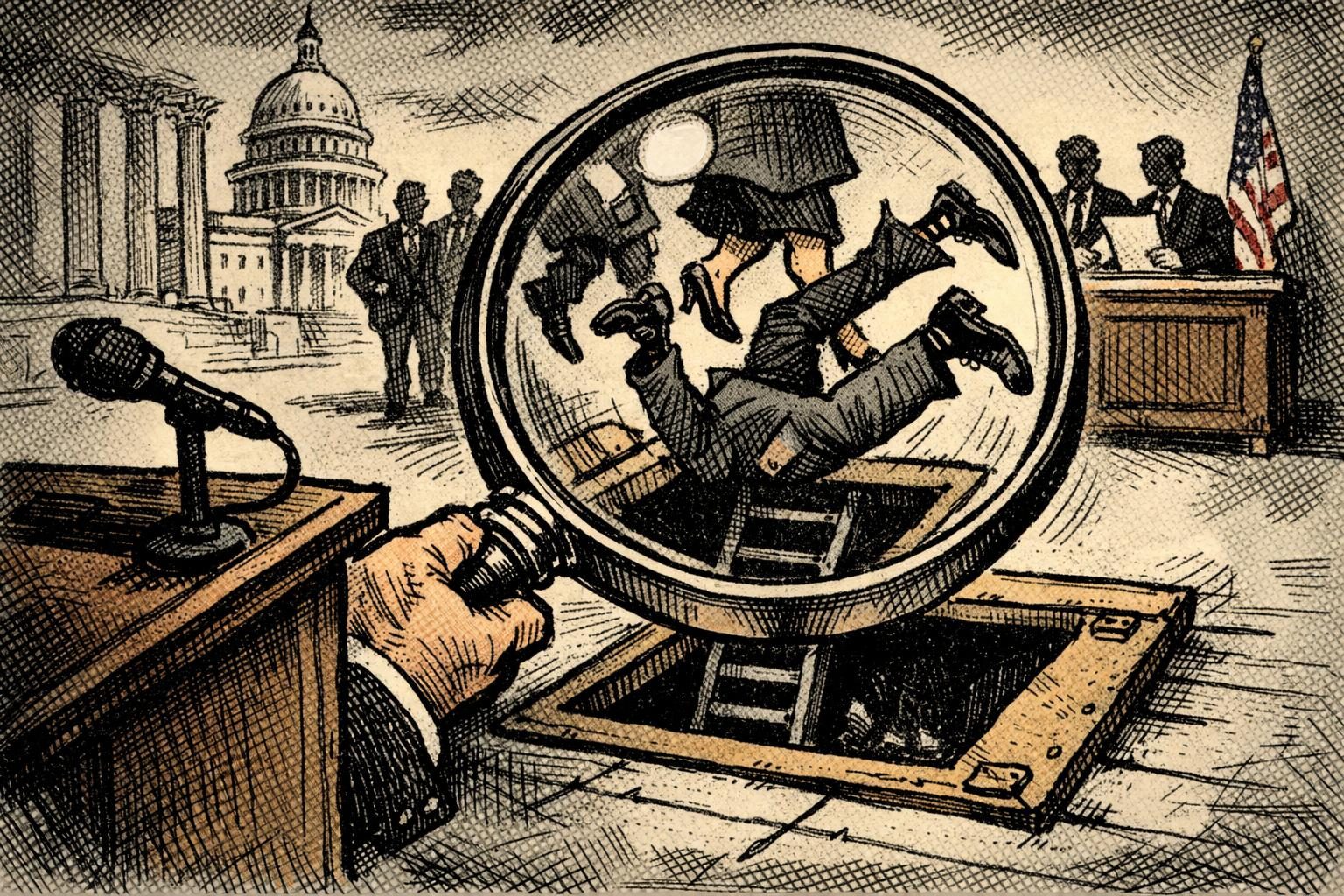
A House ethics review that began with specific misconduct cases is now being used to test whether congressional harassment rules still do enough to force consequences. The immediate trigger is not a new finding of wrongdoing, but the combination of recent House Ethics Committee actions and a fresh AP report on Oct. 24, 2026 describing the rules under review. The AP story ties the discussion to a small set of recent House cases, not to a sweeping new scandal across Congress. ([apnews.com](https://apnews.com/article/2966245df0c1aaf29d9239a100307e39?utm_source=openai))
The committee’s own public statement on April 20, 2026 gives the clearest official backdrop. In that statement, the House Ethics Committee said that since 2017 it had initiated investigations in 20 matters involving allegations of sexual misconduct by a member. It also said that in 2018 it championed passage of the CAA Reform Act, which required automatic referral to the committee when a member had to reimburse the Treasury for sexual-harassment awards or settlements paid under the Congressional Accountability Act. That is the rule structure now being reassessed. ([ethics.house.gov](https://ethics.house.gov/press-releases/statement-of-the-committee-on-ethics-regarding-sexual-misconduct-and-workplace-rights/?utm_source=openai))
AP’s reporting says the current reassessment is tied to three lawmakers who resigned this year rather than face the prospect of an expulsion vote, alongside other ethics disputes that have kept the House committee in the spotlight. The story also points to a bipartisan review led by Reps. Kat Cammack and Teresa Leger Fernandez that is expected to make recommendations after the Nov. 3 elections. Those details narrow the issue to a concrete process already underway, rather than a generalized judgment that Congress has entered a new ethics crisis. ([apnews.com](https://apnews.com/article/2966245df0c1aaf29d9239a100307e39?utm_source=openai))
That distinction matters. The official record shows that Congress has already tried to strengthen reporting and reimbursement rules for harassment cases, and the House ethics panel says it has handled a significant number of sexual-misconduct matters since 2017. But the AP report suggests lawmakers are still asking whether those measures are strong enough when cases end in resignation, committee review, or a referral for later reform rather than a clear public resolution. That is an inference about institutional durability, not a newly established finding against any one member. ([ethics.house.gov](https://ethics.house.gov/press-releases/statement-of-the-committee-on-ethics-regarding-sexual-misconduct-and-workplace-rights/?utm_source=openai))
So the story is less about a single explosive allegation than about a specific question now back before the House: whether the chamber’s rules for sexual misconduct and workplace rights are producing consequences that are visible, timely and credible enough to satisfy members, staff and the public. The official materials show the House has built a framework for reporting and reimbursement; the AP report shows that framework is still being tested by recent cases and the political pressure that follows them. ([ethics.house.gov](https://ethics.house.gov/press-releases/statement-of-the-committee-on-ethics-regarding-sexual-misconduct-and-workplace-rights/?utm_source=openai))
Comments
Read the discussion freely. Posting and voting require a verified member account. Every comment and reply is screened by AI before publication. Clear spam and abuse are blocked; only strongly cleared comments publish automatically, while uncertain drafts wait for moderator review. Civil factual disagreement alone is not grounds for rejection.
Log in to comment or join free to take part.
No comments yet. Be the first reasonably on-topic person here.