
Judge asked to compel disclosure of Kennedy Center emails and texts as Trump influence dispute widens
Permanent article number: 102526023 Find another article by number
Original article being examined
Published by: Associated Press
Claim examined: The Trump administration is withholding records documenting the scope of Trump's influence over Kennedy Center management.
Original reporting and source documents
Open the reporting and original documents used for this article. These include evidence sources; not every link is necessarily the original claim being examined.
Evidence and accountability
Accountable person, organization or policy: Trump administration
Documented issue under review: The administration is resisting disclosure of records that plaintiffs say would show the scope of presidential influence over Kennedy Center management.
This report has an independent editorial fact-audit recorded in the archive. Check the linked source documents below for the underlying evidence; where a case remains pending, allegations are not findings.
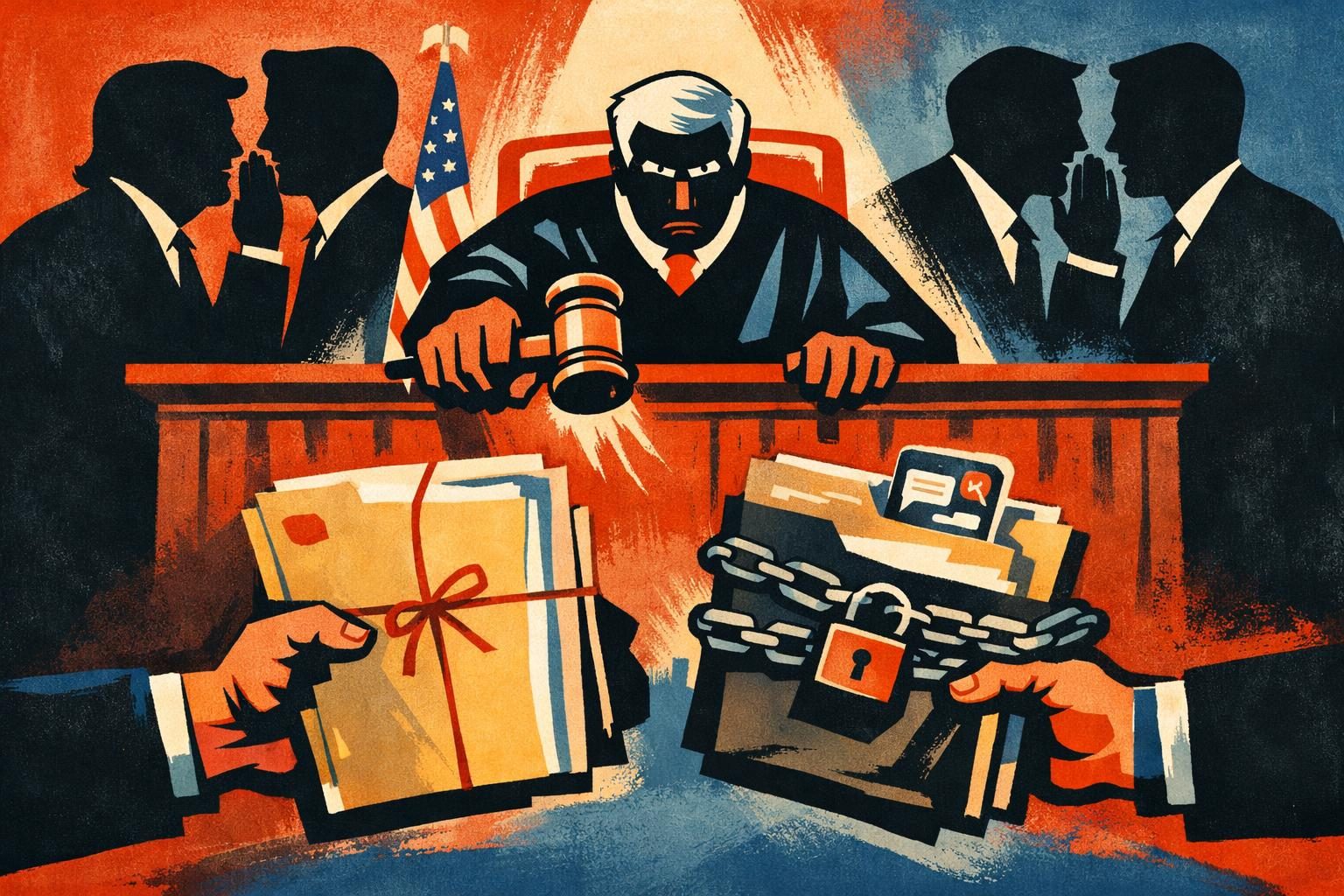
A new filing in the long-running Kennedy Center dispute is pushing the case into a different kind of fight: not over who controls the institution in public, but over what records the court will be allowed to see. Lawyers for Rep. Joyce Beatty asked a federal judge on Sunday, Oct. 25, to compel the Trump administration to turn over emails, text messages and related records that they say could show how deeply Donald Trump and his intermediaries have been involved in the center’s management. According to the filing described by AP, the government has withheld roughly 180 texts between Kennedy Center executive Matt Floca and Commerce Secretary Howard Lutnick, along with additional messages involving Trump aide Natalie Harp. The immediate question before the judge is procedural, not substantive: whether those records must be produced in discovery and whether privilege claims can keep them sealed. But in a case that has already become a test of presidential power over a major cultural institution, the paper trail itself has taken on outsized significance.
The plaintiffs’ argument is that the withheld material may help establish the scope and mechanics of the administration’s involvement, especially at a moment when the center’s management decisions have already prompted litigation. Their filing, as summarized in the AP account, suggests that the documentary record could reveal how much of the institution’s day-to-day direction was being shaped through backchannel communications with Trump allies and administration officials. The government has invoked presidential privilege grounds to resist disclosure, setting up a familiar but consequential clash between executive secrecy and a court’s need for evidence. This does not amount to a finding that the White House or its agents acted unlawfully, and the judge has not ruled on the merits of the broader dispute. Still, the volume and nature of the withheld messages underscore why discovery battles can matter as much as headline-grabbing injunction fights: they can determine whether a case is decided on a full record or on a version of events curated by one side.
The filing also matters because it widens the dispute beyond the earlier question of the Kennedy Center’s name and into the broader issue of control. AP reported that the plaintiffs believe the center’s own document index shows near-constant contact between Trump’s orbit and management, an allegation that, if supported by the records, could deepen scrutiny of how decisions were being made inside the institution. That is especially relevant because the center has already been the subject of intense political attention, including efforts tied to a proposed closure for renovations. In practical terms, the new motion asks the court to decide whether those communications are just politically sensitive or legally discoverable evidence of influence and direction. The answer could shape the next phase of the case by determining what the public, and the judge, can actually see. Even if the records are ultimately produced only under protective conditions, they could still illuminate how the administration’s push to remake the Kennedy Center was carried out behind the scenes.
The dispute has also become a broader test of transparency in a high-profile institutional battle. Beatty’s legal team is not asking the court to rule now on whether the administration overstepped in substance; it is asking for the information that would help prove or disprove that claim later. That distinction matters because discovery fights often define the scope of a case long before any merits ruling is issued. If the judge orders disclosure, the administration could be forced to reveal communications that have so far remained hidden behind privilege claims, potentially exposing internal coordination among officials and political aides. If the request is denied, the government keeps control over much of the documentary record, at least for now, and the plaintiffs may have a harder time building their theory of influence. Either way, Sunday’s filing marks a new and concrete development in a case that has repeatedly shifted from symbolic conflict to procedural confrontation. The Kennedy Center fight is no longer only about names, shutdown threats or public messaging; it is now also about who gets to control the evidence of how power was exercised in the first place.
Comments
Read the discussion freely. Posting and voting require a verified member account. Every comment and reply is screened by AI before publication. Clear spam and abuse are blocked; only strongly cleared comments publish automatically, while uncertain drafts wait for moderator review. Civil factual disagreement alone is not grounds for rejection.
Log in to comment or join free to take part.
No comments yet. Be the first reasonably on-topic person here.