
Sullivan, Peltola seek Alaska Native voters as Senate race intensifies
Permanent article number: 102526013 Find another article by number
Original article being examined
Published by: Associated Press
Original reporting and source documents
Open the reporting and original documents used for this article. These include evidence sources; not every link is necessarily the original claim being examined.
Evidence and accountability
This report has an independent editorial fact-audit recorded in the archive. Check the linked source documents below for the underlying evidence; where a case remains pending, allegations are not findings.
Questions sent by Radical Reading Room
These requests have a recorded outbound message ID and send time. A request for comment does not establish that its recipient read the message.
Alaska Native organizations and local election oversight bodies — Public professional press contact
Question: What are the exact outreach strategies and engagement methods that both Sen. Dan Sullivan's and Mary Peltola's campaigns are using to connect with Alaska Native voters?
Contacted: October 25, 2026 at 5:24 PM (server time).
Status: Response pending; no substantive response recorded.
Corrections and clarifications
October 25, 2026: October 25, 2026: Clarified the date of the underlying campaign event. Sullivan and Peltola addressed the Alaska Federation of Natives convention October 22–24, including the October 23 candidates forum. October 25 is the Associated Press article publication date, not the date of a separate candidates forum. Added the original AFN convention schedule as independent primary event documentation. The article permalink remains unchanged.
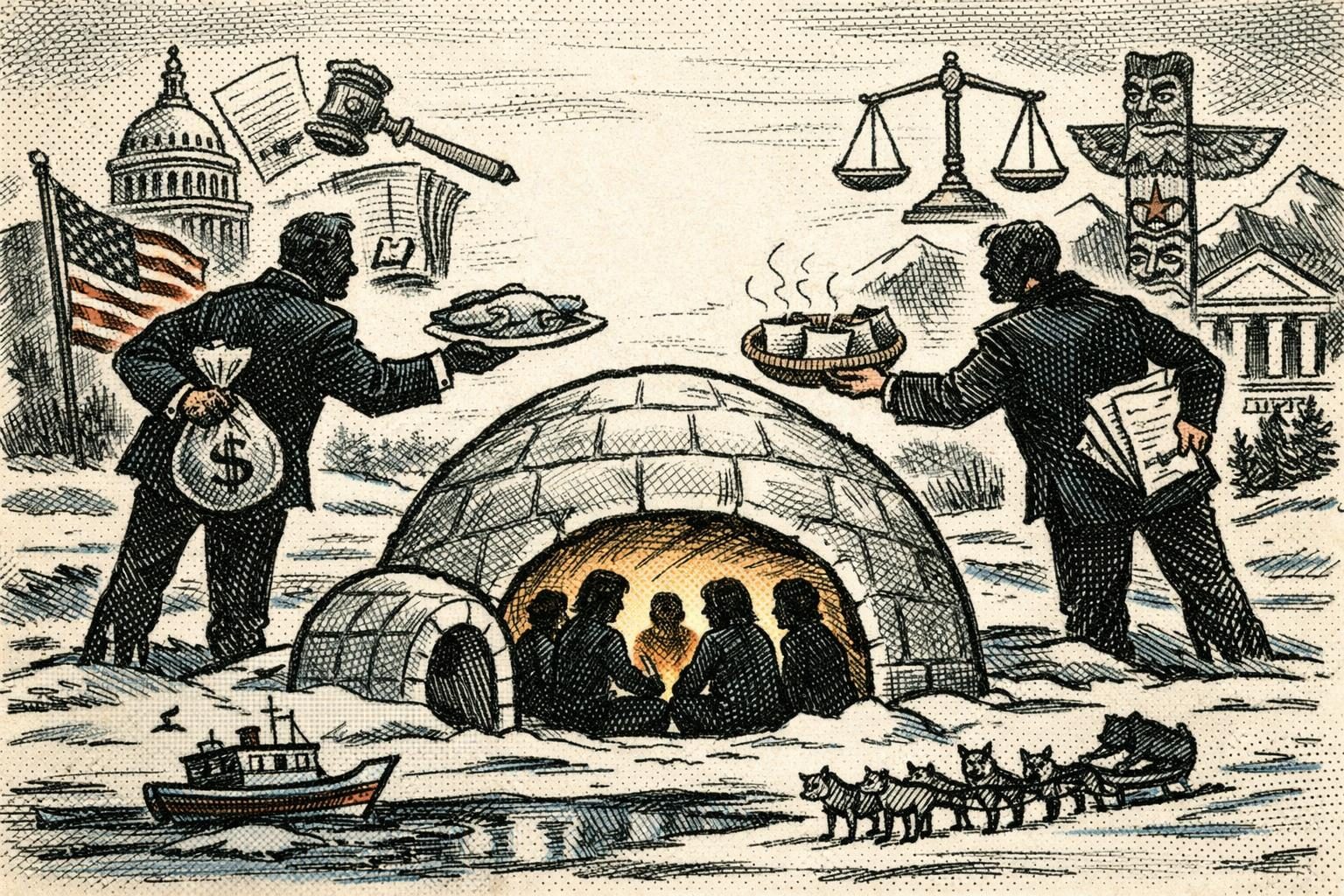
In Alaska’s Senate contest, the most important work is happening far from the campaign trail’s biggest rallies. The Associated Press reported on Oct. 25, 2026, that Sen. Dan Sullivan and Mary Peltola are both trying to win over Alaska Native voters, a bloc whose support can matter disproportionately in a state where small margins often decide statewide races. The reporting’s core point is straightforward: both campaigns see these communities as electorally important, and both are trying to make their case directly. The campaign appearances took place at the Alaska Federation of Natives convention on October 22–24, including its Friday, October 23 candidates forum. The October 25 date identifies when the Associated Press published its report, not the date of a new October 25 forum.
That makes the story less about a single confrontation than about political arithmetic. Alaska Native voters are not a symbolic add-on to the race; they are part of the coalition each side needs to assemble. AP’s account treated that outreach as the central fact pattern, not as evidence of wrongdoing or as proof of a larger legal dispute. The immediate question is who can persuade voters, not whether the article itself establishes a misconduct finding.
There is, however, a louder legal and procedural backdrop around the race. Separate AP reporting said Donald Trump ordered the Justice Department’s lawsuit over Alaska’s U.S. Senate race, and other AP coverage explained the litigation in more detail. Alaska Public Media has also documented continuing disputes over election rules, including ballot-measure fights and efforts tied to the state’s voting system. Those developments help explain the atmosphere around the campaign, but they are distinct from the AP story about Native-voter outreach.
That distinction matters because the strongest verified claim here is narrower than some political spin would suggest. The AP piece shows two candidates competing for the same voters in a high-stakes state contest. It does not, by itself, prove a coordinated pressure campaign or a new legal violation. What it does show is how much weight Alaska Native communities can carry in a Senate race where turnout, geography and trust all shape the result.
Comments
Read the discussion freely. Posting and voting require a verified member account. Every comment and reply is screened by AI before publication. Clear spam and abuse are blocked; only strongly cleared comments publish automatically, while uncertain drafts wait for moderator review. Civil factual disagreement alone is not grounds for rejection.
Log in to comment or join free to take part.
No comments yet. Be the first reasonably on-topic person here.