
Trump escalates attacks on Abdul El-Sayed as Michigan’s Senate fight hardens
Permanent article number: 102526026 Find another article by number
Original article being examined
Published by: AP News
Claim examined: President Donald Trump escalated attacks on Abdul El-Sayed on Sunday, questioning his loyalties and linking him rhetorically to extremism.
Original reporting and source documents
Open the reporting and original documents used for this article. These include evidence sources; not every link is necessarily the original claim being examined.
Evidence and accountability
Accountable person, organization or policy: Donald Trump
Documented issue under review: Used a fresh campaign appearance to intensify identity-based attacks on a Democratic Senate nominee.
This report has an independent editorial fact-audit recorded in the archive. Check the linked source documents below for the underlying evidence; where a case remains pending, allegations are not findings.
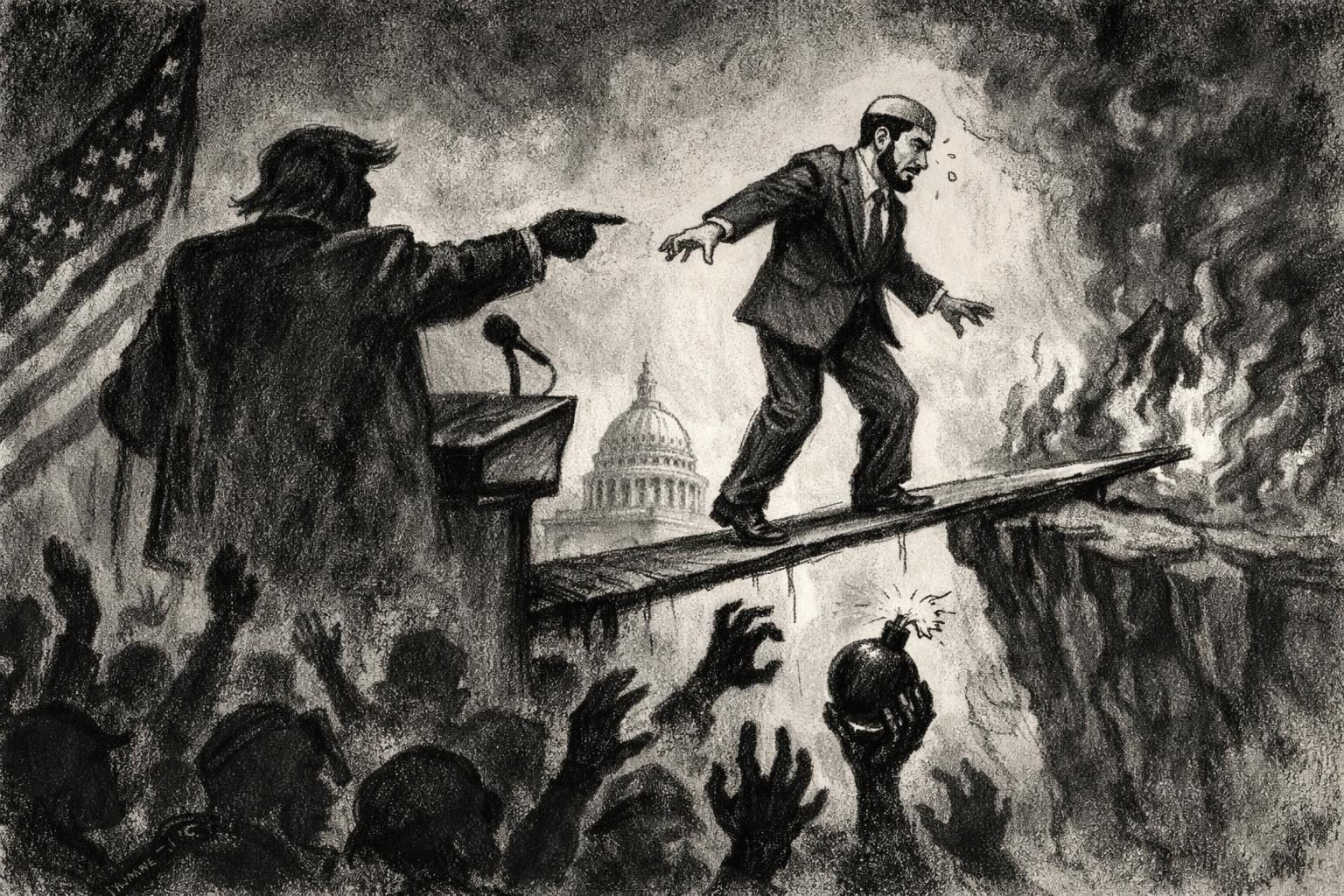
President Donald Trump used a Michigan campaign appearance on October 25 to intensify his attacks on Democratic Senate nominee Abdul El-Sayed, adding a fresh and highly visible burst of rhetoric to a race that Republicans increasingly want to frame around loyalty, identity, and ideological suspicion. According to AP, Trump questioned El-Sayed’s loyalties and repeated language that tied the candidate to extremism, turning the rally into more than just a routine stop in a battleground state. PBS had already previewed the broader contours of that line of attack in coverage of Michigan’s Senate contest, but the AP account provides the clearest public record of the Sunday event itself and the timing of Trump’s escalation. That makes this a current campaign development rather than a recycled talking point being dragged back into circulation without context. It also shows how Trump continues to serve as the most forceful and recognizable messenger for Republicans when they want to define an opponent through personal suspicion instead of through policy disagreement.
The significance of Trump’s remarks is less about whether they introduced a new policy critique and more about how deliberately they shifted the campaign terrain. Rather than focusing primarily on taxes, inflation, or the broader economic arguments that often dominate midterm messaging, Trump chose to center his appearance on insinuation and identity-based framing. That strategy matters because it can force El-Sayed and his allies to spend time rebutting the tone and premise of the attack instead of advancing their own agenda on jobs, affordability, or governance. In a competitive Senate race, time and attention are political resources, and Trump’s intervention effectively tries to redirect both toward his preferred narrative. The move also reflects a broader Republican habit of making the race about cultural grievance and suspicion, especially when Trump is the one on stage and speaking in his own voice. Even if the underlying claims are not substantiated, the political effect is real because it changes what the audience is asked to notice first.
This is not a fact-check story about whether El-Sayed’s critics are correct on the merits, and it does not require treating Trump’s comments as evidence of any wrongdoing by the Democratic nominee. Instead, the story is about the public use of demonizing rhetoric by a sitting president in a state where his party badly wants to win a Senate seat. The accountability question is whether Trump is choosing to use his platform to deepen polarization by casting a rival candidate in vaguely extremist terms, thereby pressuring the campaign environment itself. That is a political judgment rather than a factual finding about El-Sayed’s views or record. It is also important that the attack came in the context of a live rally, not an offhand comment or a social media post that could be dismissed as something less than a formal campaign signal. The setting matters because it suggests intentional messaging, not accidental phrasing, and because it gives Republicans a concrete example of how Trump is trying to shape the race in real time.
There is, of course, a counterargument that Trump and his allies are simply engaging in the sort of hard-edged campaigning that has become routine in an intensely polarized era. Supporters will say a candidate who needs to win Michigan is entitled to speak sharply about an opponent and to press whatever themes they believe will resonate with voters. That argument is not wrong as a description of modern politics, and it is consistent with how Trump has long approached contested races. But the documented fact remains that this was a fresh, dated escalation on October 25, and that the remarks appear designed to make El-Sayed’s identity and perceived ideology a central feature of the contest. In that sense, the rally was less a one-off outburst than another example of the Republican coalition leaning on Trump’s brand of confrontation to define a Senate race. If the election becomes a referendum on suspicion and cultural signaling rather than on governing, Trump’s Michigan appearance will have been a meaningful step in that direction.
Comments
Read the discussion freely. Posting and voting require a verified member account. Every comment and reply is screened by AI before publication. Clear spam and abuse are blocked; only strongly cleared comments publish automatically, while uncertain drafts wait for moderator review. Civil factual disagreement alone is not grounds for rejection.
Log in to comment or join free to take part.
No comments yet. Be the first reasonably on-topic person here.