
Trump keeps Iran strike option open as AP reports Tehran still signals talks
Permanent article number: 102526025 Find another article by number
Original reporting and source documents
Open the reporting and original documents used for this article. These include evidence sources; not every link is necessarily the original claim being examined.
Evidence and accountability
Accountable person, organization or policy: Donald Trump and the Republican foreign-policy line on Iran
Documented issue under review: The administration publicly kept open the prospect of renewed military strikes on Iran without clarifying the scope, legal basis, or end state of the escalation.
This report has an independent editorial fact-audit recorded in the archive. Check the linked source documents below for the underlying evidence; where a case remains pending, allegations are not findings.
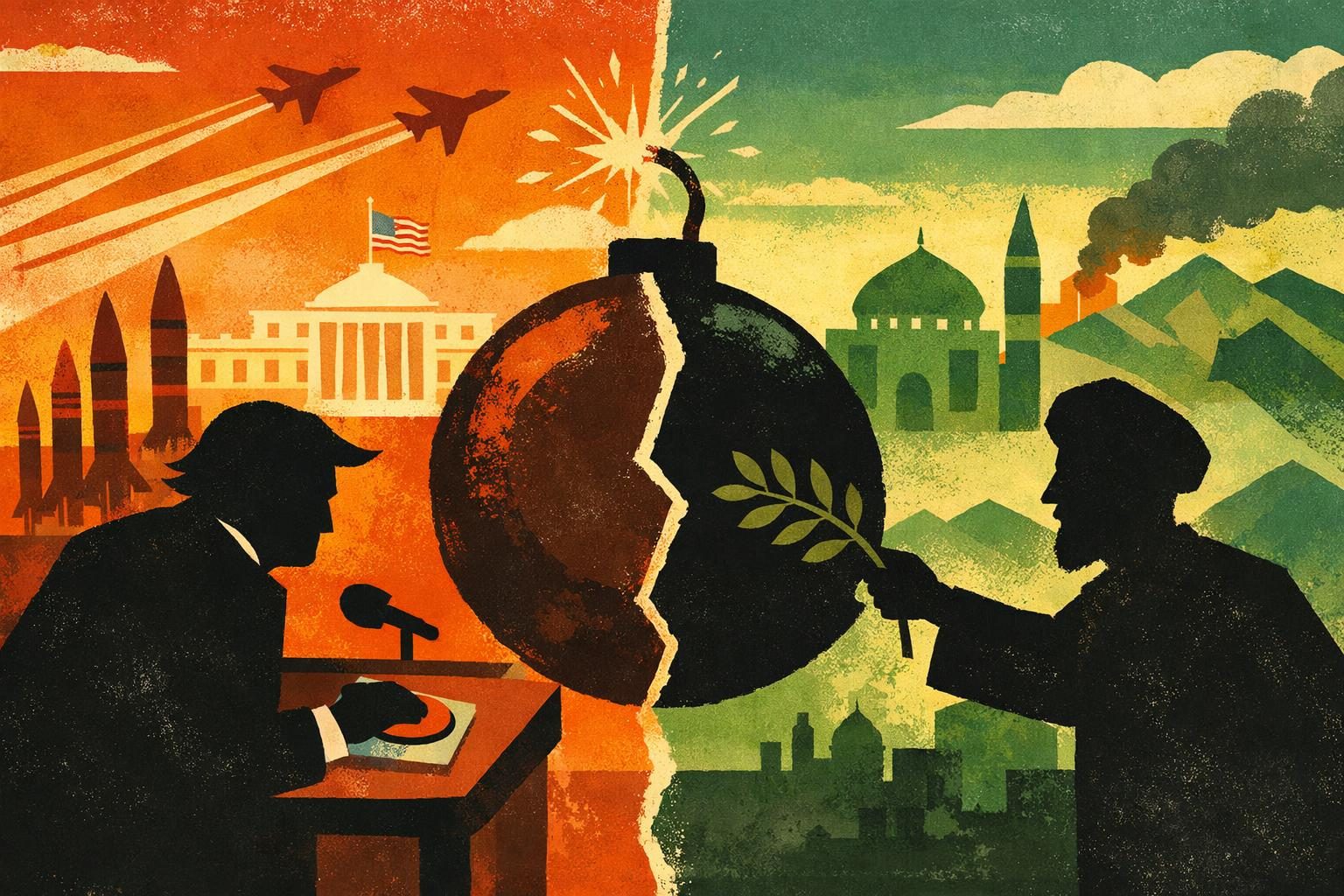
President Donald Trump is keeping Iran in a narrow band of public ambiguity: he is not promising restraint beyond the Nov. 3 midterm elections, but he is also not announcing any new strike plan. On Oct. 25, the Associated Press reported that Trump would not telegraph an attack and would not rule one out. That framing matters because it describes a posture, not a fresh decision. ([apnews.com](https://apnews.com/article/4779a3deeb1a23f59414164532d5c885?utm_source=openai))
The more specific benchmark comes from earlier AP reporting on Oct. 8, when Trump said the United States would not resume military strikes on Iran before the midterm vote. Read together, the two reports show a policy message that has been publicly constrained by election timing even as the administration keeps the underlying threat alive. The issue is less whether Trump has changed course than how long he intends to keep the option visible without acting on it. ([apnews.com](https://apnews.com/article/6ca2df0cfa031d211ea025fd8520015d?utm_source=openai))
AP’s Oct. 25 reporting also said Iranian officials were still receiving messages and remained open to diplomacy, even as they projected defiance. That does not prove a breakthrough or a thaw; it does show that Tehran is trying to avoid closing off talks while also signaling that it is not accepting pressure as final. In practical terms, both sides are using public statements to shape expectations, not settle the dispute. ([apnews.com](https://apnews.com/article/4779a3deeb1a23f59414164532d5c885?utm_source=openai))
The White House background material from Feb. 6, 2026, supports the administration’s broader hardline stance toward Iran. It says the government of Iran poses a continuing unusual and extraordinary threat to the United States and that sustained pressure is required. That document helps explain the posture, but it does not itself establish any new strike order or a specific legal or military plan tied to the Oct. 25 reporting. ([whitehouse.gov](https://www.whitehouse.gov/fact-sheets/2026/02/fact-sheet-president-donald-j-trump-addresses-threats-to-the-united-states-by-the-government-of-iran/?cst=&trk=article-ssr-frontend-pulse_little-text-block&utm_source=openai))
So the factual bottom line is narrower than the headline risk might suggest. The record shows a continued campaign of pressure, warnings and controlled ambiguity, with the midterm election serving as the most concrete public boundary so far. What it does not show is a newly announced decision to launch another round of strikes, or a disclosed end state for the confrontation. ([apnews.com](https://apnews.com/article/2195b4226316fa8cb13b875f08d5df88?utm_source=openai))
Comments
Read the discussion freely. Posting and voting require a verified member account. Every comment and reply is screened by AI before publication. Clear spam and abuse are blocked; only strongly cleared comments publish automatically, while uncertain drafts wait for moderator review. Civil factual disagreement alone is not grounds for rejection.
Log in to comment or join free to take part.
No comments yet. Be the first reasonably on-topic person here.