
Judge Sets Wednesday Ruling on DOJ Bid to Set Aside Ballots
Permanent article number: 102826034 Find another article by number
Original article being examined
Published by: LAmag
Original reporting and source documents
Open the reporting and original documents used for this article. These include evidence sources; not every link is necessarily the original claim being examined.
Evidence and accountability
Archive transparency: this article has not yet completed the site's newer independent fact-audit process. Its source links are provided below. Do not treat allegations, commentary, or a rating as a legal finding.
Questions sent by Radical Reading Room
These requests have a recorded outbound message ID and send time. A request for comment does not establish that its recipient read the message.
U.S. Department of Justice — Public professional press contact
Question: What evidence did the Justice Department find that indicates about 20,000 mail ballot voters may be noncitizens and ineligible to vote?
Contacted: October 29, 2026 at 12:13 AM (server time).
Status: Response pending; no substantive response recorded.
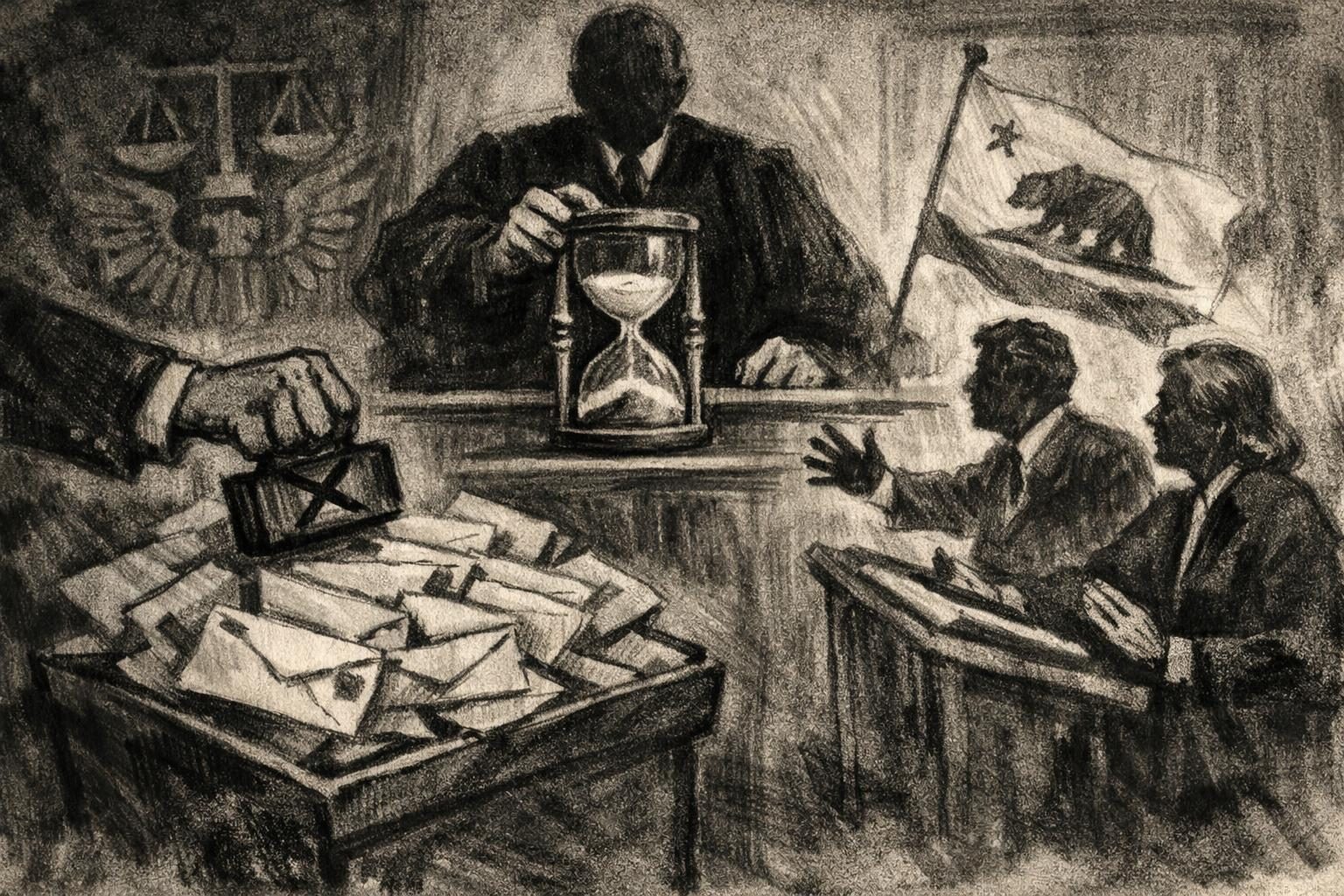
A Los Angeles federal judge said Tuesday he would rule by Wednesday on the Trump administration’s emergency request to set aside mail ballots associated with about 20,000 people the Justice Department suspects are not eligible to vote. U.S. District Judge David O. Carter heard arguments from federal prosecutors and California officials during a hearing that lasted about three hours.
The administration sought to prevent the ballots from being counted while voters’ eligibility was resolved. Federal prosecutor Bill Essayli argued that the government had found credible evidence of suspected noncitizens registered to vote by mail. He also accused California Secretary of State Shirley Weber and Los Angeles County Registrar Dean Logan of allowing lawful and unlawful ballots to be mixed.
California officials opposed the request. The state’s attorneys disputed the government’s basis for its allegations, while Carter appeared doubtful of the claims and indicated there was no immediate need for an order preventing the ballots from being counted. He gave election officials until Dec. 3, the deadline for certifying election results, to resolve the dispute.
At the end of the hearing, Carter warned that threats against state and county election employees should cease. He also indicated he would set another hearing within about two weeks. The judge had not ruled on the request as of the hearing’s conclusion; his decision was expected by Wednesday.
Comments
Read the discussion freely. Posting and voting require a verified member account. Every comment and reply is screened by AI before publication. Clear spam and abuse are blocked; only strongly cleared comments publish automatically, while uncertain drafts wait for moderator review. Civil factual disagreement alone is not grounds for rejection.
Log in to comment or join free to take part.
No comments yet. Be the first reasonably on-topic person here.