
Judge Temporarily Blocks Shorter Refugee Response Deadline
Permanent article number: 102826004 Find another article by number
Original article being examined
Published by: voz.us
Original reporting and source documents
Open the reporting and original documents used for this article. These include evidence sources; not every link is necessarily the original claim being examined.
Evidence and accountability
Archive transparency: this article has not yet completed the site's newer independent fact-audit process. Its source links are provided below. Do not treat allegations, commentary, or a rating as a legal finding.
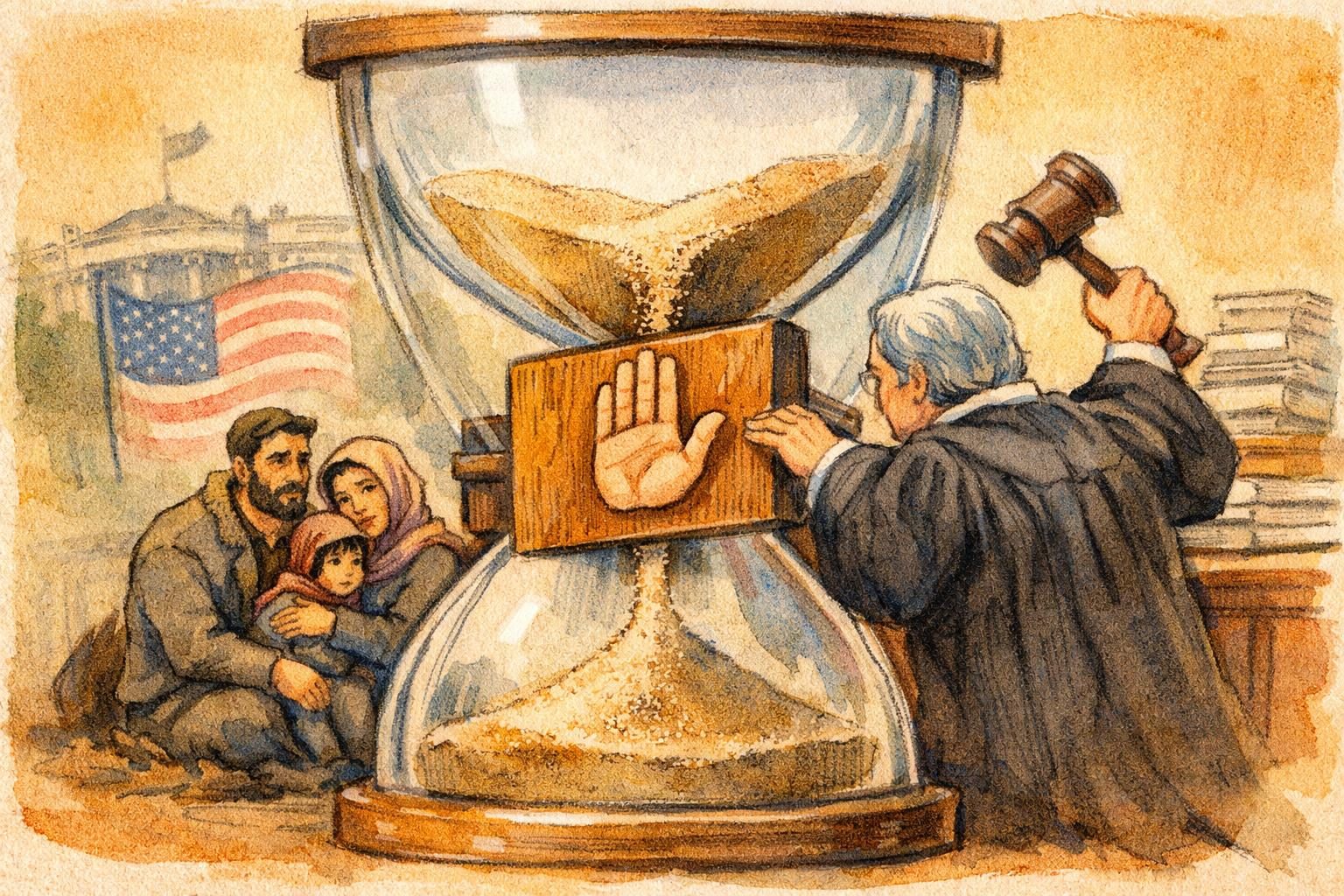
A federal judge in Boston temporarily blocked the Trump administration on Oct. 27 from enforcing a policy that would shorten the time refugees have to contest termination of their legal status from 30 days to 10. U.S. District Judge Julia Kobick ordered enforcement halted through Nov. 6. The order pauses the shorter deadline; it does not establish a final ruling on whether the policy is lawful.
The case followed a lawsuit brought in Massachusetts by refugee advocacy groups and four refugees from Afghanistan, Colombia, Ethiopia and Iraq. The plaintiffs contend the shortened response period makes it harder for refugees to obtain lawful permanent residence while exposing them to loss of status without a meaningful chance to challenge revocation. Those claims remain allegations in the case, rather than findings adopted by the court.
The policy was described in an Oct. 14 notice and concerns notices seeking to revoke refugee status. Under the rule, recipients would have 10 days to respond instead of the previous 30-day period—20 fewer days to challenge a notice. The court’s temporary block leaves the policy unenforced through Nov. 6 while the case proceeds; the reports do not describe a final decision on the plaintiffs’ challenge.
The Department of Homeland Security estimated the change could affect as many as 186,000 refugees. USCIS spokesperson Zach Kahler criticized the lawsuit as an attempt to hinder the administration’s enforcement of immigration laws. That position contrasts with the plaintiffs’ claim that the shorter deadline obstructs a meaningful challenge to revocation. The reported order is temporary, and the competing arguments remain unresolved.
Comments
Read the discussion freely. Posting and voting require a verified member account. Every comment and reply is screened by AI before publication. Clear spam and abuse are blocked; only strongly cleared comments publish automatically, while uncertain drafts wait for moderator review. Civil factual disagreement alone is not grounds for rejection.
Log in to comment or join free to take part.
No comments yet. Be the first reasonably on-topic person here.